. 2012 Jun 11:6:47.
doi: 10.3389/fnsys.2012.00047. eCollection 2012.

Stress and tinnitus-from bedside to bench and back

Affiliations

Stress and tinnitus-from bedside to bench and back

Birgit Mazurek et al. Front Syst Neurosci. .

Abstract

The aim of this review is to focus the attention of clinicians and basic researchers on the association between psycho-social stress and tinnitus. Although tinnitus is an auditory symptom, its onset and progression often associates with emotional strain. Recent epidemiological studies have provided evidence for a direct relationship between the emotional status of subjects and tinnitus. In addition, studies of function, morphology, and gene and protein expression in the auditory system of animals exposed to stress support the notion that the emotional status can influence the auditory system. The data provided by clinical and basic research with use of animal stress models offers valuable clues for an improvement in diagnosis and more effective treatment of tinnitus.

Keywords: HPA axis; corticosteroid; emotional stress; gene expression; neurotransmitter; tinnitus.


Figures
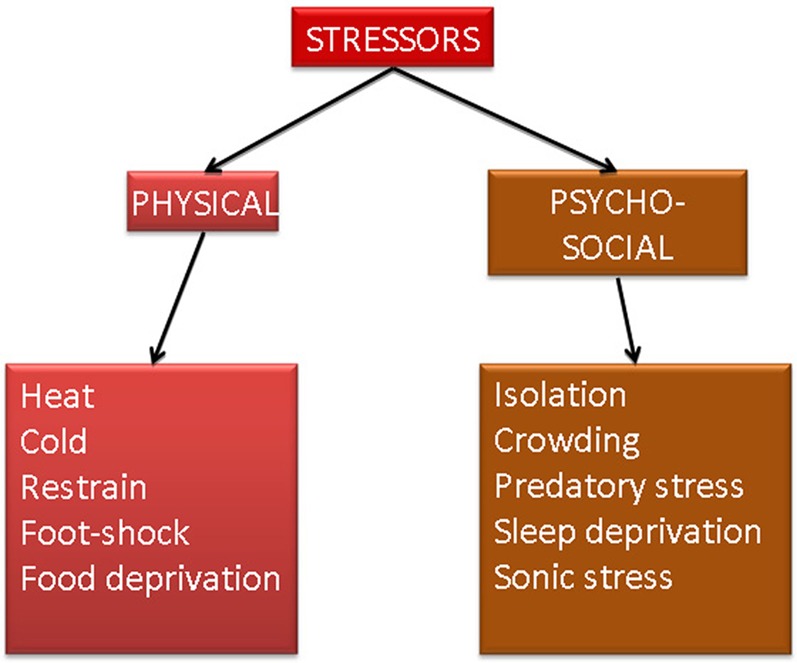
Figure 1
Figure 1
Schematic representation of two main types of stress and different stress models used in basic research.
Figure 2
Figure 2
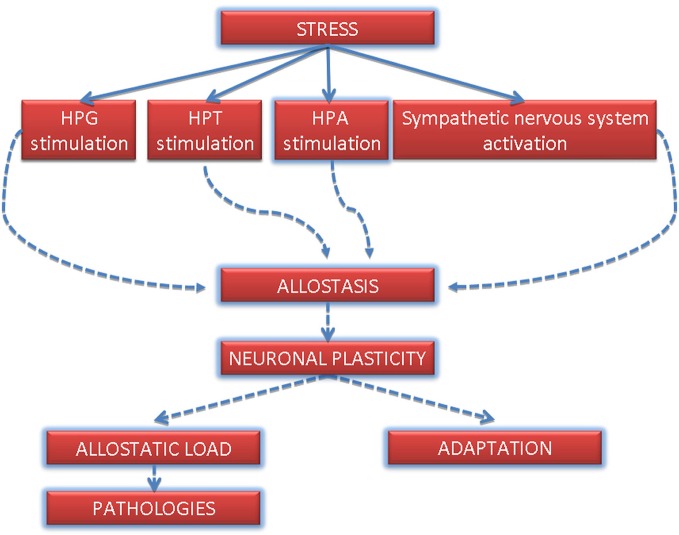
Most representative stress-induced pathways and hypothetical involvement in the induction of allostatic load. HPT, hypothalamus-pituitary-thyroid axis; HPG, hypothalamus-pituitary-gonadal axis; HPA, hypothalamus-pituitary-adrenal axis.
Figure 3
Figure 3
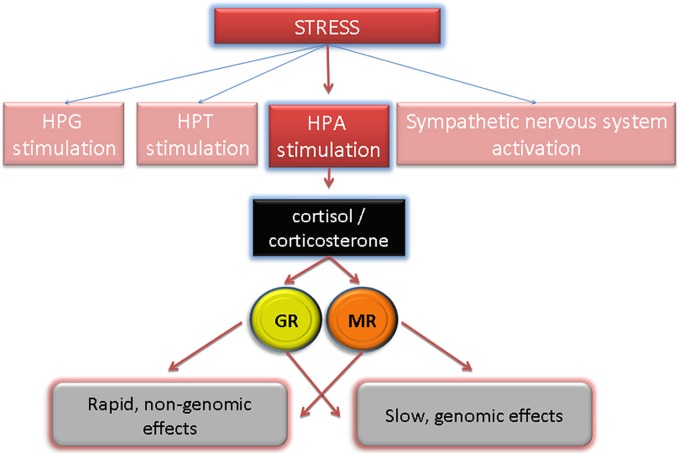
HPA-induced stress hormone release and their signaling via respective receptors induce genomic (slow) and non-genomic (rapid) changes. GR, glucocorticoid receptor; MR, mineralcorticoid receptor.
Figure 4
Figure 4
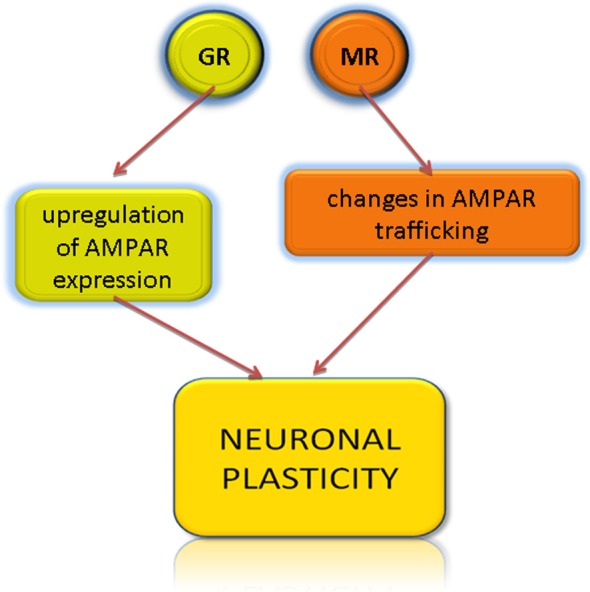
Glucocorticoids induce neuronal plasticity via respective receptors. AMPAR, α-amino-3-hydroxy-5-methyl-4-isoxazolepropionic acid receptor; GR, glucocorticoid receptor; MR, mineralcorticoid receptor.
Figure 5
Figure 5
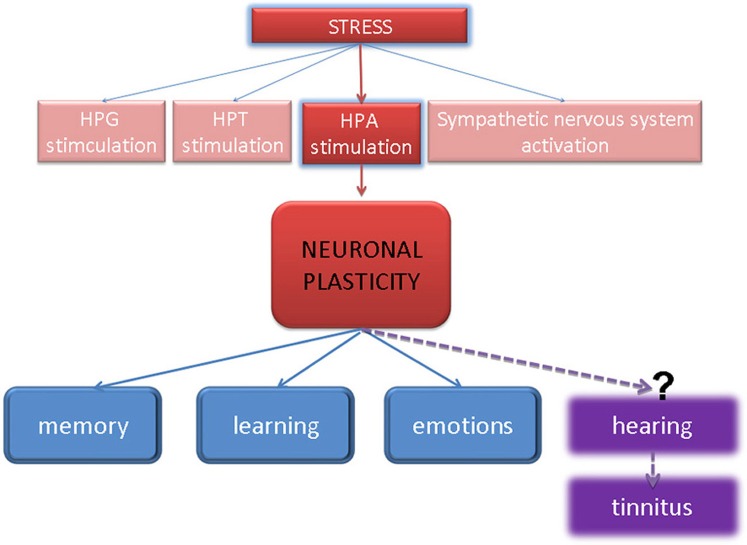
Model of stress-induced neuronal plasticity, which has been accepted in memory, learning, and emotional systems—can it also be truth to explain the induction of auditory pathologies by stress?

References

    1. Amsterdam A., Sasson R. (2002). The anti-inflammatory action of glucocorticoids is mediated by cell type specific regulation of apoptosis. Mol. Cell. Endocrinol. 189, 1–9. 10.1016/S0303-7207(01)00722-5 - DOI - PubMed
    1. Amsterdam A., Tajima K., Sasson R. (2002). Cell-specific regulation of apoptosis by glucocorticoids: implication to their anti-inflammatory action. Biochem. Pharmacol. 64, 843–850. 10.1016/S0006-2952(02)01147-4 - DOI - PubMed
    1. Arnold W., Bartenstein P., Oestreicher E., Romer W., Schwaiger M. (1996). Focal metabolic activation in the predominant left auditory cortex in patients suffering from tinnitus: a PET study with [18F]deoxyglucose. ORL J. Otorhinolaryngol. Relat. Spec. 58, 195–199. - PubMed
    1. Baigi A., Oden A., Almlid-Larsen V., Barrenas M. L., Holgers K. M. (2011). Tinnitus in the general population with a focus on noise and stress: a public health study. Ear Hear. 32, 787–789. 10.1097/AUD.0b013e31822229bd - DOI - PubMed
    1. Berlucchi G., Buchtel H. A. (2009). Neuronal plasticity: historical roots and evolution of meaning. Exp. Brain Res. 192, 307–319. 10.1007/s00221-008-1611-6 - DOI - PubMed

LinkOut - more resources