


Expression and putative function of innate immunity genes under in situ conditions in the symbiotic hydrothermal vent tubeworm Ridgeia piscesae
- PMID: 22701617
- PMCID: PMC3372519
- DOI: 10.1371/journal.pone.0038267
Expression and putative function of innate immunity genes under in situ conditions in the symbiotic hydrothermal vent tubeworm Ridgeia piscesae
Abstract
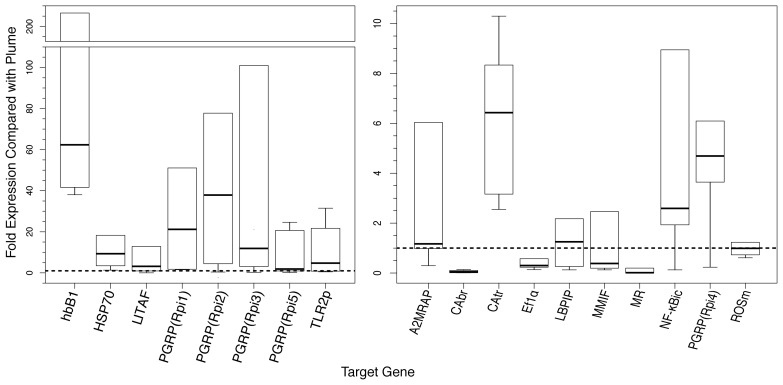
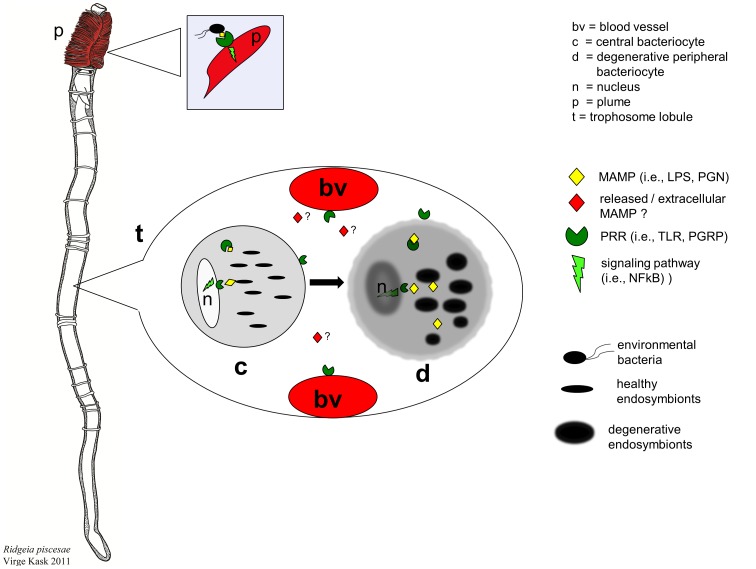
The relationships between hydrothermal vent tubeworms and sulfide-oxidizing bacteria have served as model associations for understanding chemoautotrophy and endosymbiosis. Numerous studies have focused on the physiological and biochemical adaptations that enable these symbioses to sustain some of the highest recorded carbon fixation rates ever measured. However, far fewer studies have explored the molecular mechanisms underlying the regulation of host and symbiont interactions, specifically those mediated by the innate immune system of the host. To that end, we conducted a series of studies where we maintained the tubeworm, Ridgeia piscesae, in high-pressure aquaria and examined global and quantitative changes in gene expression via high-throughput transcriptomics and quantitative real-time PCR (qPCR). We analyzed over 32,000 full-length expressed sequence tags as well as 26 Mb of transcript sequences from the trophosome (the organ that houses the endosymbiotic bacteria) and the plume (the gas exchange organ in contact with the free-living microbial community). R. piscesae maintained under conditions that promote chemoautotrophy expressed a number of putative cell signaling and innate immunity genes, including pattern recognition receptors (PRRs), often associated with recognizing microbe-associated molecular patterns (MAMPs). Eighteen genes involved with innate immunity, cell signaling, cell stress and metabolite exchange were further analyzed using qPCR. PRRs, including five peptidoglycan recognition proteins and a Toll-like receptor, were expressed significantly higher in the trophosome compared to the plume. Although PRRs are often associated with mediating host responses to infection by pathogens, the differences in expression between the plume and trophosome also implicate similar mechanisms of microbial recognition in interactions between the host and symbiont. We posit that regulation of this association involves a molecular "dialogue" between the partners that includes interactions between the host's innate immune system and the symbiont.
Conflict of interest statement
Figures
References
-
- Dubilier N, Bergin C, Lott C. Symbiotic diversity in marine animals: the art of harnessing chemosynthesis. Nat Rev Microbiol. 2008;6:740. - PubMed
-
- Stewart FJ, Cavanaugh CM. Symbiosis of thioautotrophic bacteria with Riftia pachyptila. Molecular Basis of Symbiosis. 2006. pp. 225. - PubMed
-
- Cavanaugh CM, Gardiner SL, Jones ML, Jannasch HW, Waterbury JB. Prokaryotic Cells in the Hydrothermal Vent Tube Worm Riftia pachyptila Jones: Possible Chemoautotrophic Symbionts. Science. 1981;213:342. - PubMed
-
- Felbeck H. Chemoautotrophic Potential of the Hydrothermal Vent Tube Worm, Riftia pachyptila Jones (Vestimentifera). Science. 1981;213:338. - PubMed
-
- Childress J, Fisher C, Favuzzi J, Kochevar R, Sanders N. Sulfide-driven autotrophic balance in the bacterial symbiont-containing hydrothermal vent tubeworm, Riftia pachyptila Jones. The Biological Bulletin. 1991;180:153. - PubMed
Publication types
MeSH terms
LinkOut - more resources
Full Text Sources
Miscellaneous
