


The combined dexamethasone/TSST paradigm--a new method for psychoneuroendocrinology
- PMID: 22701740
- PMCID: PMC3372469
- DOI: 10.1371/journal.pone.0038994
The combined dexamethasone/TSST paradigm--a new method for psychoneuroendocrinology
Abstract
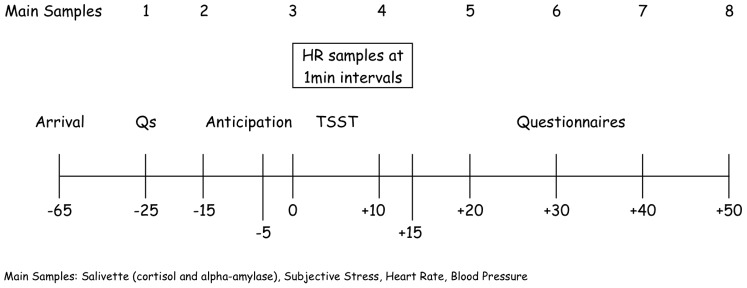
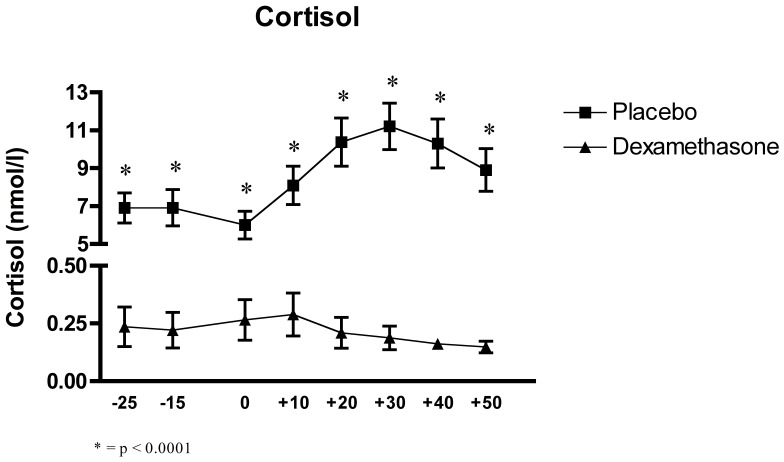
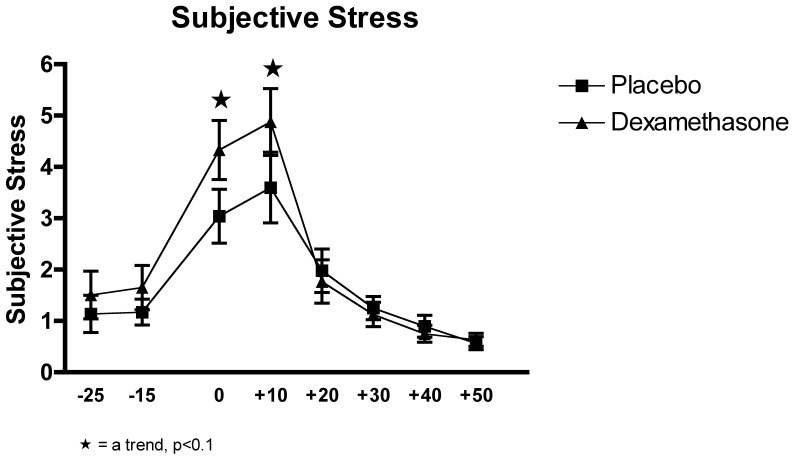
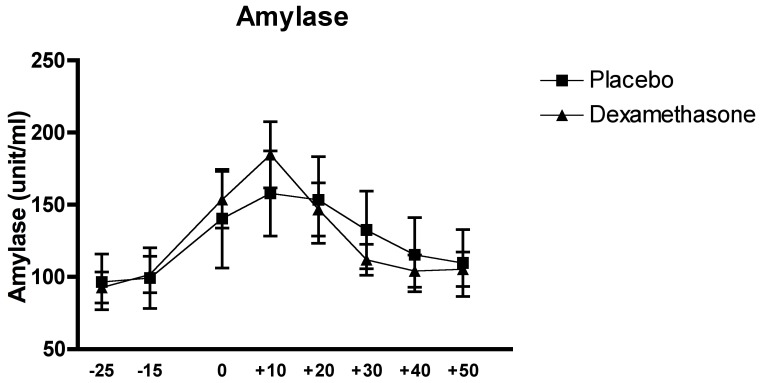
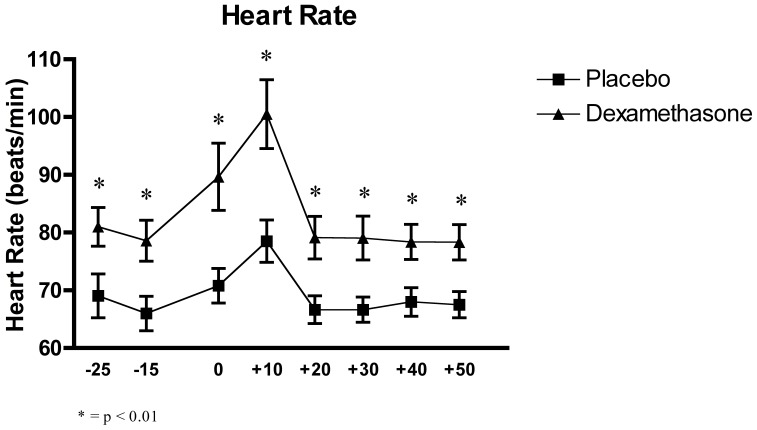
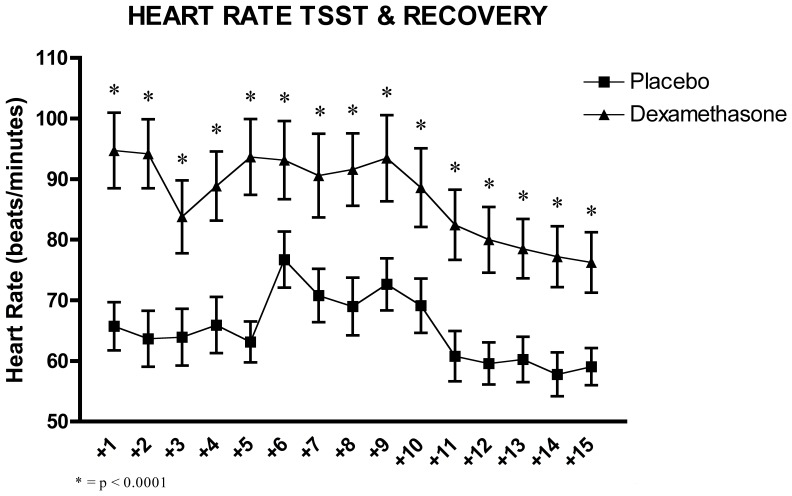
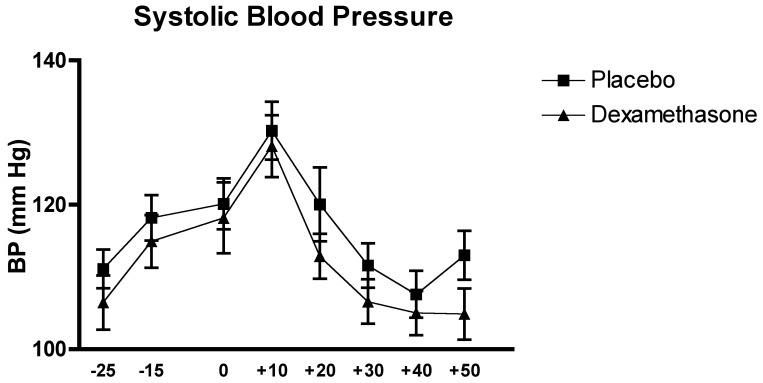
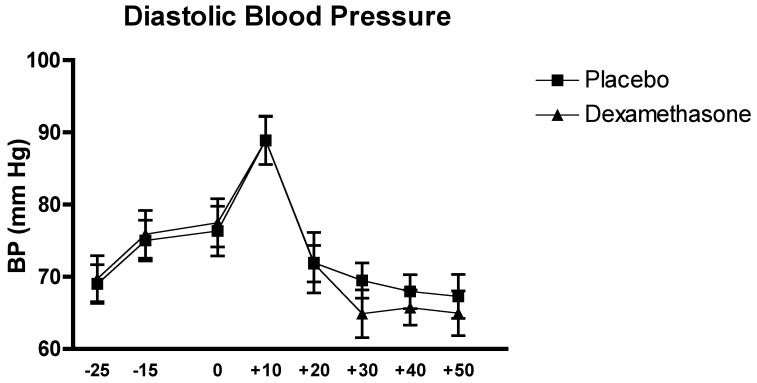
The two main physiological systems involved in the regulation of the stress response are the hypothalamus-pituitary-adrenal (HPA) axis and the sympathetic nervous system (SNS). However, the interaction of these systems on the stress response remains poorly understood. To better understand the cross-regulatory effects of the different systems involved in stress regulation, we developed a new stress paradigm that keeps the activity of the HPA constant when exposing subjects to psychosocial stress. Thirty healthy male participants were recruited and randomly assigned to either a dexamethasone (DEX; n = 15) or placebo (PLC; n = 15) group. All subjects were instructed to take the Dexamethasone (2 mg) or Placebo pill the night before coming to the laboratory to undergo the Trier Social Stress Task (TSST). Salivary cortisol, salivary alpha amylase (sAA), heart rate, blood pressure and subjective stress were assessed throughout the protocol. As expected, the DEX group presented with suppressed cortisol levels. In comparison, their heart rate was elevated by approximately ten base points compared to the PLC group, with increases throughout the protocol and during the TSST. Neither sAA, nor systolic or diastolic blood pressures showed significant group differences. Subjective stress levels significantly increased from baseline, and were found to be higher before and after the TSST after DEX compared to placebo. These results demonstrate a significant interaction between the HPA and the SNS during acute stress. The SNS activity was found to be elevated in the presence of a suppressed HPA axis, with some further effects on subjective levels of stress. The method to suppress the HPA prior to inducing stress was found to completely reliable, without any adverse side effects. Therefore, we propose this paradigm as a new method to investigate the interaction of the two major stress systems in the regulation of the stress response.
Conflict of interest statement
Figures
References
-
- Kirschbaum C, Pirke KM, Hellhammer DH. The ‘Trier Social Stress Test’–a tool for investigating psychobiological stress responses in a laboratory setting. Neuropsychobiology. 1993;28:76–81. - PubMed
-
- Sapolsky RM, Romero LM, Munck AU. How do glucocorticoids influence stress responses? Integrating permissive, suppressive, stimulatory, and preparative actions. Endocr Rev. 2000;21:55–89. - PubMed
-
- Strohmayer EA, Krakoff LR. Glucocorticoids and cardiovascular risk factors. Endocrinology and metabolism clinics of North America 40: 409–417, ix. 2011. - PubMed
-
- Seckl JR, Meaney MJ. Glucocorticoid programming. Annals of the New York Academy of Sciences. 2004;1032:63–84. - PubMed
-
- Dallman MF, Pecoraro NC, La Fleur SE, Warne JP, Ginsberg AB, et al. Glucocorticoids, chronic stress, and obesity. Progress in brain research. 2006;153:75–105. - PubMed
Publication types
MeSH terms
Substances
Grants and funding
LinkOut - more resources
Full Text Sources
Medical
Research Materials
