


Mechanisms for nicotine in the development and progression of gastrointestinal cancers
- PMID: 22701817
- PMCID: PMC3371638
- DOI: 10.3978/j.issn.2224-4778.2011.12.01
Mechanisms for nicotine in the development and progression of gastrointestinal cancers
Abstract
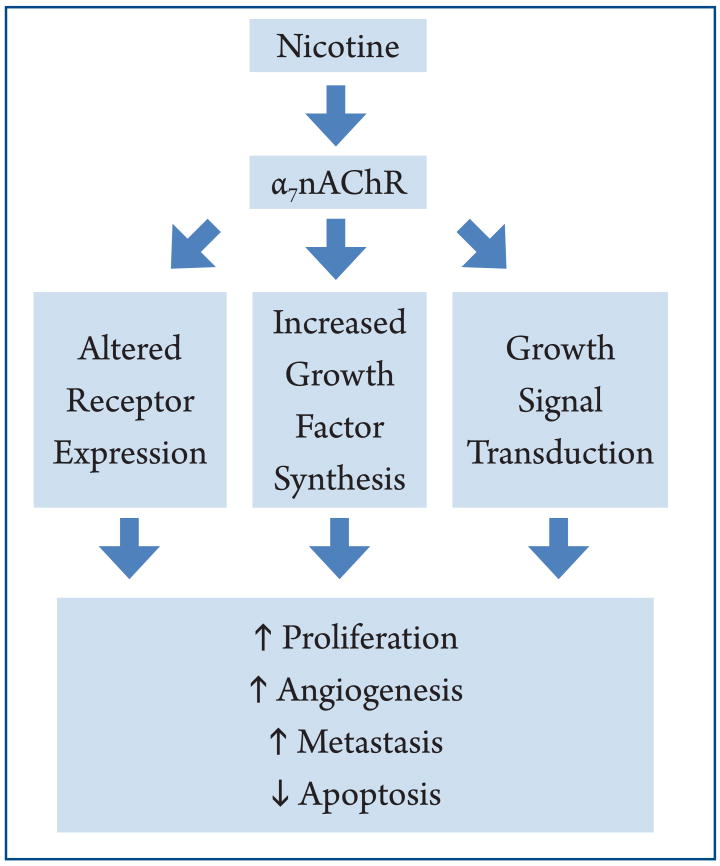
Long-term smoking is major risk factor for a variety of cancers, including those of the gastrointestinal (GI) tract. Historically, nicotine and its derivatives are well known for their role in addiction, and have more recently been documented for their carcinogenic role in a number of human cancers. The cellular and molecular pathways activated by nicotine mimic physiological and environmental carcinogenesis in cancers throughout the GI tract potentiating cancer growth and/or inducing the formation of cancer on their own. Thus, it is important to unlock the carcinogenic mechanisms induced by nicotine in these systems, and underscore nicotine's potential as an environmental hazard. This review outlines the specific pathways demonstrated to mediate nicotine's carcinogenic mechanism in the GI tract. The abundance of cell and animal evidence calls for increased epidemiologic and case-control evaluation of nicotine's role in cancer.
Conflict of interest statement
No potential conflict of interest.
Figures
References
-
- Organization WH. WHO Report on the Global Tobacco Epidemic, 2011. The mPower Package. 2011.
-
- Shin VY, Cho CH. Nicotine and gastric cancer. Alcohol. 2005;35:259–64. - PubMed
-
- Liu ES, Ye YN, Shin VY, et al. Cigarette smoke exposure increases ulcerative colitis-associated colonic adenoma formation in mice. Carcinogenesis. 2003;24:1407–13. - PubMed
-
- Tsiara S, Elisaf M, Mikhailidis DP. Influence of smoking on predictors of vascular disease. Angiology. 2003;54:507–30. - PubMed
Grants and funding
LinkOut - more resources
Full Text Sources