


Using mHealth technology to enhance self-monitoring for weight loss: a randomized trial
- PMID: 22704741
- PMCID: PMC3563396
- DOI: 10.1016/j.amepre.2012.03.016
Using mHealth technology to enhance self-monitoring for weight loss: a randomized trial
Abstract
Background: Self-monitoring for weight loss has traditionally been performed with paper diaries. Technologic advances could reduce the burden of self-monitoring and provide feedback to enhance adherence.
Purpose: To determine if self-monitoring diet using a PDA only or the PDA with daily tailored feedback (PDA+feedback [FB]), was superior to using a paper diary on weight loss and maintenance.
Design: The Self-Monitoring and Recording Using Technology (SMART) Trial was a 24-month randomized clinical trial; participants were randomly assigned to one of three self-monitoring groups.
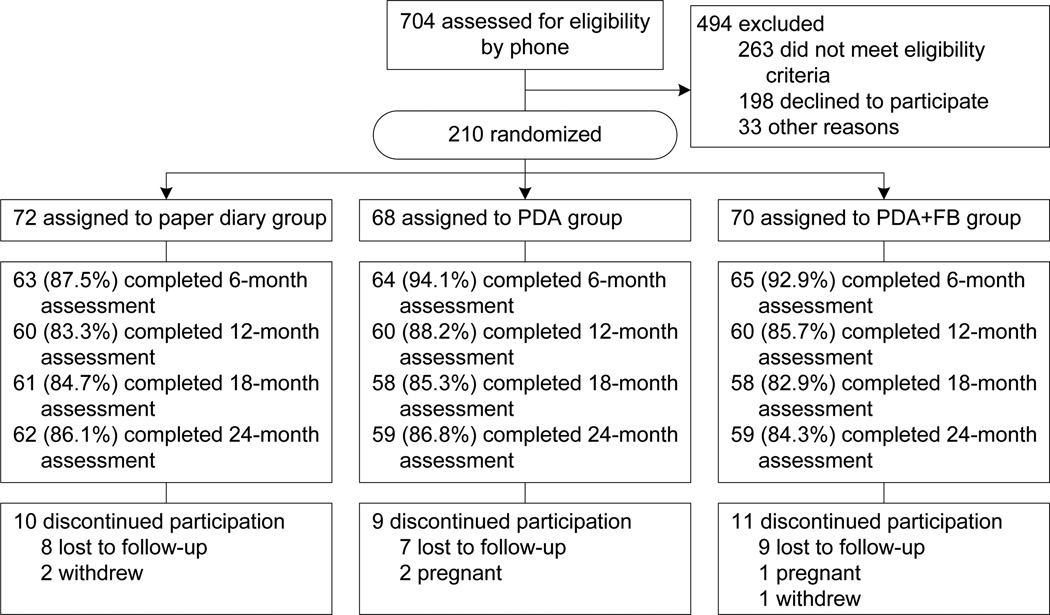
Setting/participants: From 2006 to 2008, a total of 210 overweight/obese adults (84.8% female, 78.1% white) were recruited from the community. Data were analyzed in 2011.
Intervention: Participants received standard behavioral treatment for weight loss that included dietary and physical activity goals, encouraged the use of self-monitoring, and was delivered in group sessions.
Main outcome measures: Percentage weight change at 24 months, adherence to self-monitoring over time.
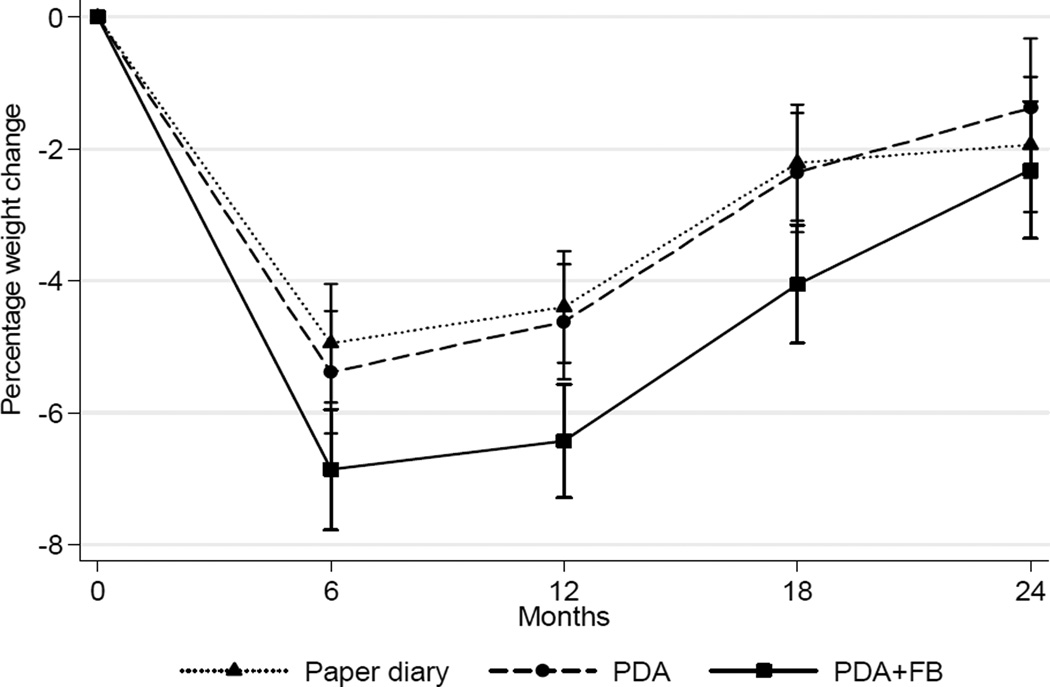
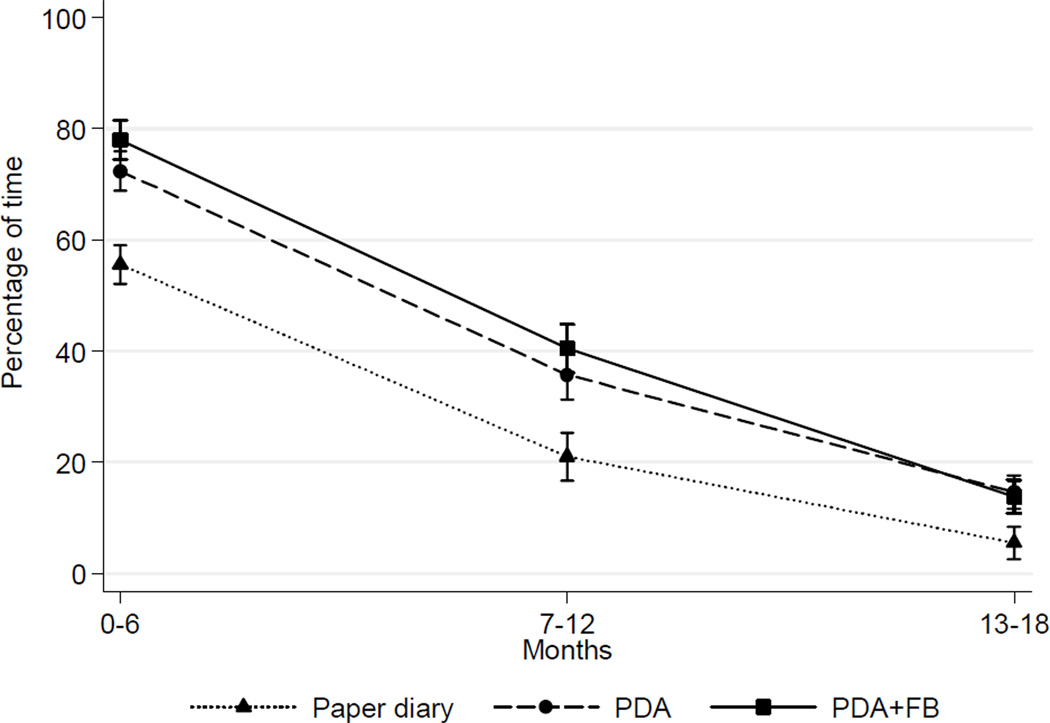
Results: Study retention was 85.6%. The mean percentage weight loss at 24 months was not different among groups (paper diary: -1.94%, 95% CI = -3.88, 0.01; PDA: -1.38%, 95% CI= -3.38, 0.62; PDA+FB: -2.32%, 95% CI= -4.29, -0.35); only the PDA+FB group (p=0.02) demonstrated a significant loss. For adherence to self-monitoring, there was a time-by-treatment group interaction between the combined PDA groups and the paper diary group (p=0.03) but no difference between PDA and PDA+FB groups (p=0.49). Across all groups, weight loss was greater for those who were adherent ≥60% versus <30% of the time (p<0.001).
Conclusions: PDA+FB use resulted in a small weight loss at 24 months; PDA use resulted in greater adherence to dietary self-monitoring over time. However, for sustained weight loss, adherence to self-monitoring is more important than the method used to self-monitor. A daily feedback message delivered remotely enhanced adherence and improved weight loss, which suggests that technology can play a role in improving weight loss.
Trial registration: This study is registered at clinicaltrials.gov NCT00277771.
Copyright © 2012 American Journal of Preventive Medicine. Published by Elsevier Inc. All rights reserved.
Figures

References
-
- Wadden TA, Butryn ML, Wilson C. Lifestyle modification for the management of obesity. Gastroenterology. 2007;132:226–2238. - PubMed
-
- Wadden TA, Butryn ML, Byrne KJ. Efficacy of lifestyle modification for long-term weight control. Obes Res. 2004;12(suppl):S151–S162. - PubMed
-
- Ryan DH, Kushner R. The State of Obesity and Obesity Research. JAMA. 2010;304(16):1835–1836. - PubMed
-
- Wing RR. Behavioral approaches to the treatment of obesity. In: Bray GA, Bourchard C, James WPT, editors. Handbook of obesity: Clinical applications. 2nd ed. New York: Marcel Dekker; 2004. pp. 147–167.
