


Genetic bioaugmentation as an effective method for in situ bioremediation: functionality of catabolic plasmids following conjugal transfers
- PMID: 22705839
- PMCID: PMC3476876
- DOI: 10.4161/bioe.20551
Genetic bioaugmentation as an effective method for in situ bioremediation: functionality of catabolic plasmids following conjugal transfers
Abstract
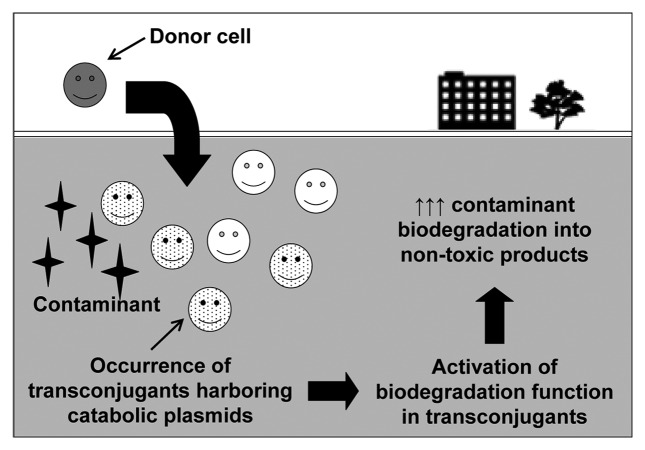
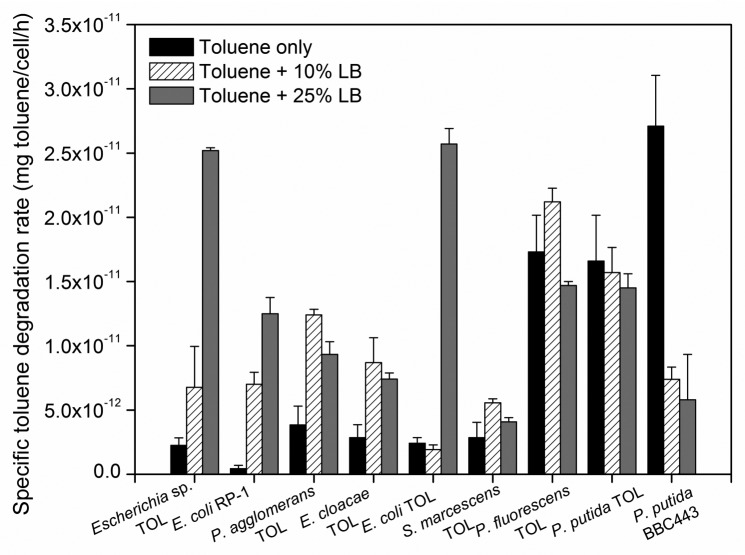
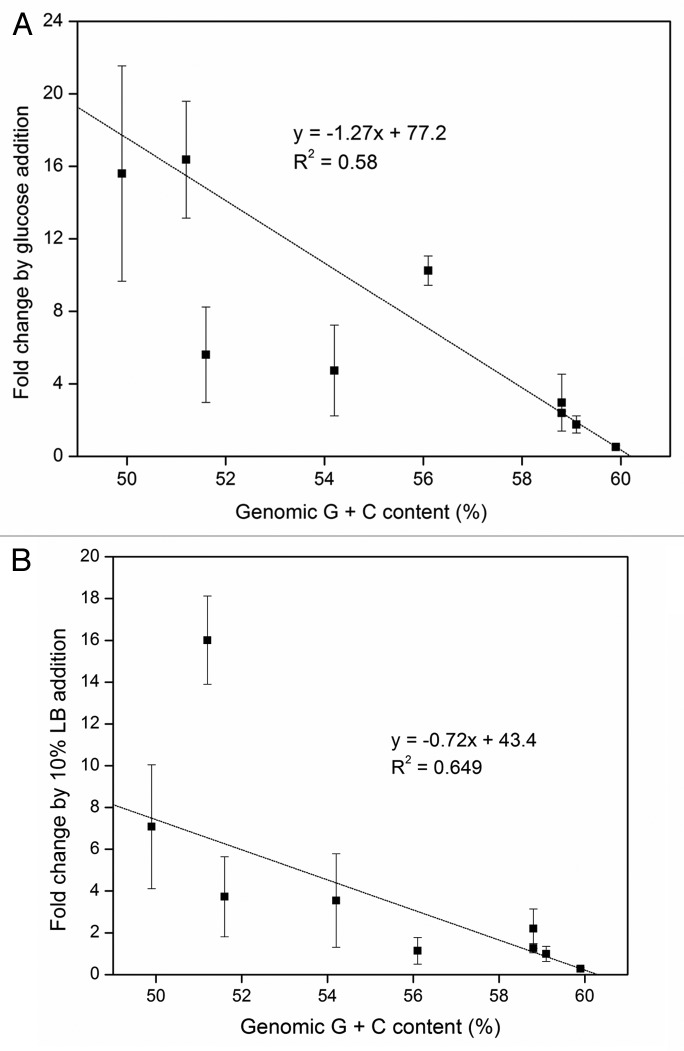
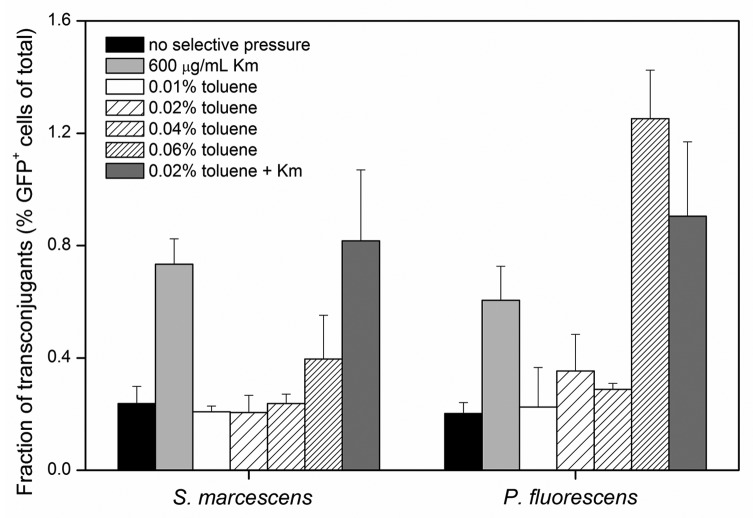
Genetic bioaugmentation is an in situ bioremediation method that stimulates horizontal transfer of catabolic plasmids between exogenous donor cells and indigenous bacteria to increase the biodegradation potential of contaminants. A critical outcome of genetic bioaugmentation is the expression of an active catabolic phenotype upon plasmid conjugation. Using a pWW0-derivative TOL plasmid, we showed that certain genetic characteristics of the recipient bacteria, including genomic guanine-cytosine (G + C) content and phylogeny, may limit the expression of the transferred catabolic pathway. However, such genetic limitations observed in transconjugants could be overcome by the presence of an additional carbon source. Glucose and Luria-Bertani broth were shown to enhance the toluene degradation rates of transconjugants; these enhancement effects were dependent on transconjugant genomic G + C contents. Based on these observations, thorough genetic characterization of the indigenous microbial community in the contaminated environment of interest may provide a predictive tool for assessing the success of genetic bioaugmentation.
Figures
Comment in
- Ikuma K, Gunsch CK. Functionality of the TOL plasmid under varying environmental conditions following conjugal transfer. Appl Microbiol Biotechnol. 2012 doi: 10.1007/s00253-012-3949-8. doi: 10.1007/s00253-012-3949-8
References
Publication types
MeSH terms
Substances
LinkOut - more resources
Full Text Sources
