


Dairy foods and osteoporosis: an example of assessing the health-economic impact of food products
- PMID: 22707061
- PMCID: PMC3536961
- DOI: 10.1007/s00198-012-1998-6
Dairy foods and osteoporosis: an example of assessing the health-economic impact of food products
Abstract
Osteoporosis has become a major health concern, carrying a substantial burden in terms of health outcomes and costs. We constructed a model to quantify the potential effect of an additional intake of calcium from dairy foods on the risk of osteoporotic fracture, taking a health economics perspective.
Introduction: This study seeks, first, to estimate the impact of an increased dairy consumption on reducing the burden of osteoporosis in terms of health outcomes and costs, and, second, to contribute to a generic methodology for assessing the health-economic outcomes of food products.
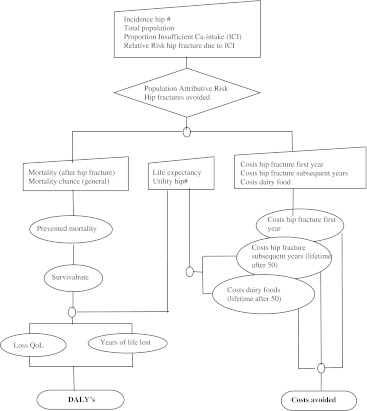
Methods: We constructed a model that generated the number of hip fractures that potentially can be prevented with dairy foods intakes, and then calculated costs avoided, considering the healthcare costs of hip fractures and the costs of additional dairy foods, as well as the number of disability-adjusted life years (DALYs) lost due to hip fractures associated with low nutritional calcium intake. Separate analyses were done for The Netherlands, France, and Sweden, three countries with different levels of dairy products consumption.
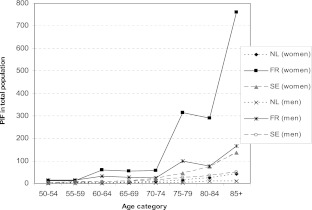
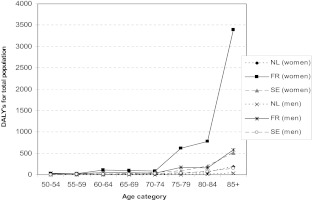
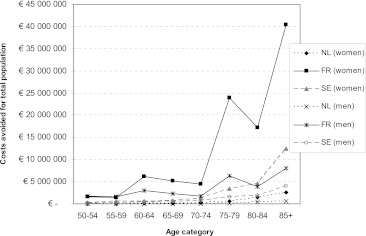
Results: The number of hip fractures that may potentially be prevented each year with additional dairy products was highest in France (2,023), followed by Sweden (455) and The Netherlands (132). The yearly number of DALYs lost was 6,263 for France, 1,246 for Sweden, and 374 for The Netherlands. The corresponding total costs that might potentially be avoided are about 129 million, 34 million, and 6 million Euros, in these countries, respectively.
Conclusions: This study quantified the potential nutrition economic impact of increased dairy consumption on osteoporotic fractures, building connections between the fields of nutrition and health economics. Future research should further collect longitudinal population data for documenting the net benefits of increasing dairy consumption on bone health and on the related utilization of healthcare resources.
Figures
References
-
- Steijns JM. Dairy products and health: focus on their constituents or on the matrix? Int Dairy J. 2008;18:425–435. doi: 10.1016/j.idairyj.2007.11.008. - DOI
-
- Gracia A, Albisu LM. Food consumption in the European Union: main determinants and country differences. Agribusiness. 2001;17:469–488. doi: 10.1002/agr.1030. - DOI
-
- Hjartåker A, Lagiou A, Slimani N, Lund E, Chirlaque MD, Vasilopoulou E, Zavitsanos X, Berrino F, Sacerdote C, Ocke MC, Peeters PH, Engeset D, Skeie G, Aller A, Amiano P, Berglund G, Nilsson S, McTaggart A, Spencer EA, Overvad K, Tjonneland A, Clavel-Chapelon F, Linseisen J, Schulz M, Hemon B, Riboli E. Consumption of dairy products in the European Prospective Investigation into Cancer and Nutrition (EPIC) cohort: data from 35955 24-hour dietary recalls in 10 European countries. Public Health Nutr. 2002;5:1259–1271. doi: 10.1079/PHN2002403. - DOI - PubMed
-
- Elwood PC, Givens DI, Beswick AD, Fehily AM, Pickering JE, Gallacher J. The survival advantage of milk and dairy consumption: an overview of evidence from cohort studies of vascular diseases, diabetes and cancer. J Am Coll Nutr. 2008;27:723S–734S. - PubMed
Publication types
MeSH terms
Substances
LinkOut - more resources
Full Text Sources
Medical
