


Disentangling input and output-related components of spatial neglect
- PMID: 22707937
- PMCID: PMC3374575
- DOI: 10.3389/fnhum.2012.00176
Disentangling input and output-related components of spatial neglect
Abstract
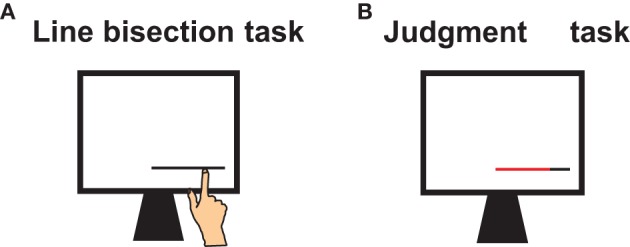
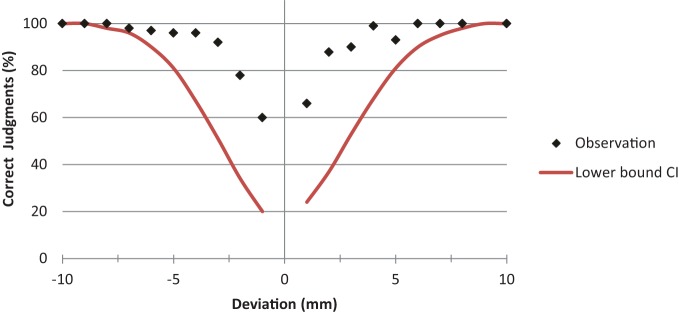
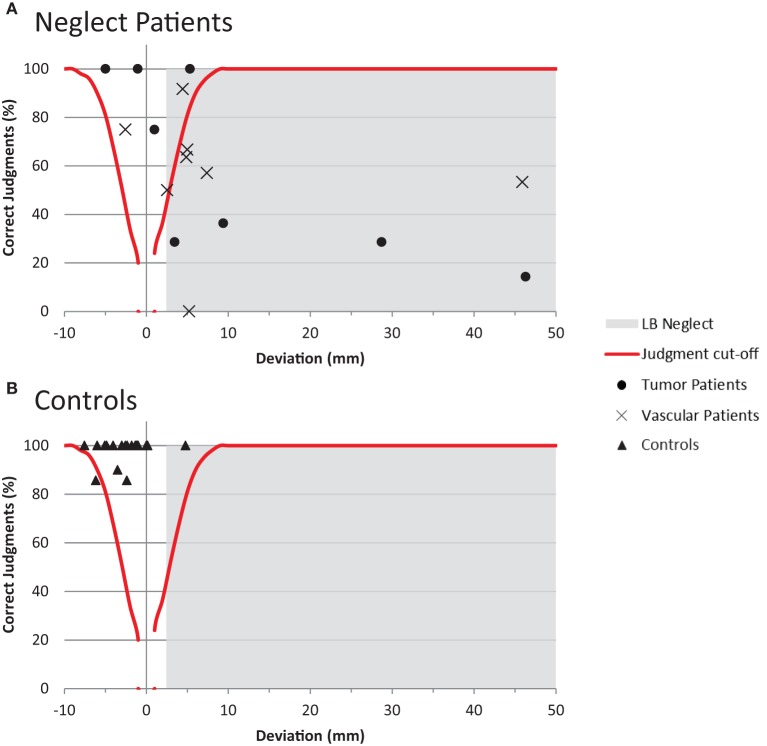
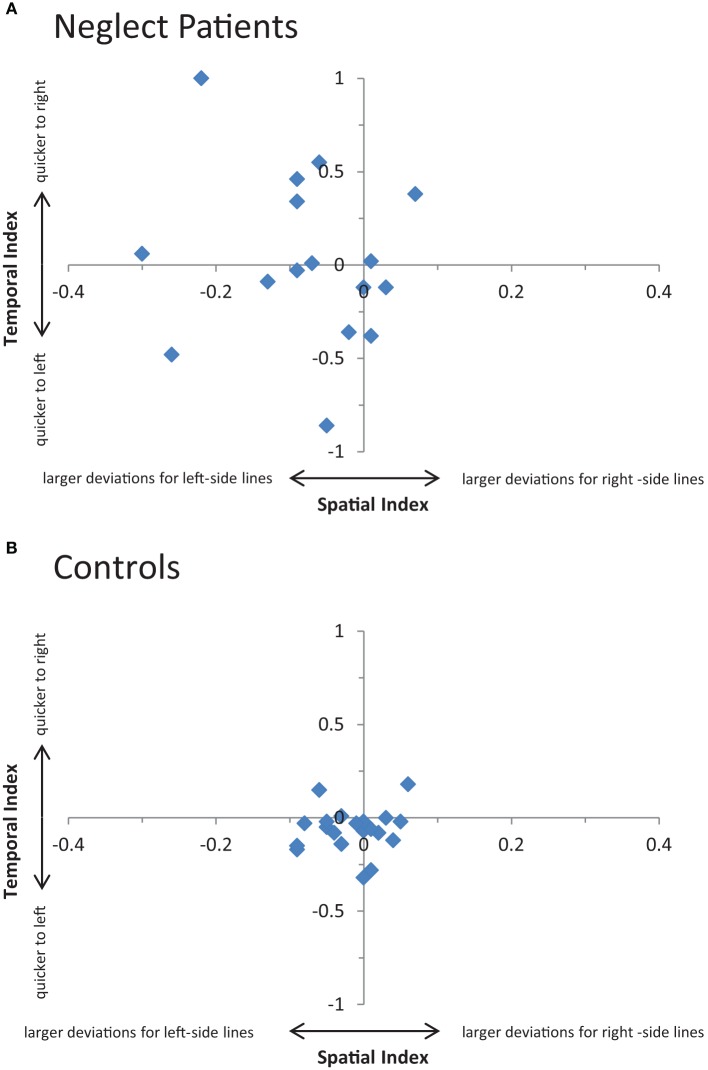
Spatial neglect is a heterogeneous disorder with a multitude of manifestations and subtypes. Common clinical paper and pencil neglect tests fail to differentiate between these subtypes. For example, neglect patients typically bisect lines to the right. This bias can be caused by an underestimation of the left half of the line (input-related deficit), by the failure to direct actions toward the left side of space (output-related deficit), or by a mixture of these impairments. To disentangle these impairments, we used a test consisting of a line bisection task on a touch screen monitor (manual motor task) and the subsequent judgment of one's own bisection performance (visual perceptual task). It was hypothesized that patients with mainly output-related neglect should be better able to recognize their misbisected lines than patients with purely input-related neglect. In a group of 16 patients suffering from spatial neglect after right brain damage, we found that patients were three times more likely to suffer from a predominantly input-related than from an output-related subtype. The results thus suggest that neglect is typically an input-related impairment. Additional analysis of the line bisection task revealed that temporal (slowness in initiation and execution of contralateral movements) and spatial (insufficient movement amplitude toward the contralesional side) aspects of output-related neglect were mutually unrelated. This independence raises the possibility that a fine-grained differentiation of output-related neglect is required. That is, impairments in lateralized temporal and spatial aspects of movements may underlie different neglect subtypes.
Keywords: attention; motor neglect; neglect subtype; perceptual neglect; proof of concept; rehabilitation; spatial neglect; stroke.
Figures
References
-
- Azouvi P., Samuel C., Louis-Dreyfus A., Bernati T., Bartolomeo P., Beis J. M., Chokron S., Leclercq M., Marchal F., Martin Y., de Montety G., Olivier S., Perennou D., Pradat-Diehl P., Prairial C., Rode G., Sieroff E., Wiart L., Rousseaux M. (2002). Sensitivity of clinical and behavioural tests of spatial neglect after right hemisphere stroke. J. Neurol. Neurosurg. Psychiatry 73, 160–166 10.1136/jnnp.73.2.160 - DOI - PMC - PubMed
-
- Barrett A. M., Burkholder S. (2006). Monocular patching in subjects with right-hemisphere stroke affects perceptual-attentional bias. J. Rehabil. Res. Dev. 43, 337–345 - PubMed
LinkOut - more resources
Full Text Sources
