


Correlation between Hamstring Flexor Power Restoration and Functional Performance Test: 2-Year Follow-Up after ACL Reconstruction Using Hamstring Autograft
- PMID: 22708113
- PMCID: PMC3373998
- DOI: 10.5792/ksrr.2012.24.2.113
Correlation between Hamstring Flexor Power Restoration and Functional Performance Test: 2-Year Follow-Up after ACL Reconstruction Using Hamstring Autograft
Abstract
Purpose: To evaluate the restoration of the flexor power and the correlation between the flexor power and functional performance tests (FPTs) after anterior cruciate ligament (ACL) reconstruction with hamstring autograft.
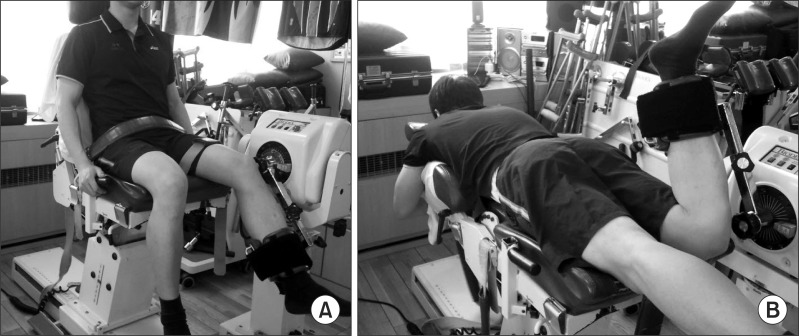
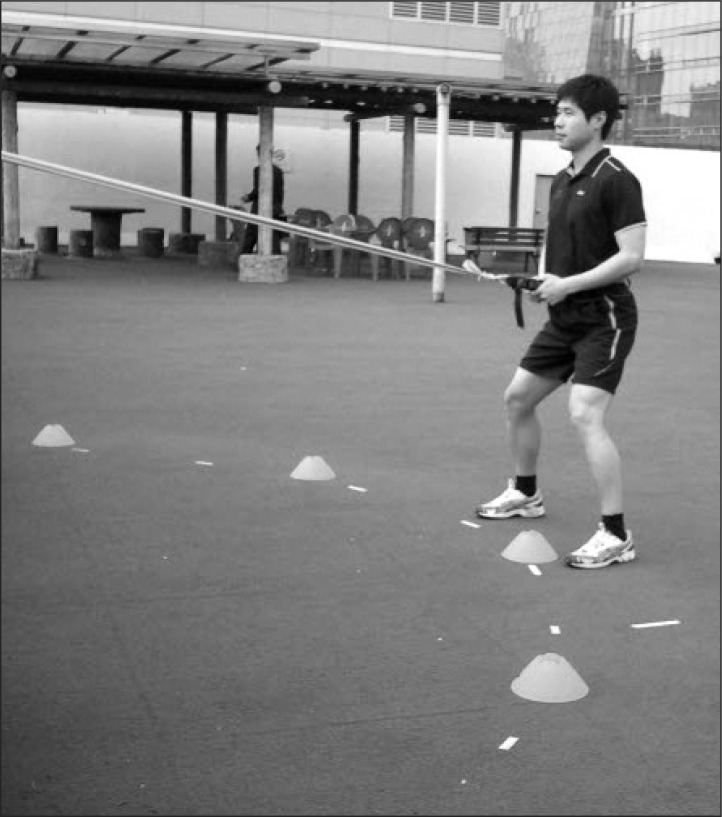
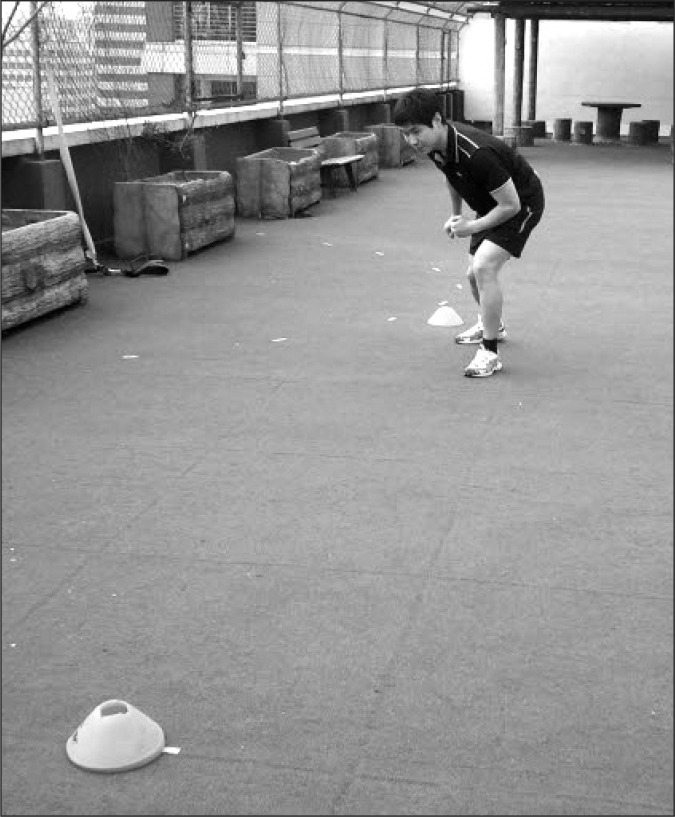
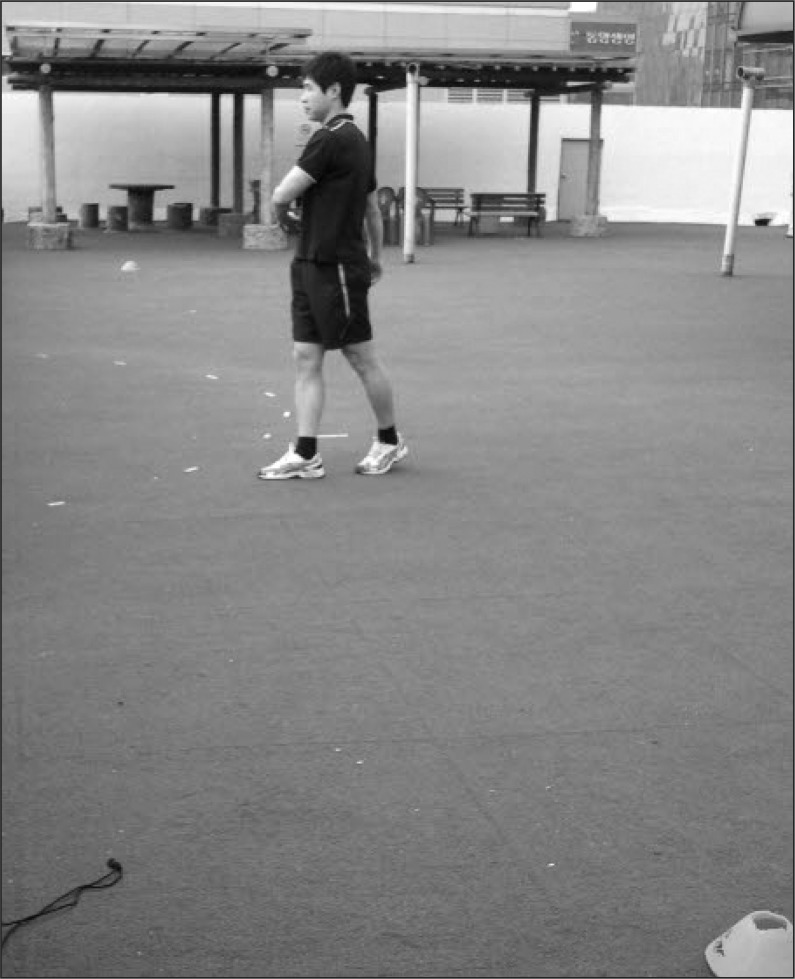
Materials and methods: Twenty-three men, who underwent ACL reconstruction with hamstring autograft, were evaluated using Lysholm, Subjective IKDC, Tegner activity score, isokinetic flexion and hyperflexion power test, and the FPTs at 1 and 2-year follow-up. We analyzed the mean change from 1 to 2 year and the correlation between both the flexion and hyperflexion power deficit with the FPTs at each follow-up.
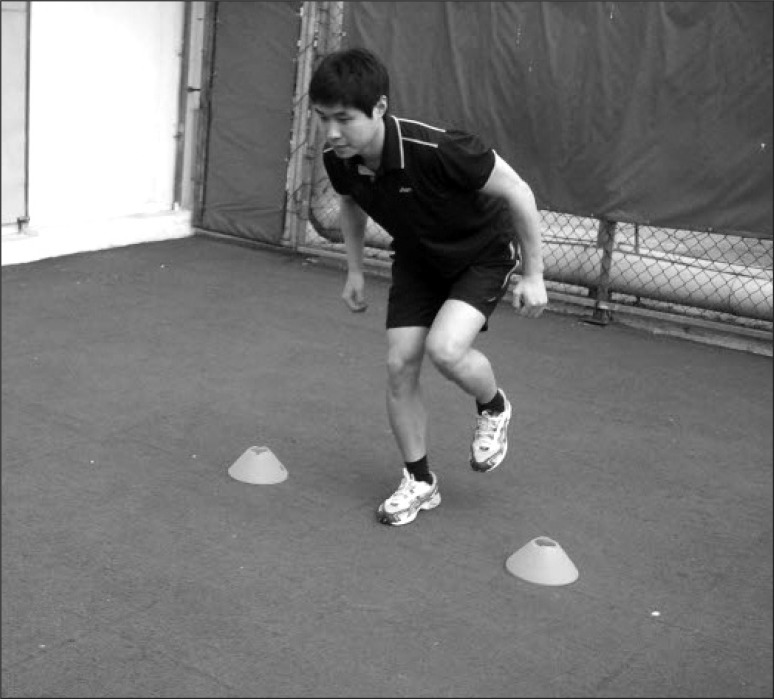
Results: Mean age of the patients was 30.9 years (range, 19 to 44). Tegner activity score was significantly increased from 5.7 to 6.3 (p=.010). Hyperflexion power of the involved knee deficits significantly decreased at 2 year follow-up compared with 1 year (p<.001). There was a correlation between the flexor power deficit and the co-contraction, carioca, and involved one-legged hop test at each follow-up. However, no significant correlations were revealed between the hyperflexion power deficit and the FPTs.
Conclusions: Hyperflexion power deficit after ACL reconstruction with the hamstring autograft decreased at 2 year follow-up compared to 1 year and does not affect the results of the FPTs.
Keywords: Anterior cruciate ligament reconstruction; Flexion power; Functional performance test; Hamstring autograft; Hyperflexion.
Figures
References
-
- Kannus P. Ratio of hamstring to quadriceps femoris muscles' strength in the anterior cruciate ligament insufficient knee. Relationship to long-term recovery. Phys Ther. 1988;68:961–965. - PubMed
-
- Moore JR, Wade G. Prevention of anterior cruciate ligament injuries. NSCA Journal. 1989;11:35–40.
-
- Marder RA, Raskind JR, Carroll M. Prospective evaluation of arthroscopically assisted anterior cruciate ligament reconstruction. Patellar tendon versus semitendinosus and gracilis tendons. Am J Sports Med. 1991;19:478–484. - PubMed
-
- Wojtys EM, Huston LJ. Longitudinal effects of anterior cruciate ligament injury and patellar tendon autograft reconstruction on neuromuscular performance. Am J Sports Med. 2000;28:336–344. - PubMed
-
- Noyes FR, Sonstegard DA. Biomechanical function of the pes anserinus at the knee and the effect of its transplantation. J Bone Joint Surg Am. 1973;55:1225–1241. - PubMed
LinkOut - more resources
Full Text Sources