


Neural correlates of socioeconomic status in the developing human brain
- PMID: 22709401
- PMCID: PMC6554027
- DOI: 10.1111/j.1467-7687.2012.01147.x
Neural correlates of socioeconomic status in the developing human brain
Abstract
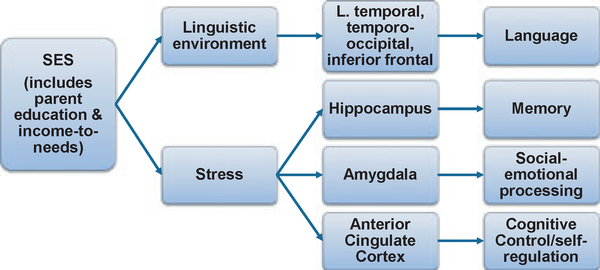
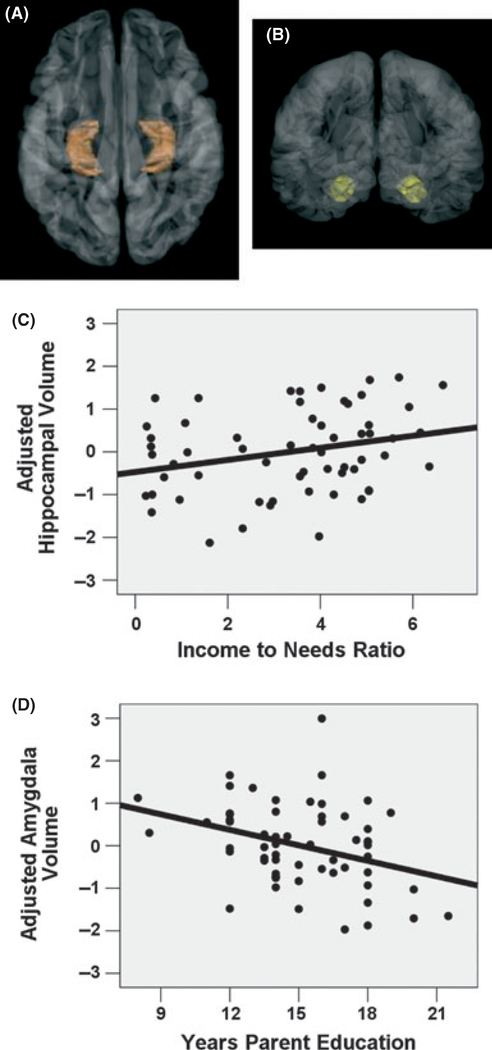
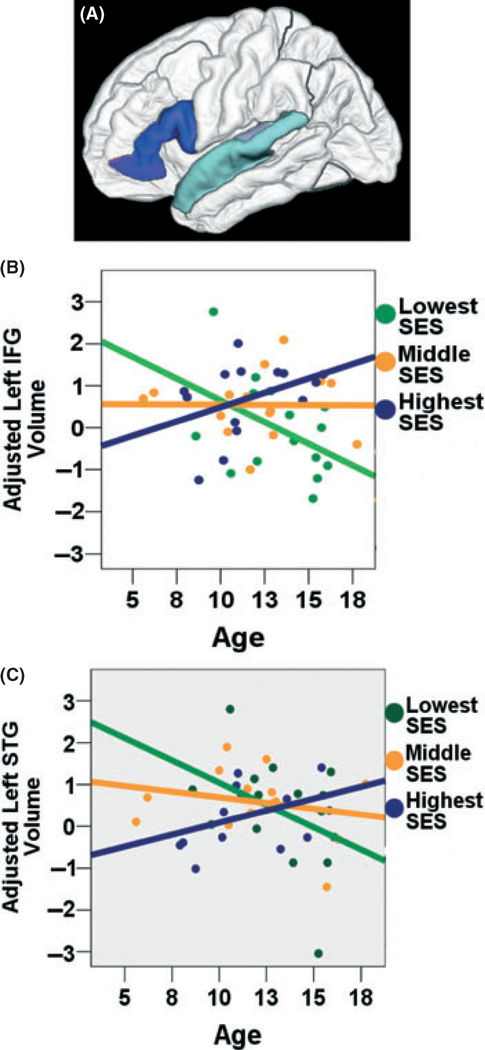
Socioeconomic disparities in childhood are associated with remarkable differences in cognitive and socio-emotional development during a time when dramatic changes are occurring in the brain. Yet, the neurobiological pathways through which socioeconomic status (SES) shapes development remain poorly understood. Behavioral evidence suggests that language, memory, social-emotional processing, and cognitive control exhibit relatively large differences across SES. Here we investigated whether volumetric differences could be observed across SES in several neural regions that support these skills. In a sample of 60 socioeconomically diverse children, highly significant SES differences in regional brain volume were observed in the hippocampus and the amygdala. In addition, SES × age interactions were observed in the left superior temporal gyrus and left inferior frontal gyrus, suggesting increasing SES differences with age in these regions. These results were not explained by differences in gender, race or IQ. Likely mechanisms include differences in the home linguistic environment and exposure to stress, which may serve as targets for intervention at a time of high neural plasticity.
© 2012 Blackwell Publishing Ltd.
Figures
References
-
- Adams MJ (1990). Beginning to read: Thinking and learning about print. Cambridge, MA: MIT Press.
-
- Blair C, Granger D, & Peters Razza R (2005). Cortisol reactivity is positively related to executive function in preschool children attending Head Start. Child Development, 76 (3), 554–567. - PubMed
-
- Bradley RH, Corwyn RF, Burchinal M, McAdoo HP, & Garcia Coll C (2001). The home environments of children in the United States part II: Relations with behavioral development through age thirteen. Child Development, 72 (6), 1844–1867. - PubMed
-
- Bremner JD, Randall P, Vermetten E, Staib L, Bronen RA, Mazure C, Capelli S, McCarthy G, Innis RB, & Charney DS (1997). Magnetic resonance imaging-based measurement of hippocampal volume in posttraumatic stress disorder related to childhood physical and sexual abuse - a preliminary report. Biological Psychiatry, 41 (1), 23–32. - PMC - PubMed
-
- Brooks-Gunn J, & Duncan GJ (1997). The effects of poverty on children. Future of Children, 7 (2), 55–71. - PubMed
Publication types
MeSH terms
Grants and funding
LinkOut - more resources
Full Text Sources
