


Endogenous production of fibronectin is required for self-renewal of cultured mouse embryonic stem cells
- PMID: 22710062
- PMCID: PMC3582329
- DOI: 10.1016/j.yexcr.2012.06.009
Endogenous production of fibronectin is required for self-renewal of cultured mouse embryonic stem cells
Abstract
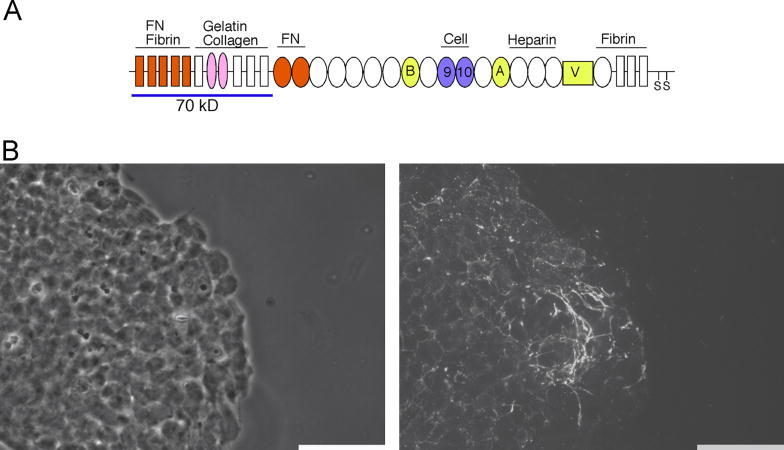
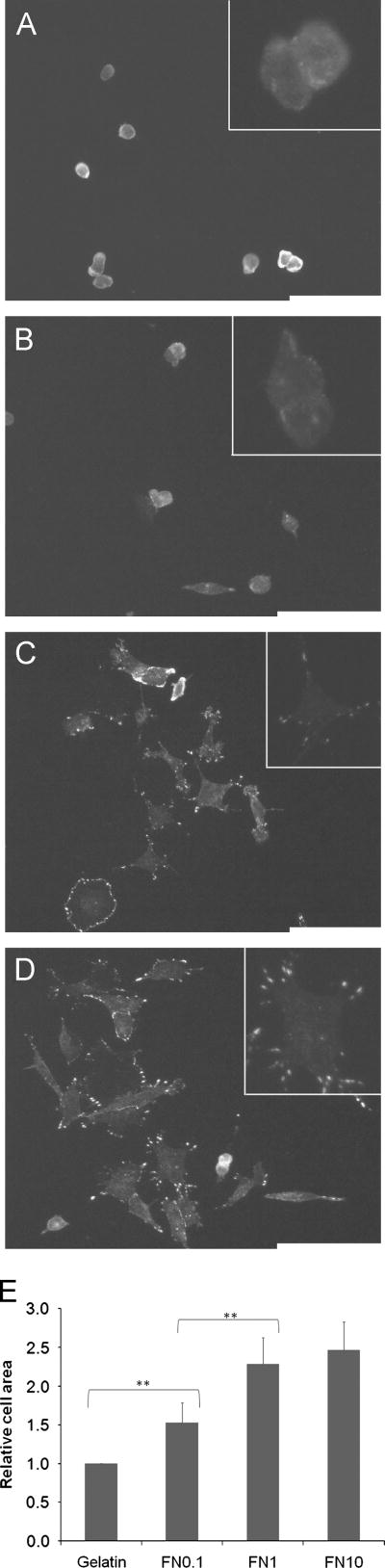
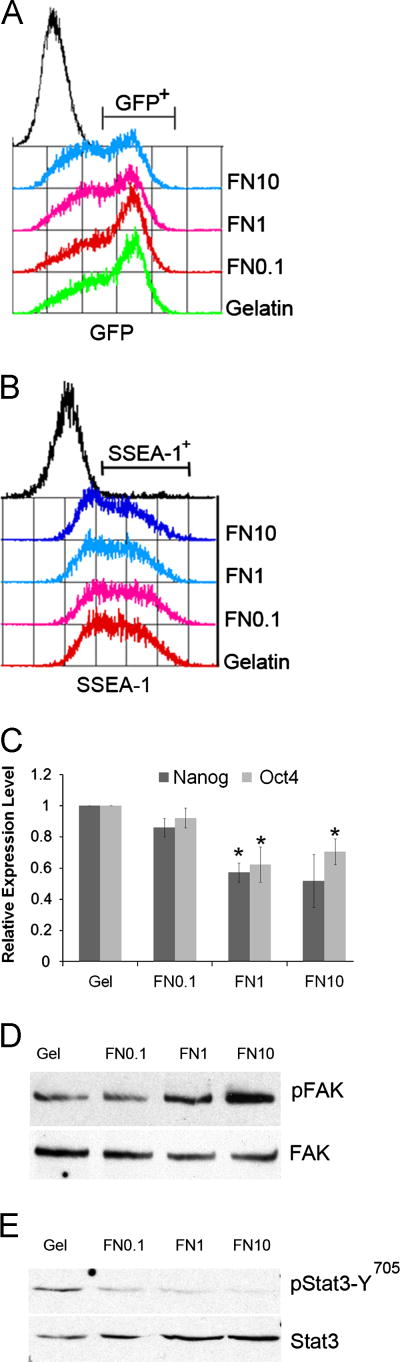
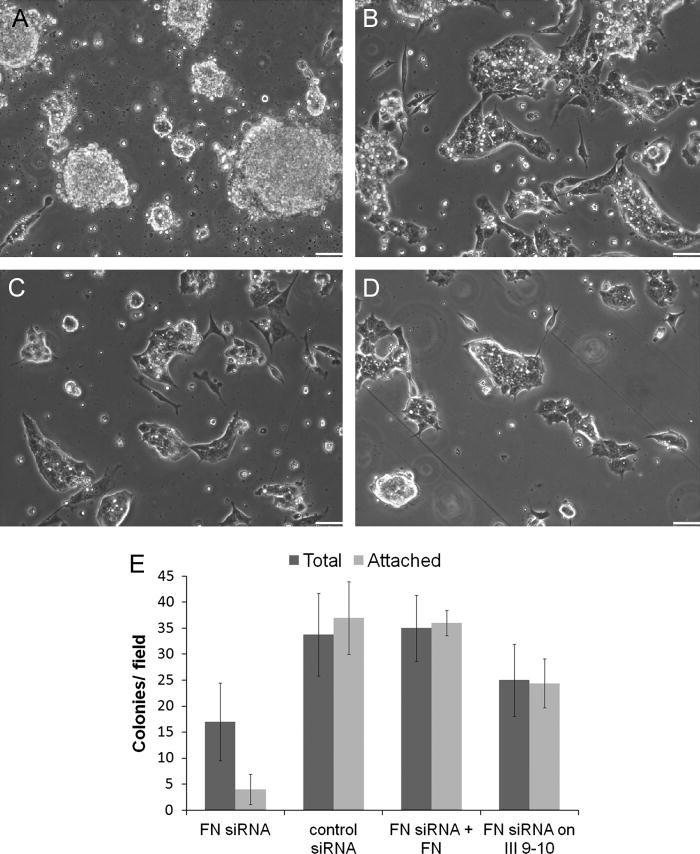
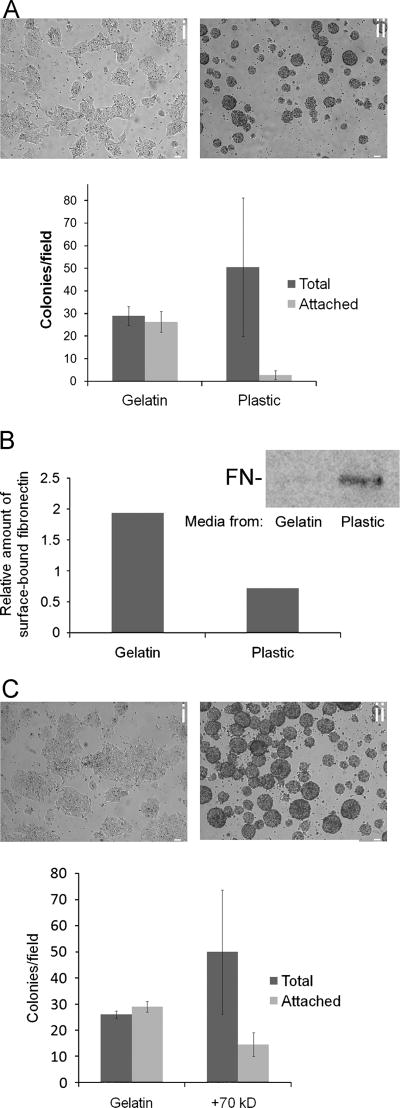
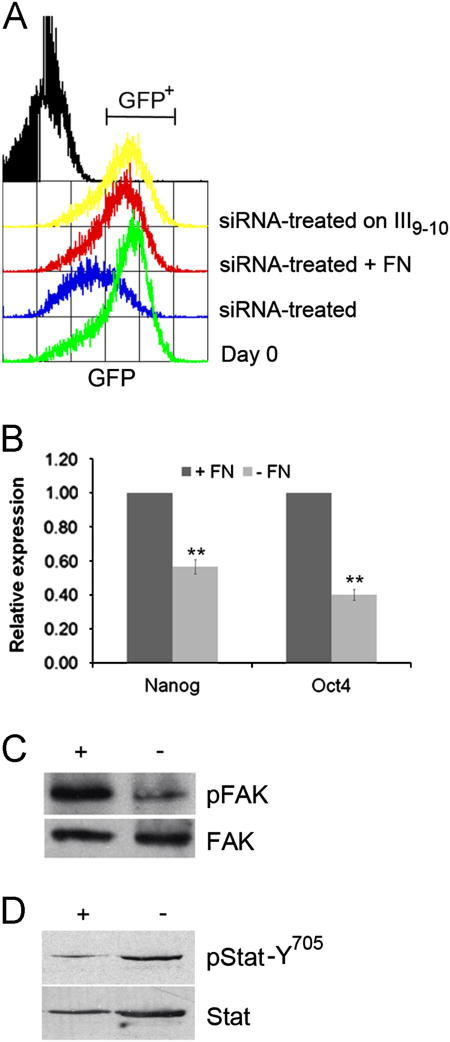
Pluripotent cells are attached to the extracellular matrix (ECM) as they make cell fate decisions within the stem cell niche. Here we show that the ubiquitous ECM protein fibronectin is required for self-renewal decisions by cultured mouse embryonic stem (mES) cells. Undifferentiated mES cells produce fibronectin and assemble a fibrillar matrix. Increasing the level of substrate fibronectin increased cell spreading and integrin receptor signaling through focal adhesion kinase, while concomitantly inducing the loss of Nanog and Oct4 self-renewal markers. Conversely, reducing fibronectin production by mES cells growing on a feeder-free gelatin substrate caused loss of cell adhesion, decreased integrin signaling, and decreased expression of self-renewal markers. These effects were reversed by providing the cells with exogenous fibronectin, thereby restoring adhesion to the gelatin substrate. Interestingly, mES cells do not adhere directly to the gelatin substrate, but rather adhere indirectly through gelatin-bound fibronectin, which facilitates self-renewal via its effects on cell adhesion. These results provide new insights into the mechanism of regulation of self-renewal by growth on a gelatin-coated surface. The effects of increasing or decreasing fibronectin levels show that self-renewal depends on an intermediate level of cell-fibronectin interactions. By providing cell adhesive signals that can act with other self-renewal factors to maintain mES cell pluripotency, fibronectin is therefore a necessary component of the self-renewal signaling pathway in culture.
Copyright © 2012 Elsevier Inc. All rights reserved.
Figures
References
-
- Smith AG. Embryo-derived stem cells: of mice and men. Annu Rev Cell Dev Biol. 2001;17:435–462. - PubMed
-
- Chambers I, Colbya D, Robertsona M, Nicholsa J, Leea S, Tweediea S, Smith A. Functional expression cloning of Nanog, a pluripotency sustaining factor in embryonic stem cells. Cell. 2003;113:643–655. - PubMed
-
- Mitsui K, Tokuzawa Y, Itoh H, Segaw K, Murakami M, Takahashi K, Maruyama M, Maeda M, Yamanaka S. The homeoprotein Nanog is required for maintenance of pluripotency in mouse epiblast and ES cells. Cell. 2003;113:631–642. - PubMed
Publication types
MeSH terms
Substances
Grants and funding
LinkOut - more resources
Full Text Sources
Other Literature Sources
Research Materials
Miscellaneous
