


Dahl salt-sensitive rats are protected against vascular defects related to diet-induced obesity
- PMID: 22710645
- PMCID: PMC3444144
- DOI: 10.1161/HYPERTENSIONAHA.112.191551
Dahl salt-sensitive rats are protected against vascular defects related to diet-induced obesity
Abstract
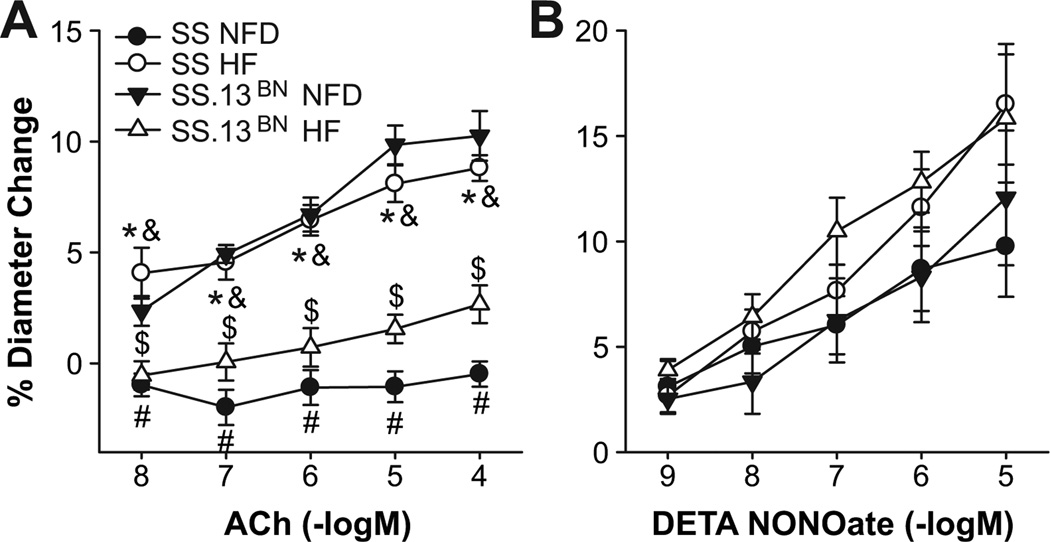
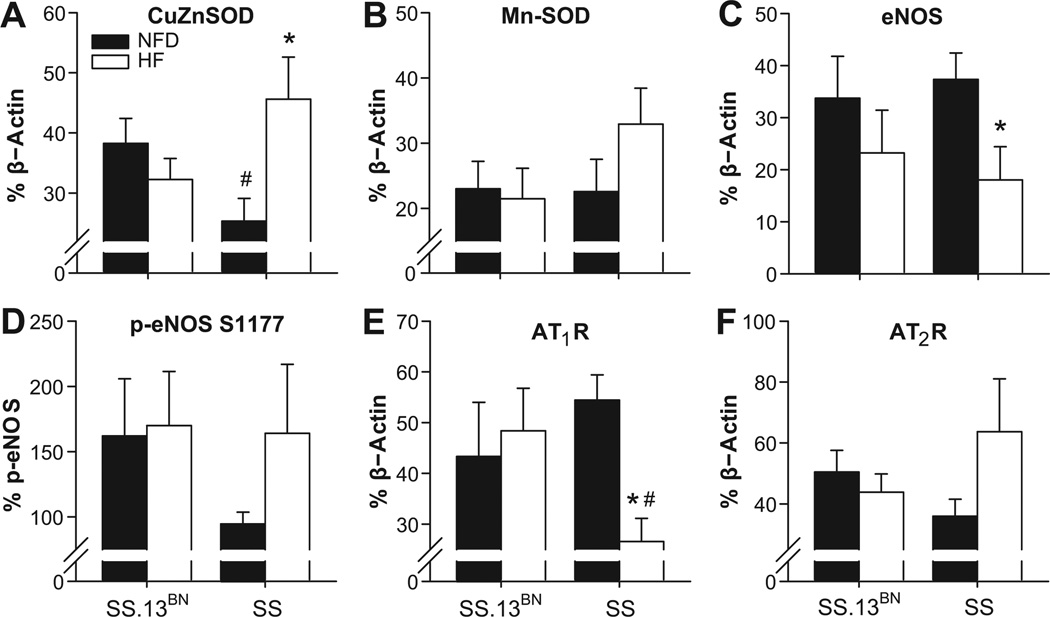
Obesity increases plasma renin activity and angiotensin II levels, leading to vascular damage, elevated blood pressure, diabetes mellitus, and renal damage. Because genetic deletion of crucial parts of the renin-angiotensin system protect against obesity-related cardiovascular defects, we hypothesized that Dahl salt-sensitive (SS) rats, a model of chronically low plasma renin activity and angiotensin II levels, would be protected against vascular defects during diet-induced obesity compared with SS.13(BN) consomic rats showing normal renin-angiotensin system regulation. We evaluated vascular function in middle cerebral arteries of SS or SS.13(BN) rats fed high-fat (45% kcal from fat) versus normal-fat diet for 15 to 20 weeks from weaning. Endothelium-dependent relaxation in response to acetylcholine (10(-8) to 10(-4) mol/L) was restored in middle cerebral arteries of high-fat SS rats versus normal-fat diet controls, whereas vasodilation to acetylcholine was dramatically reduced in high-fat SS 13(BN) rats versus normal-fat diet controls. These findings support the hypothesis that physiological levels of angiotensin II play an important role in maintaining normal vascular relaxation in cerebral arteries and suggest that the cerebral vasculature of the SS rat model is genetically protected against endothelial dysfunction in diet-induced obesity.
Figures

References
-
- Cassis LA, Marshall DE, Fettinger MJ, Rosenbluth B, Lodder RA. Mechanisms contributing to angiotensin II regulation of body weight. Am J Physiol. 1998;274:E867–E876. - PubMed
-
- Boustany CM, Bharadwaj K, Daugherty A, Brown DR, Randall DC, Cassis LA. Activation of the systemic and adipose renin-angiotensin system in rats with diet-induced obesity and hypertension. Am J Physiol Regul Integr Comp Physiol. 2004;287:R943–R949. - PubMed
-
- Engeli S, Bohnke J, Gorzelniak K, Janke J, Schling P, Bader M, Luft FC, Sharma AM. Weight loss and the renin-angiotensin-aldosterone system. Hypertension. 2005;45:356–362. - PubMed
-
- Rahmouni K, Correia ML, Haynes WG, Mark AL. Obesity-associated hypertension: new insights into mechanisms. Hypertension. 2005;45:9–14. - PubMed
Publication types
MeSH terms
Substances
Grants and funding
LinkOut - more resources
Full Text Sources
Medical
