Comparative Study
. 2012 Jun 1;12(2):71-100.
doi: 10.2165/11634300-000000000-00000.

Moxifloxacin safety: an analysis of 14 years of clinical data

Affiliations
Comparative Study

Moxifloxacin safety: an analysis of 14 years of clinical data

Paul M Tulkens et al. Drugs R D. .

Abstract

Background: Moxifloxacin, a fluoroquinolone antibiotic, is used for the treatment of respiratory tract, pelvic inflammatory disease, skin, and intra-abdominal infections. Its safety profile is considered favorable in most reviews but has been challenged with respect to rare but potentially fatal toxicities (e.g. hepatic, cardiac, or skin reactions).

Objective: To analyze and compare the safety profile of moxifloxacin versus comparators in the entire clinical database of the manufacturer.

Setting: Data on the valid-for-safety population from phase II-IV actively controlled studies (performed between 1996 and 2010) were analyzed. Studies were either double blind (n = 22 369) or open label (n = 7635) and included patients with indications that have been approved in at least one country [acute bacterial sinusitis, acute exacerbation of chronic bronchitis, community-acquired pneumonia, uncomplicated pelvic inflammatory disease, complicated and uncomplicated skin and skin structure infections, and complicated intra-abdominal infections] (n = 27 824) and patients with other indications (n = 2180), using the recommended daily dose (400 mg) and route of administration (oral, intravenous/oral, intravenous only). The analysis included patients at risk (age ≥65 years, diabetes mellitus, renal impairment, hepatic impairment, cardiac disorders, or body mass index <18 kg/m2). Patients with known contraindications were excluded from enrollment by study protocol design, but any patient having entered a study, even if inappropriately, was included in the analysis.

Main outcome measure: Crude incidences and relative risk estimates (Mantel-Haenszel analysis) of patients with any adverse event (AE), adverse drug reaction (ADR), serious AE (SAE), serious ADR (SADR), treatment discontinuation due to an AE or ADR, and fatal outcomes related to an AE or ADR.

Results: Overall incidence rates of AEs were globally similar in the moxifloxacin and comparator groups. By filtering the data for differences in disfavor of moxifloxacin (i) at ≥2.5% for events with an incidence ≥2.5% or at ≥2-fold for events with an incidence <2.5% in one or both groups and (ii) affecting ≥10 patients in either group, we observed slightly more (i) AEs in double-blind intravenous-only and open-label oral studies, (ii) SAEs in double-blind intravenous-only studies, (iii) ADRs and SADRs in open-label oral studies, (iv) SADRs in open-label intravenous/oral studies, and (v) premature discontinuation due to AEs in open-label intravenous-only studies. The actual numbers of SADRs (in all studies) were small, with clinically relevant differences noted only in intravenous/oral studies and mainly driven by 'gastrointestinal disorders' (15 versus 7 patients) and 'changes observed during investigations' (23 versus 7 patients [asymptomatic QT prolongation: 11 versus 4 patients in double-blind studies]). Analysis by comparator (including another fluoroquinolone) did not reveal medically relevant differences, even in patients at risk. Incidence rates of hepatic disorders, tendon disorders, clinical surrogates of QT prolongation, serious cutaneous reactions, and Clostridium difficile-associated diarrhea were similar with moxifloxacin and comparators.

Conclusion: The safety of moxifloxacin is essentially comparable to that of standard therapies for patients receiving the currently registered dosage and for whom contraindications and precautions of use (as in the product label) are taken into account.


Figures
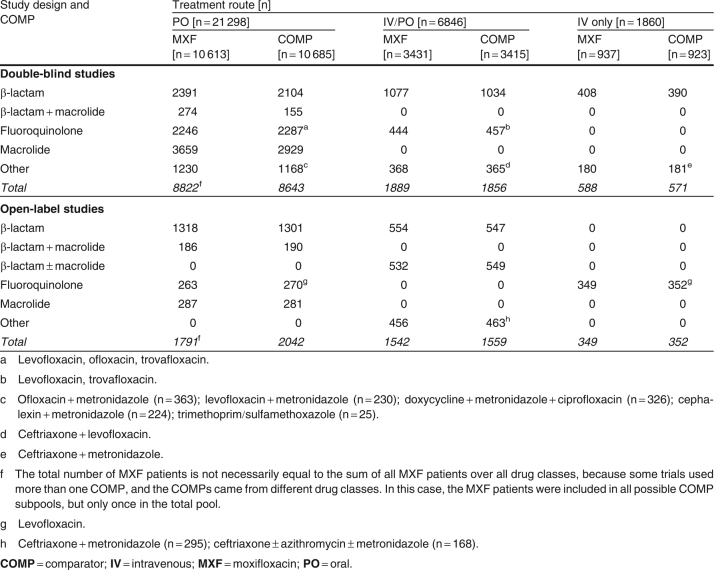
Table I
Table I
Distribution of patients valid for the safety analysis, stratified by route of administration (oral only; intravenous followed by oral [sequential]; intravenous only) and by comparator
Table II
Table II
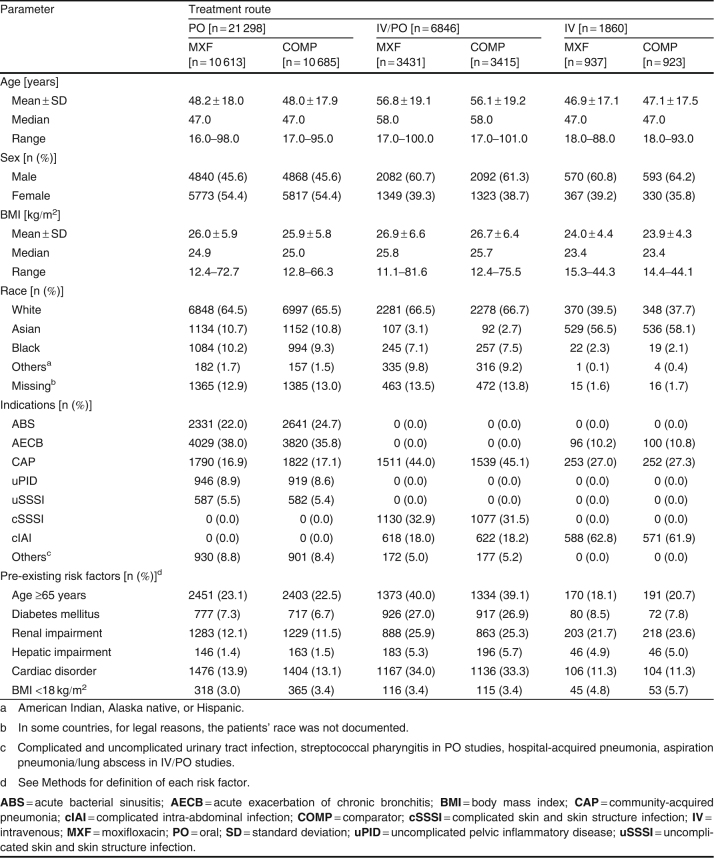
Demographic parameters of the patients valid for the safety analysis, stratified by route of administration (oral only; intravenous followed by oral [sequential]; intravenous only). See table SDC-II or further stratification according to study design (double blind versus open label)
Table III
Table III
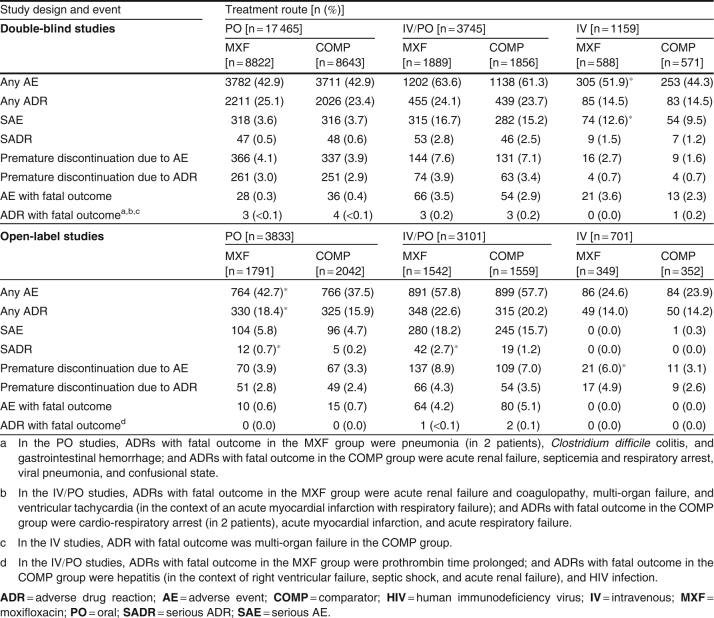
Summary of safety data for patients valid for the safety analysis, treated with moxifloxacin or a comparator and stratified by route of administration (oral only; intravenous followed by oral [sequential]; intravenous only) and by study design. An asterisk (*) indicates differences observed between treatment groups in disfavor of moxifloxacin that were ≥2.5% for events with an incidence ≥2.5% in both groups or ≥2-fold for events with an incidence <2.5% in one or both groups and for which the number of patients experiencing an event was ≥10 in either group
Table IV
Table IV
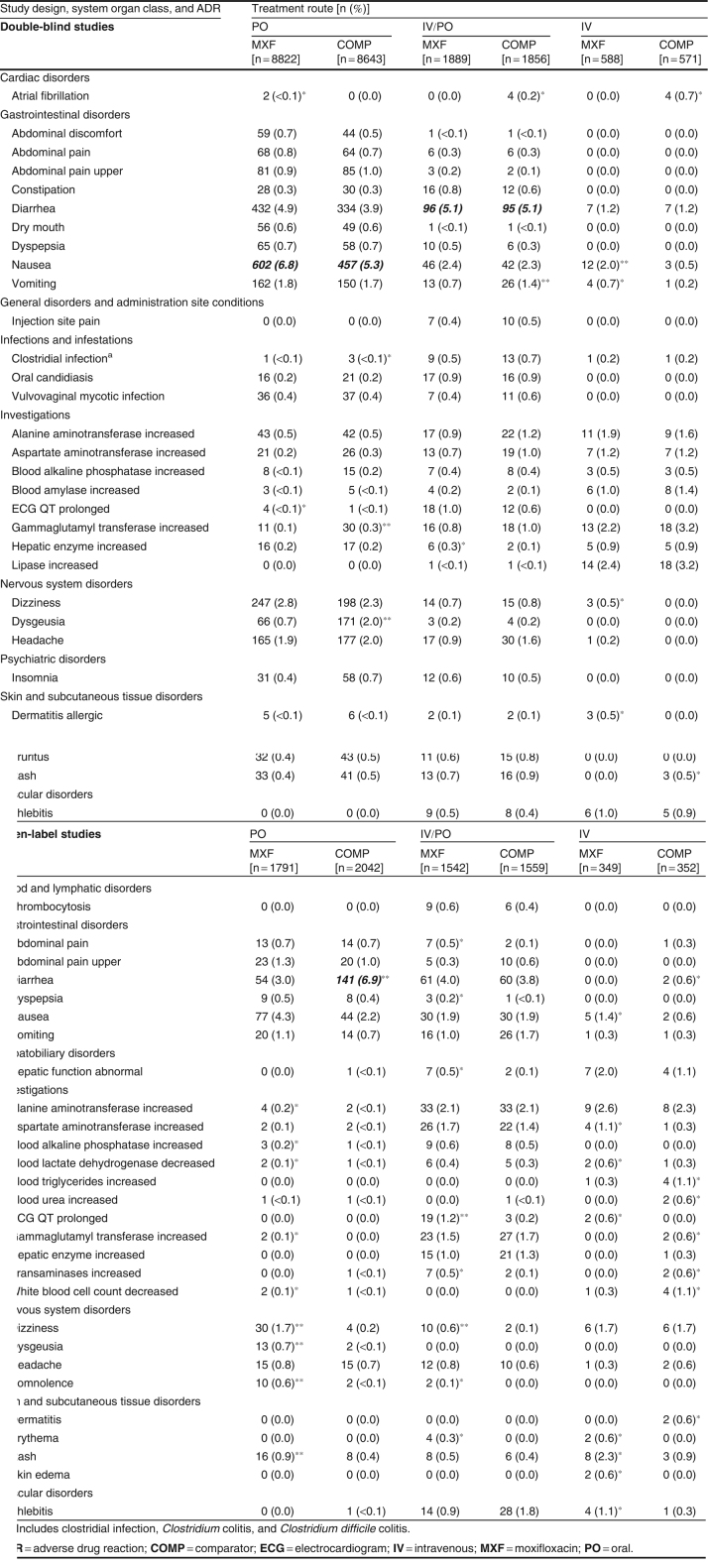
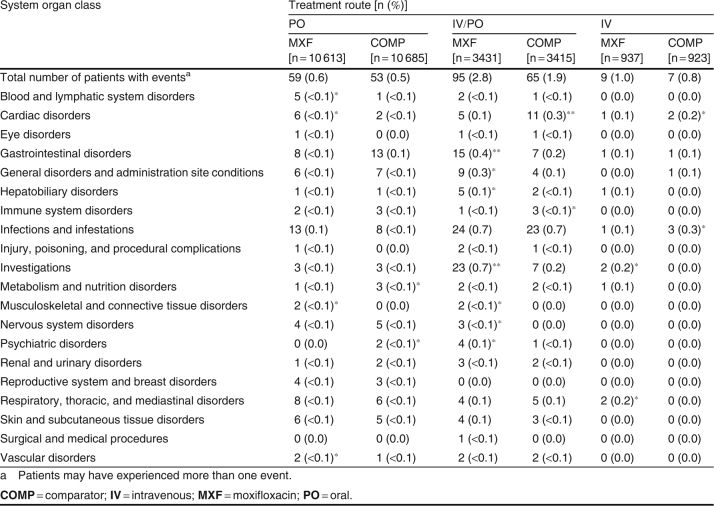
Adverse drug reactions occurring in either treatment group in ≧0.5% of patients valid for the safety analysis, treated with moxifloxacin or a comparator and stratified by route of administration (oral only; intravenous followed by oral [sequential]; intravenous only) and by study design (double blind, open label). Numbers in bold italic text correspond to events with an incidence ≥5% in either treatment group. A single asterisk (*) indicates differences observed between groups that were ≥2.5% for events with an incidence ≥2.5% in both groups or ≥2-fold for events with an incidence <2.5% in one or both groups (calculations were made using the number of patients [no rounding]; in the event of a null value for one treatment, only situations where ≥2 cases were observed in the other treatment group are indicated); the symbol is placed to the right of the value observed for the drug in disfavor. A double asterisk (**) indicates differences observed between treatment groups according to the same rule and where the number of patients experiencing an event was ≥10 in either group; the symbols are placed to the right of the value observed for the drug in disfavor
Table V
Table V
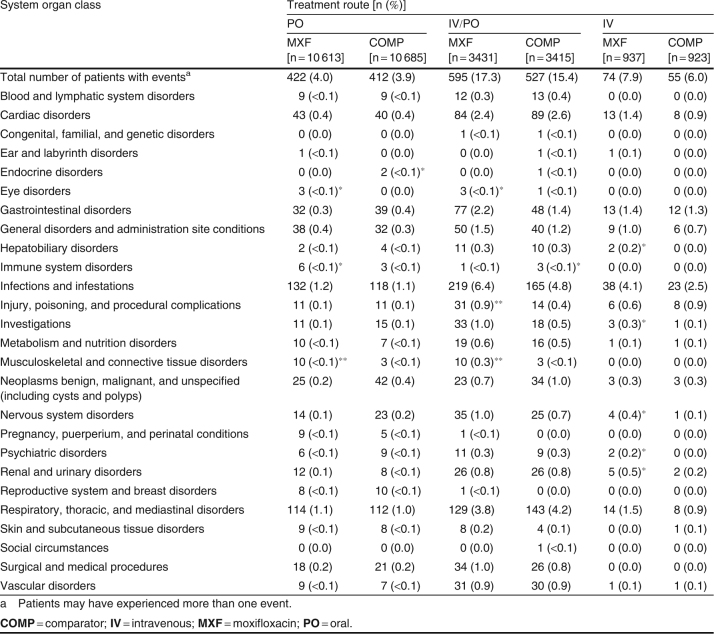
Serious adverse events presented by system organ class in patients valid for the safety analysis, treated with moxifloxacin or a comparator and stratified by route of administration (oral only; intravenous followed by oral [sequential]; intravenous only). A single asterisk (*) indicates differences observed between groups that were ≥2.5% for events with an incidence ≥2.5% in both groups or ≥2-fold for events with an incidence <2.5% in one or both groups (calculations were made using the number of patients [no rounding]; in the event of a null value for one treatment, only situations where ≥2 cases were observed in the other treatment group are indicated); the symbol is placed to the right of the value observed for the drug in disfavor. A double asterisk (**) indicates differences observed between treatment groups according to the same rule and where the number of patients experiencing an event was ≥10 in either group; the symbols are placed to the right of the value observed for the drug in disfavor
Table VI
Table VI
Serious adverse drug reactions presented by system organ class in patients valid for the safety analysis, treated with moxifloxacin or a comparator and stratified by route of administration (oral only; intravenous followed by oral [sequential]; intravenous only). A single asterisk (*) indicates differences observed between groups that were ≥2.5% for events with an incidence ≥2.5% in both groups or ≥2-fold for events with an incidence <2.5% in one or both groups (calculations were made using the number of patients [no rounding]; in the event of a null value for one treatment, only situations where ≥2 cases were observed in the other treatment group are indicated); the symbol is placed to the right of the value observed for the drug in disfavor. A double asterisk (**) indicates differences observed between treatment groups according to the same rule and where the number of patients experiencing an event was ≥10 in either group; the symbols are placed to the right of the value observed for the drug in disfavor
Table VII
Table VII
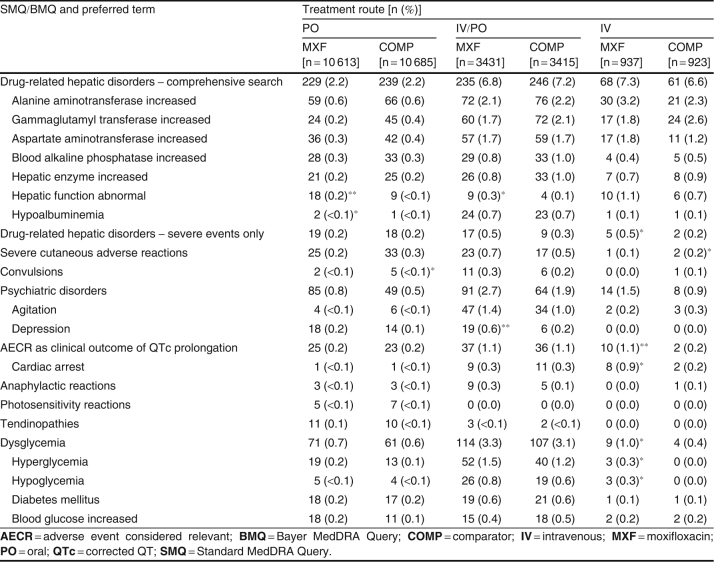
Incidence of selected treatment-emergent adverse events presented by Standard MedDRA Queries/Bayer MedDRA Queries and preferred terms in patients valid for the safety analysis, treated with moxifloxacin or a comparator and stratified by route of administration (oral only; intravenous followed by oral [sequential]; intravenous only). Data are limited to events with an incidence ≧0.5% in either group of patients. A single asterisk (*) indicates differences observed between groups that were ≥2.5% for events with an incidence ≥2.5% in both groups or ≥2-fold for events with an incidence <2.5% in one or both groups (calculations were made using the number of patients [no rounding]; in the event of a null value for one treatment, only situations where ≥2 cases were observed in the other treatment group are indicated); the symbol is placed to the right of the value observed for the drug in disfavor. A double asterisk (**) indicates differences observed between treatment groups according to the same rule and where the number of patients experiencing an event was ≥10 in either group; the symbols are placed to the right of the value observed for the drug in disfavor
Fig. 1
Fig. 1
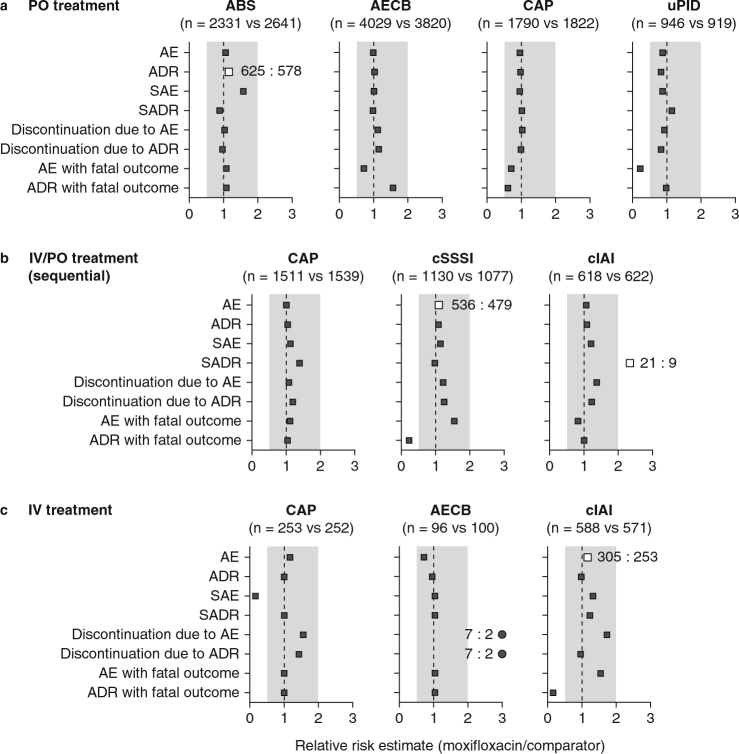
Relative risk estimates (moxifloxacin versus comparator) for adverse events from pooled data stratified according to indications (the most pertinent or most frequent ones). The data are substratified according to the route of administration approved or commonly used for the corresponding indication: (a) oral route; (b) intravenous route followed by oral route [sequential]; (c) intravenous route. The number of patients enrolled in each cohort (moxifloxacin versus the comparator) is shown at the top of each graph. Calculations were made using the Mantel–Haenszel method stratified by study, with a continuity correction of 0.1 in the event of a null value. The relative risk estimates are presented on a 0–3 linear scale (1 denotes no difference; values <1 and >1 denote a correspondingly lower and higher risk, respectively, associated with moxifloxacin treatment relative to the comparator). Values ≤3 are displayed as squares. Circles placed at the edge of the scale indicate that the actual value is >3 (the numbers of patients who received moxifloxacin versus the comparator are shown to the left of the circle). White symbols indicate values with a lower limit of the calculated 95% confidence interval >1, indicating a nominally significantly higher risk for moxifloxacin relative to the comparator (the number of patients in each group is shown to the right of the symbol). The light gray shaded area highlights the zone where the relative risk estimate (moxifloxacin/comparator) is between 0.5 and 2. ABS = acute bacterial sinusitis; ADR = adverse drug reaction; AE = adverse event; AECB = acute exacerbation of chronic bronchitis; CAP = community-acquired pneumonia; cIAI = complicated intra-abdominal infection; cSSSI = complicated skin and skin structure infection; IV = intravenous; PO = oral; SADR = serious ADR; SAE = serious AE; uPID = uncomplicated pelvic inflammatory disease.
Fig. 2
Fig. 2
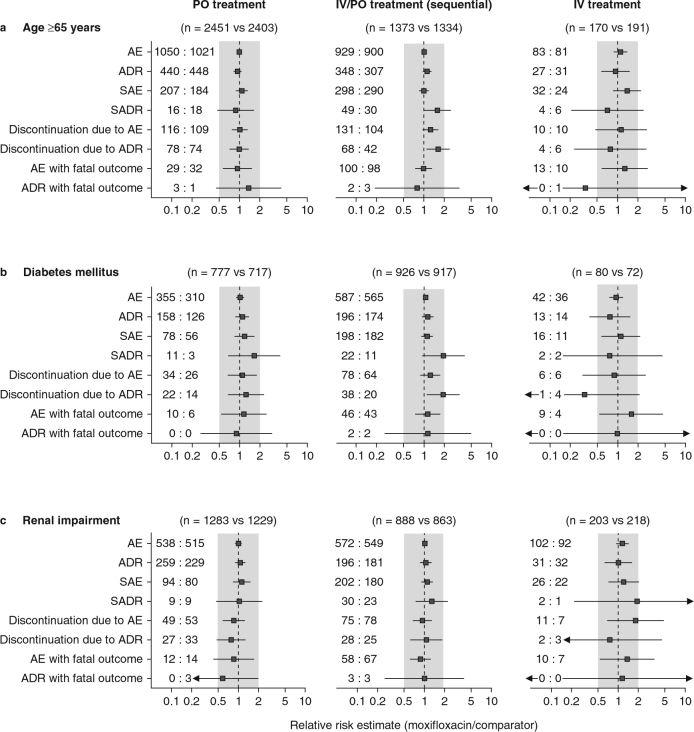
Relative risk estimates (moxifloxacin versus the comparator) for adverse events from pooled data on (a) elderly patients, (b) patients with diabetes mellitus, and (c) patients with renal impairment. The data are stratified by route of administration (oral only; intravenous followed by oral [sequential]; intravenous only).The number of patients enrolled in each subgroup (moxifloxacin versus the comparator) is shown at the top of each graph, and the numbers of patients with each of the recorded events are shown to the left of the corresponding symbol. Calculations were made using the Mantel–Haenszel method (with the 95% confidence interval) stratified by study, with a continuity correction of 0.1 in the event of a null value. The relative risk estimates are presented as black squares on a (0.1–10) logarithmic scale (1 denotes no difference; values <1 and >1 denote a correspondingly lower and higher risk, respectively, associated with moxifloxacin treatment relative to the comparator), and the horizontal lines denote the confidence interval (limited to a maximum of 0.1 to 10 for reasons of legibility; lines that extend beyond these limits [or where the limits are masked by text] have an arrowhead symbol; when not visible, the lines is shorter than the corresponding symbol size). The light gray shaded area highlights the zone where the relative risk estimate (moxifloxacin/comparator) is between 0.5 and 2. ADR = adverse drug reaction; AE = adverse event; IV = intravenous; PO = oral; SADR = serious ADR; SAE = serious AE.
Fig. 3
Fig. 3
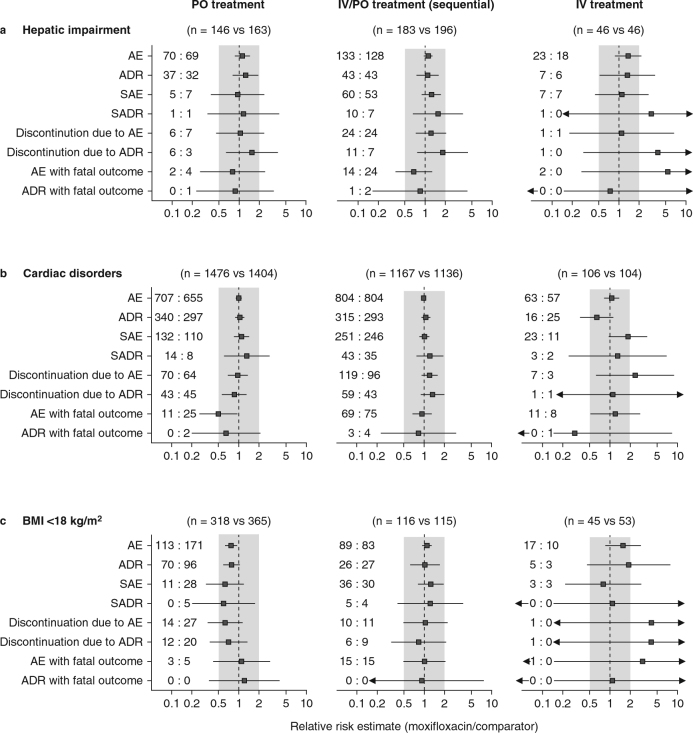
Relative risk estimates (moxifloxacin versus the comparator) for adverse events from pooled data on (a) patients with hepatic impairment, (b) patients with a cardiac disorder, and (c) patients with a body mass index <18 kg/m2. The data are stratified by route of administration (oral only; intravenous followed by oral [sequential]; intravenous only).The number of patients enrolled in each subgroup (moxifloxacin versus the comparator) is shown at the top of each graph, and the numbers of patients with each of the recorded events are shown to the left of the corresponding symbol. Calculations were made using the Mantel–Haenszel method (with the 95% confidence interval) stratified by study, with a continuity correction of 0.1 in the event of a null value. The relative risk estimates are presented as black squares on a (0.1–10) logarithmic scale (1 denotes no difference; values <1 and >1 denote a correspondingly lower and higher risk, respectively, associated with moxifloxacin treatment relative to the comparator), and the horizontal lines denote the confidence interval (limited to a maximum of 0.1 to 10 for reasons of legibility; lines that extend beyond these limits [or where the limits are masked by text] have an arrowhead symbol; when not visible, the lines is shorter than the corresponding symbol). The light gray shaded area highlights the zone where the relative risk estimate (moxifloxacin/comparator) is between 0.5 and 2. ADR = adverse drug reaction; AE = adverse event; BMI = body mass index; IV = intravenous; PO = oral; SADR = serious ADR; SAE = serious AE.
Fig. 4
Fig. 4
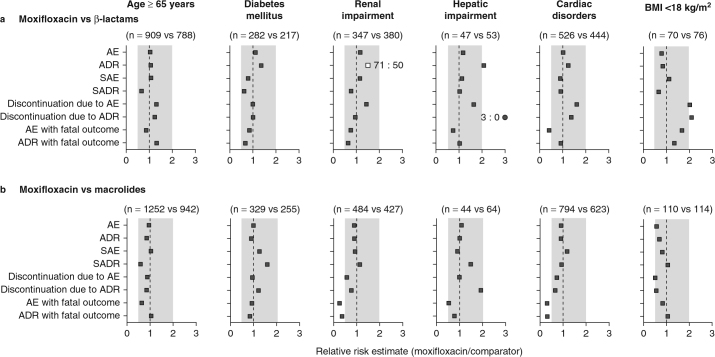
Relative risk estimates (moxifloxacin versus the comparator) for adverse events from pooled data on patients treated by the oral route with the most frequent or meaningful comparator antibiotic: (a) β-lactam or (b) a macrolide. The data are stratified according to risk factors (age ≥65 years, diabetes mellitus, renal impairment, hepatic impairment, cardiac disorders, body mass index <18 kg/m2). The number of patients enrolled in each subgroup (moxifloxacin versus the comparator) is shown at the top of each graph. Calculations were made using the Mantel–Haenszel method stratified by study, with a continuity correction of 0.1 in the event of a null value. The relative risk estimates are presented on a 0–3 linear scale (1 denotes no difference; values <1 and >1 denote a correspondingly lower and higher risk, respectively, associated with moxifloxacin treatment relative to the comparator). Values ≤3 are displayed by squares. Circles placed at the edge of the scale indicate that the actual value is >3 (the numbers of patients who received moxifloxacin versus the comparator are shown to the left of the circle). White symbols indicate values with a lower limit of the calculated 95% confidence interval >1, indicating a nominally significantly higher risk for moxifloxacin relative to the comparator (the numbers of patients in each group are shown to the right or left of the corresponding symbol). The light gray shaded area highlights the zone where the relative risk estimate (moxifloxacin/comparator) is between 0.5 and 2. ADR = adverse drug reaction; AE = adverse event; BMI = body mass index; SADR = serious ADR; SAE = serious AE.
Fig. 5
Fig. 5
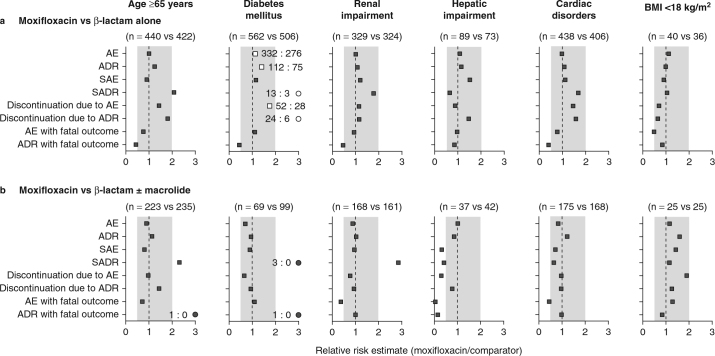
Relative risk estimates (moxifloxacin versus the comparator) for adverse events from pooled data on patients treated by the intravenous route followed by the oral route (sequential) with the most frequent or meaningful comparator antibiotic(s): (a) β-lactam or (b) β-lactam ± macrolide (the design of the study did not allow differentiation between patients receiving only a β-lactam and those receiving the combination of a β-lactam and a macrolide). The data are stratified according to risk factors (age ≥65 years, diabetes mellitus, renal impairment, hepatic impairment, cardiac disorder, body mass index <18 kg/m2). The number of patients enrolled in each subgroup (moxifloxacin versus the comparator) is shown at the top of each graph. Calculations were made using the Mantel–Haenszel method stratified by study, with a continuity correction of 0.1 in the event of a null value. The relative risk estimates are presented on a 0–3 linear scale (1 denotes no difference; values <1 and >1 denote a correspondingly lower and higher risk, respectively, associated with moxifloxacin treatment relative to the comparator). Values ≤3 are displayed by squares. Circles placed at the edge of the scale indicate that the actual value is >3 (the numbers of patients who received moxifloxacin versus the comparator are shown to the left of the circle). White symbols indicate values with a lower limit of the calculated 95% confidence interval >1, indicating a nominally significantly higher risk for moxifloxacin relative to the comparator (the numbers of patients in each group are shown to the right or left of the corresponding symbol). The light gray shaded area highlights the zone where the relative risk estimate (moxifloxacin/comparator) is between 0.5 and 2. ADR = adverse drug reaction; AE = adverse event; BMI = body mass index; SADR = serious ADR; SAE = serious AE.
Fig. 6
Fig. 6
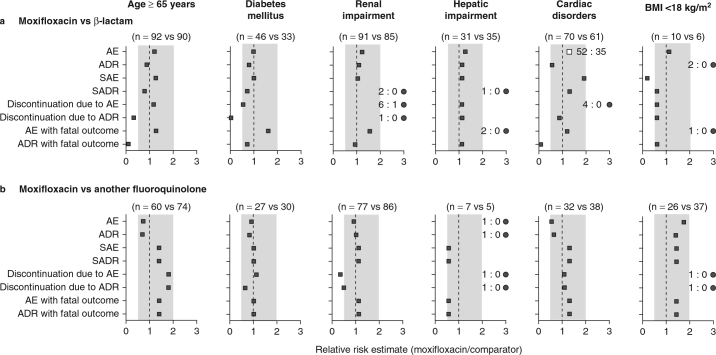
Relative risk estimates (moxifloxacin versus the comparator) for adverse events from pooled data on patients treated by the intravenous route with the most frequent or meaningful comparator antibiotic: (a) β-lactam or (b) another fluoroquinolone. The data are stratified according to risk factors (age ≥65 years, diabetes mellitus, renal impairment, hepatic impairment, cardiac disorder, body mass index <18 kg/m2). The number of patients enrolled in each subgroup (moxifloxacin versus the comparator) is shown at the top of each graph. Calculations were made using the Mantel–Haenszel method stratified by study, with a continuity correction of 0.1 in the event of a null value. The relative risk estimates are presented on a 0–3 linear scale (1 denotes no difference; values <1 and >1 denote a correspondingly lower and higher risk, respectively, associated with moxifloxacin treatment relative to the comparator). Values ≤3 are displayed by squares. Circles placed at the edge of the scale indicate that the actual value is >3 (the numbers of patients who received moxifloxacin versus the comparator are shown to the left of the circle). White symbols indicate values with a lower limit of the calculated 95% confidence interval >1, indicating a nominally significantly higher risk for moxifloxacin relative to the comparator (the numbers of patients in each group are shown to the right or left of the corresponding symbols). The light gray shaded area highlights the zone where the relative risk estimate (moxifloxacin/comparator) is between 0.5 and 2. ADR = adverse drug reaction; AE = adverse event; BMI = body mass index; SADR = serious ADR; SAE = serious AE.
Table VIII
Table VIII
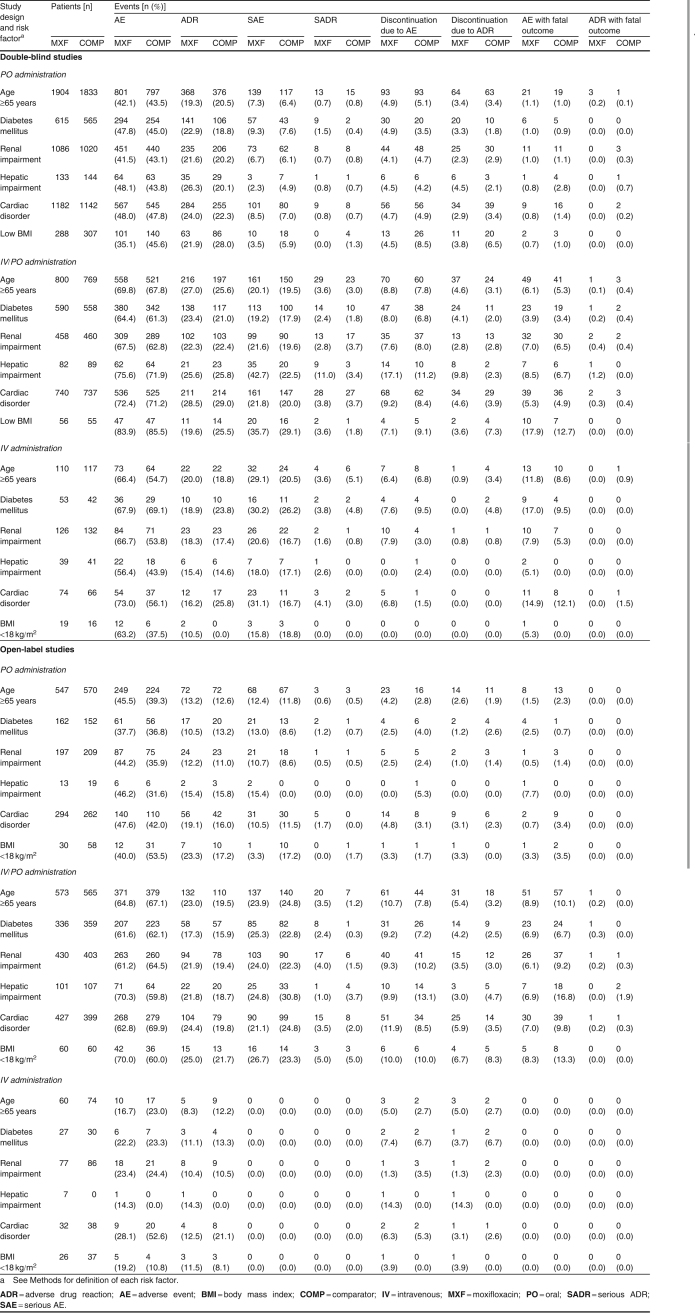
Incidence of adverse events, adverse drug reactions, serious adverse events, serious adverse drug reactions, discontinuation due to adverse events, discontinuation due to adverse drug reactions, adverse events with fatal outcome, and adverse drug reactions with fatal outcome in patients with risk factors (age, diabetes mellitus, renal or hepatic impairment, cardiac disorder, low body mass index) treated with moxifloxacin or a comparator and stratified by route of administration (oral only; intravenous followed by oral [sequential]; intravenous only) and by study design

References

    1. Woodhead M., Blasi F., Ewig S., et al. Guidelines for the management of adult lower respiratory tract infections: full version. Clin Microbiol Infect. 2011;17(6):E1–59. doi: 10.1111/j.1469-0691.2011.03672.x. - DOI - PMC - PubMed
    1. Mandell L.A., Wunderink R.G., Anzueto A., et al. Infectious Diseases Society of America/American Thoracic Society consensus guidelines on the management of community-acquired pneumonia in adults. Clin Infect Dis. 2007;44(2):S27–72. doi: 10.1086/511159. - DOI - PMC - PubMed
    1. Balter M.S., La Forge J., Low D.E., et al. Canadian guidelines for the management of acute exacerbations of chronic bronchitis. Can Respir J. 2003;10(B):3B–32B. - PubMed
    1. Solomkin J.S., Mazuski J.E., Bradley J.S., et al. Diagnosis and management of complicated intra-abdominal infection in adults and children: guidelines by the Surgical Infection Society and the Infectious Diseases Society of America. Clin Infect Dis. 2010;50(2):133–64. doi: 10.1086/649554. - DOI - PubMed
    1. Anon J.B., Jacobs M.R., Poole M.D., et al. Antimicrobial treatment guidelines for acute bacterial rhinosinusitis. Otolaryngol Head Neck Surg. 2004;130(1):1–45. - PMC - PubMed

Publication types