


Cognitive deficits in schizophrenia: an updated metanalysis of the scientific evidence
- PMID: 22715980
- PMCID: PMC3528440
- DOI: 10.1186/1471-244X-12-64
Cognitive deficits in schizophrenia: an updated metanalysis of the scientific evidence
Abstract
Background: This is an update of a previous meta-analysis published in 2005.
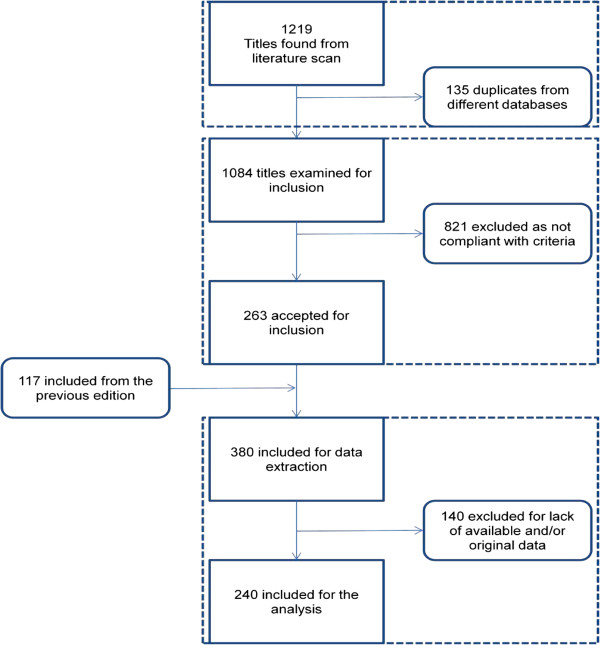
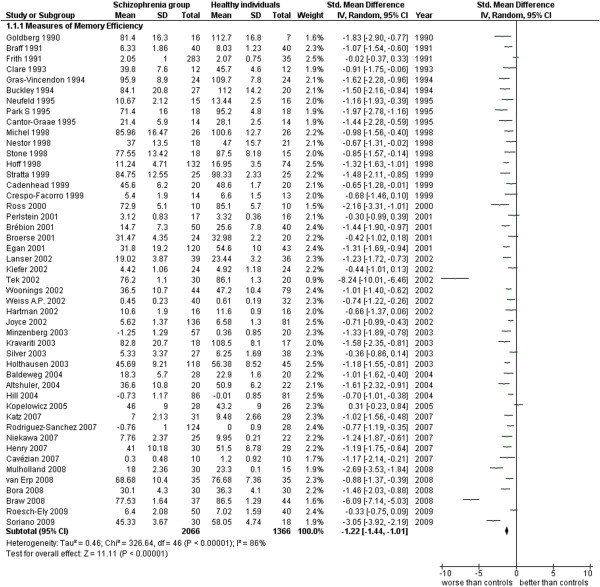
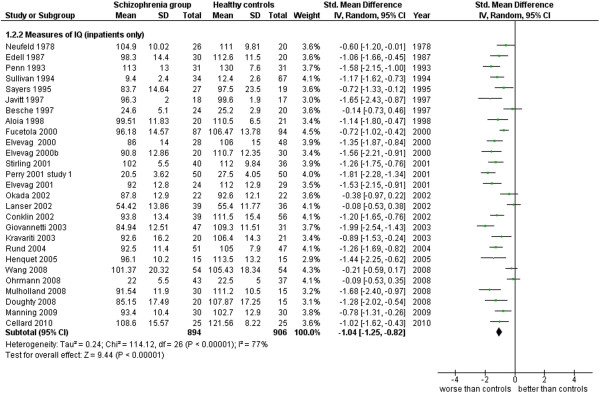
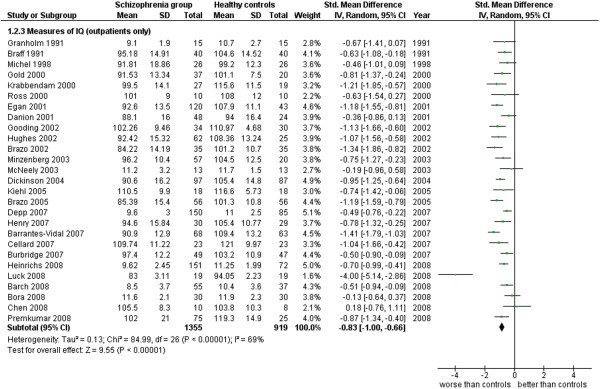
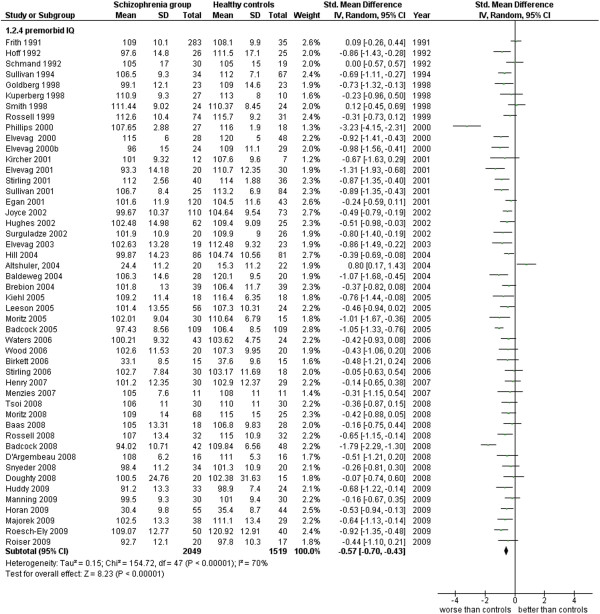
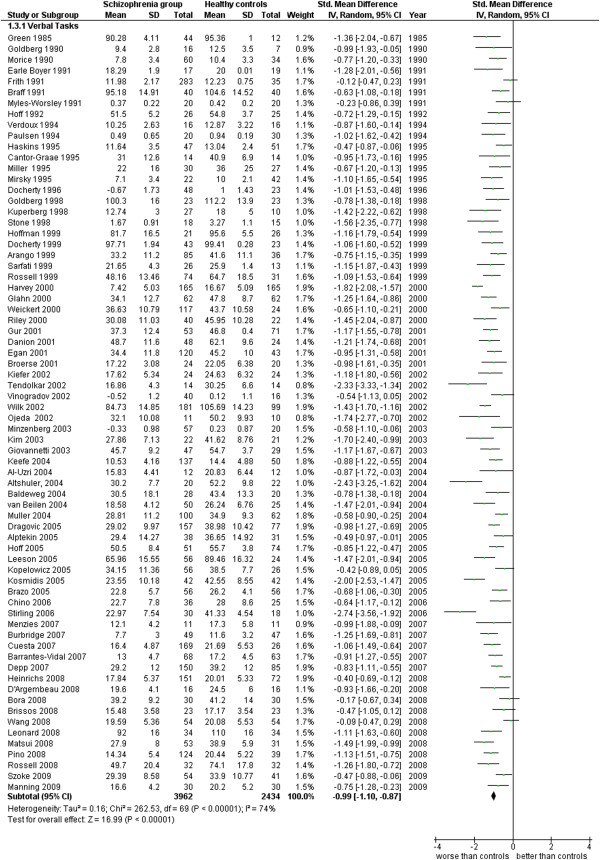
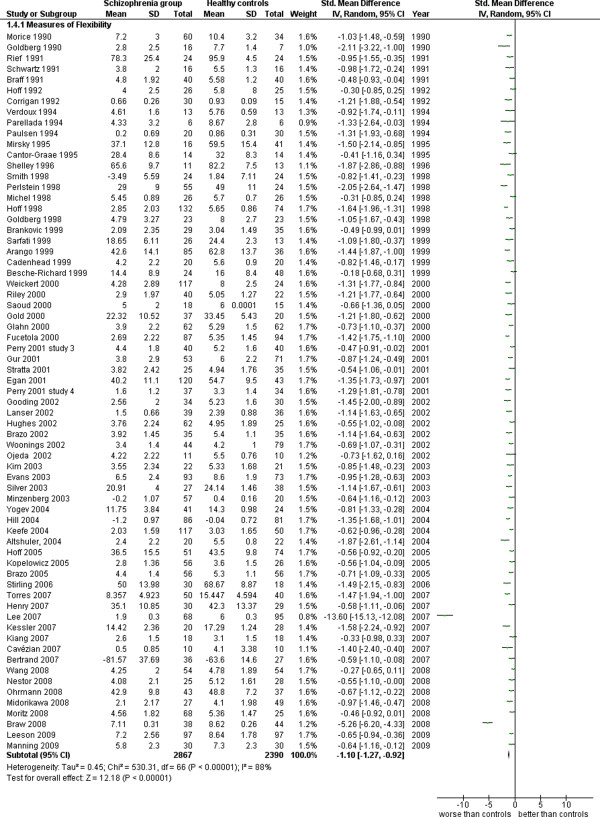
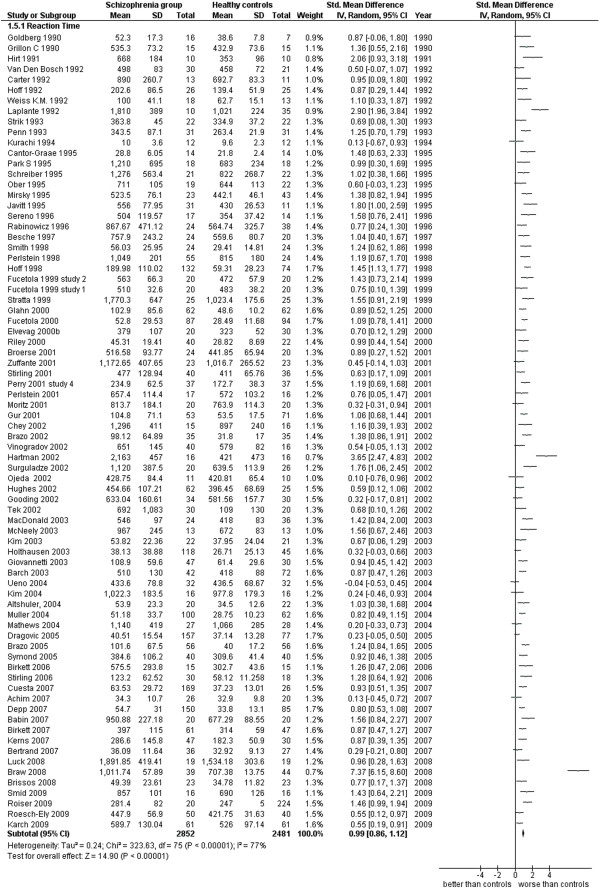
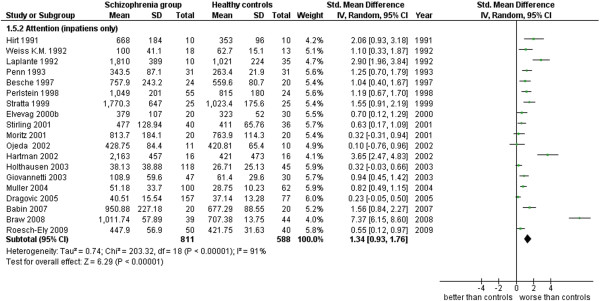
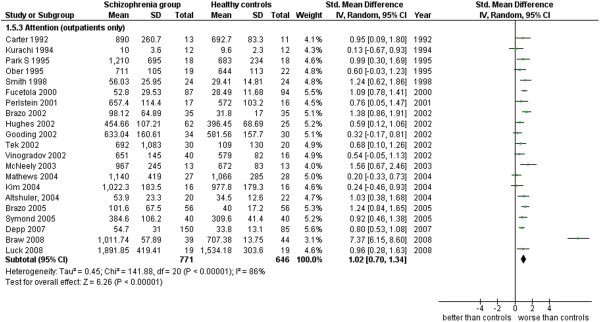
Methods: It includes the data published up to march 2010 for a total of 247 papers and 18,300 cases. Cognitive deficits are examined in 5 different domains: Memory functioning (128 studies), Global cognitive functioning (131 studies), Language (70 studies), Executive function (67 studies), Attention (76 studies). Only controlled studies were included: patients vs. normal subjects.
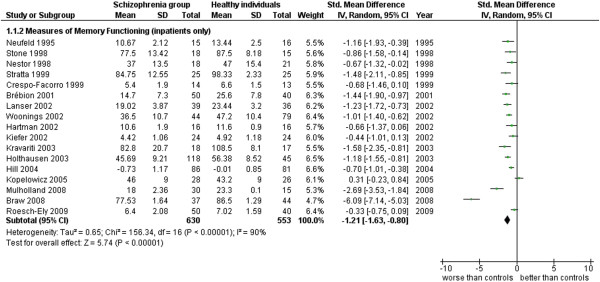
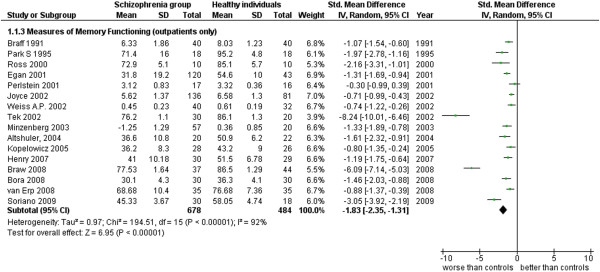
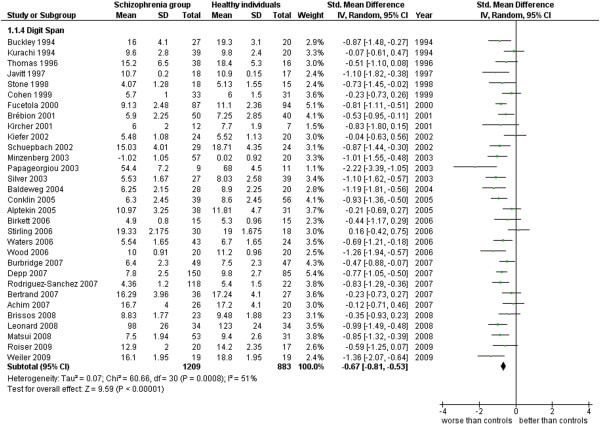
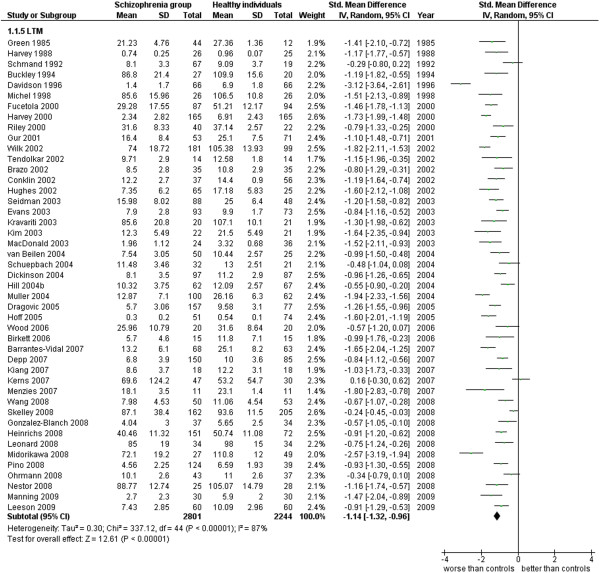
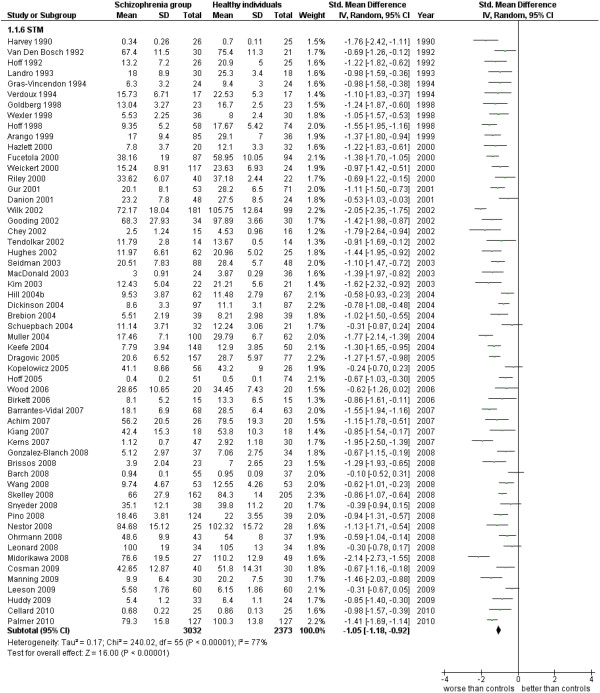
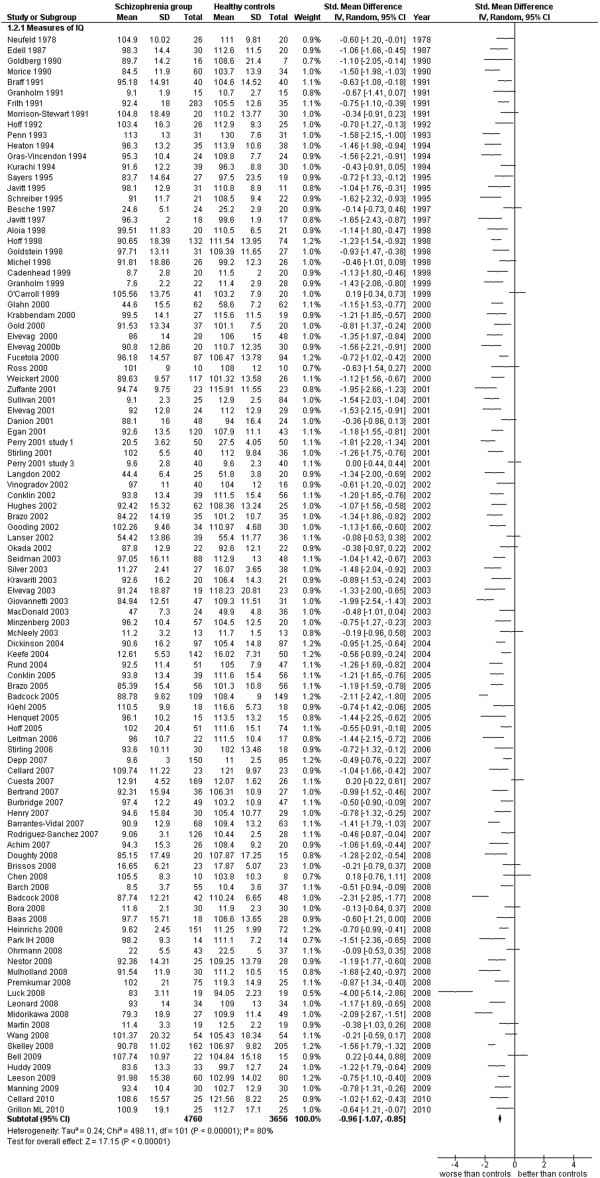
Results: Results evidence that in all domains and in all different analyses performed within each domain, patients show a significant reduction of cognitive efficiency with respect to normal subjects. The between studies heterogeneity is very high in almost all domains. There are various sources of this heterogeneity (age, sex, sample size, type of patients, and type of measurement) which contribute to the high degree of not-overlapping information offered by the single studies.
Conclusions: Our results, based on the current scientific evidence, confirm the previous findings that there is a generalized impairment of various cognitive functions in patients with schizophrenia when compared to normal cases. The modalities with which these results are obtained have not changed over the years and the more recent studies do not modify the high heterogeneity previously found between the studies. This reduces the methodological quality of the results. In order to improve the methodological quality of the studies performed in the field of cognitive deficits of patients with schizophrenia, various factors should be taken into account and better managed in designing future studies.
Figures
References
-
- Heinrichs RW, Zakzanis KK. Neurocognitive deficit in schizophrenia, a quantitative review of the evidence. Neuropsychol. 1998;12(Suppl 3):426–445. - PubMed
-
- Raji TK, Mulsant BH. Nature and course of cognitive function in late-life schizophrenia: a systematic review. Schizophr Res. 2008;102:122–140. - PubMed
-
- Mesholam-Gately RI, Giuliano AJ, Goff KP, Faraone SV, Seidman L. Neurocognition in first-episode schizophrenia: a meta-analytic review. Neuropsychol. 2009;23:315–336. - PubMed
-
- Green MF. What are the functional consequences of neurocognitive deficit in schizophrenia? Am J Psych. 1996;153:32–330. - PubMed
Publication types
MeSH terms
LinkOut - more resources
Full Text Sources
Other Literature Sources
Medical
