


Intermittent availability of ethanol does not always lead to elevated drinking in mice
- PMID: 22717273
- PMCID: PMC3417685
- DOI: 10.1093/alcalc/ags067
Intermittent availability of ethanol does not always lead to elevated drinking in mice
Abstract
Aims: Intermittent access (IA) to an alcohol (ethanol) solution can lead rats to higher ethanol intakes than continuous access, and a recent report showed increased drinking in C57BL/6J mice offered 20% ethanol vs. water 3X/week (Prior studies have offered ethanol during 24 h periods, either continuously or intermittently.).
Methods: We tested the high-preference C57BL/6J inbred mice: we also studied High Drinking in the Dark (HDID) mice, a line we have selectively bred to reach intoxicating blood ethanol levels after a short period of access to a single bottle of 20% ethanol.
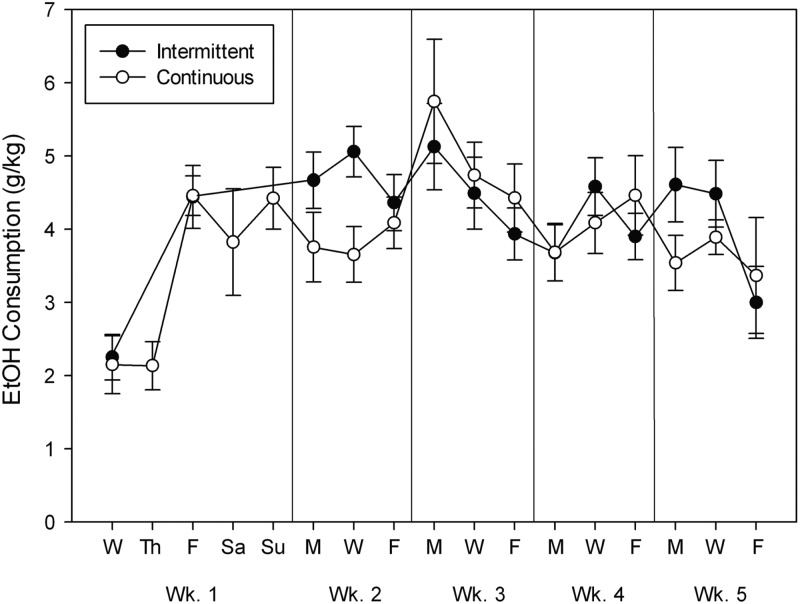
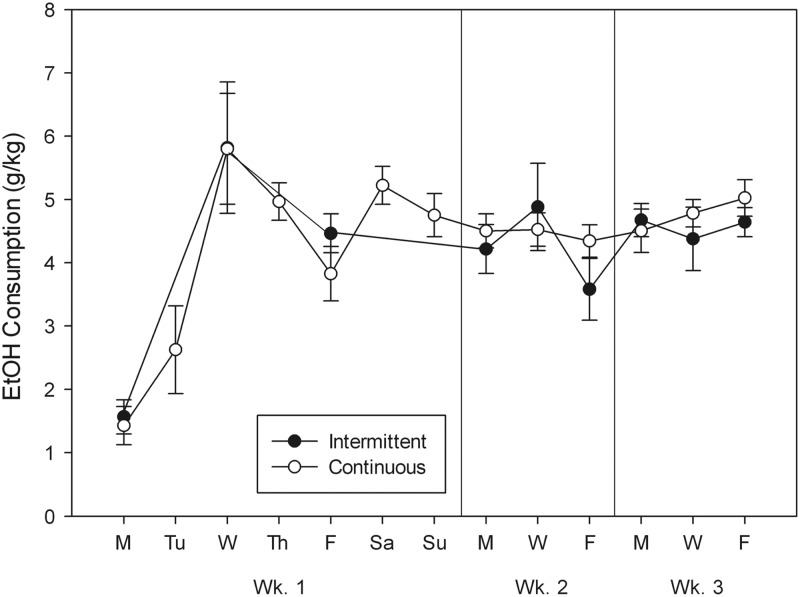
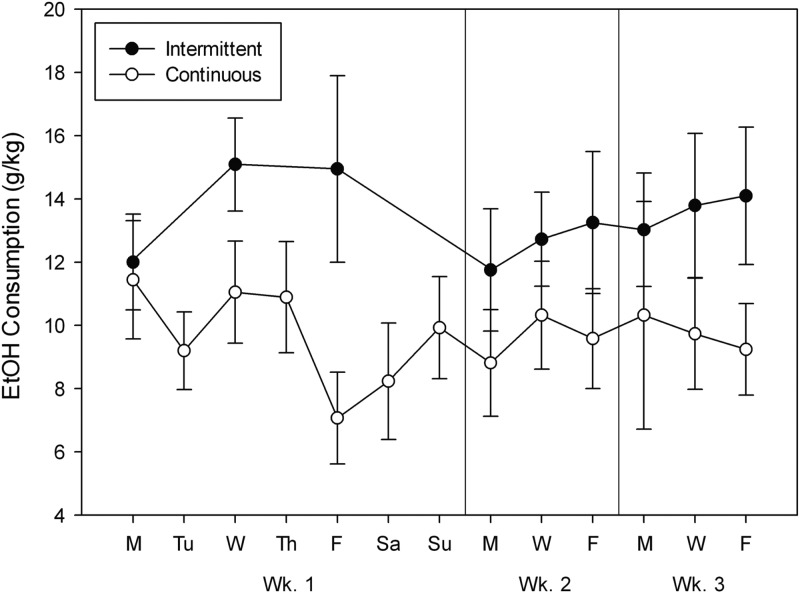
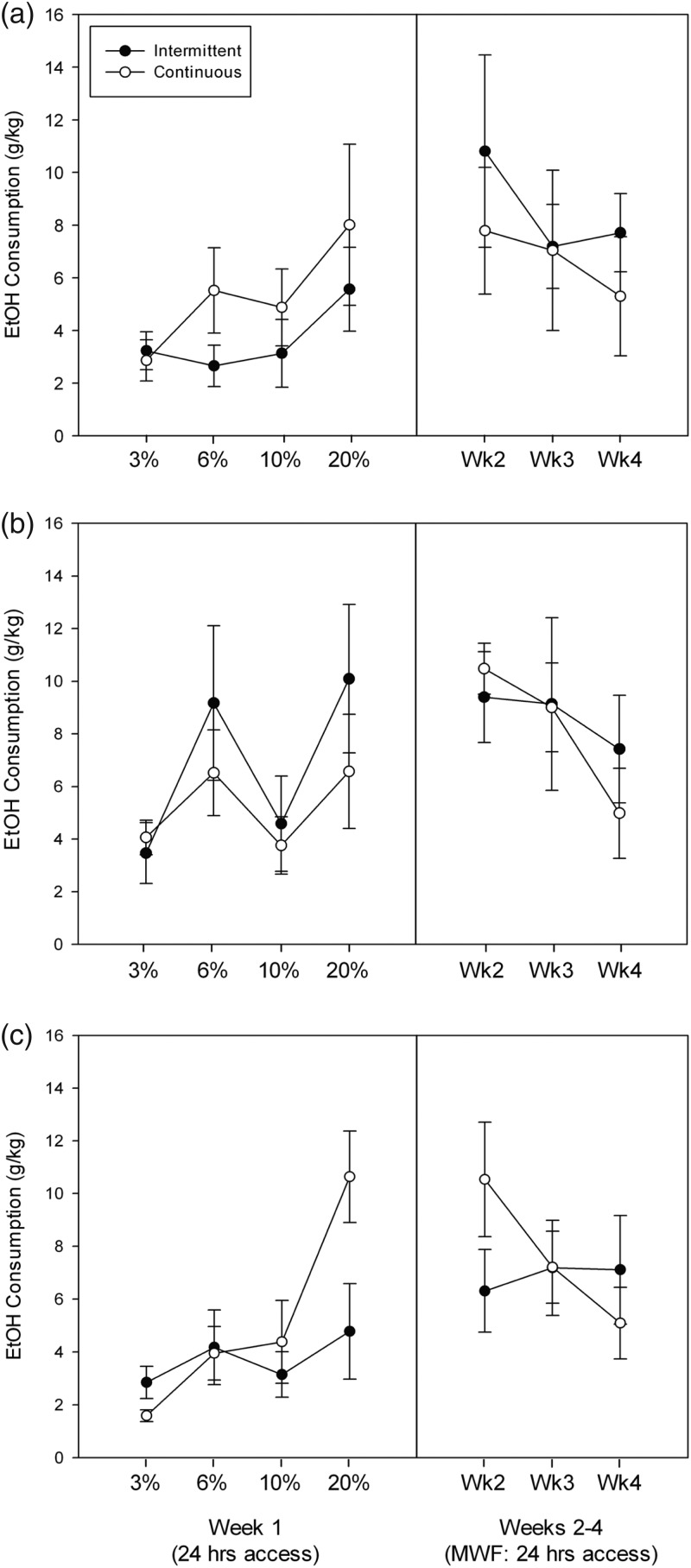
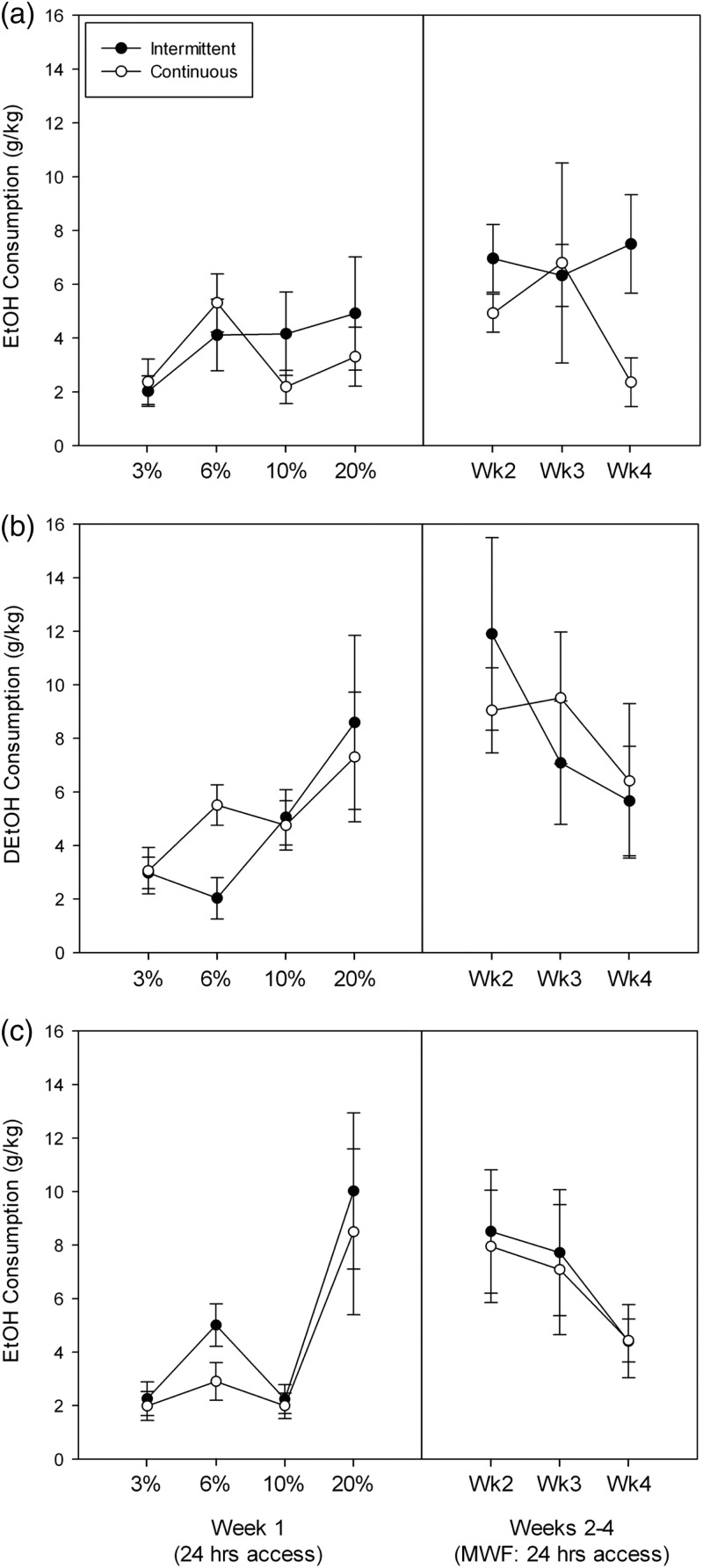
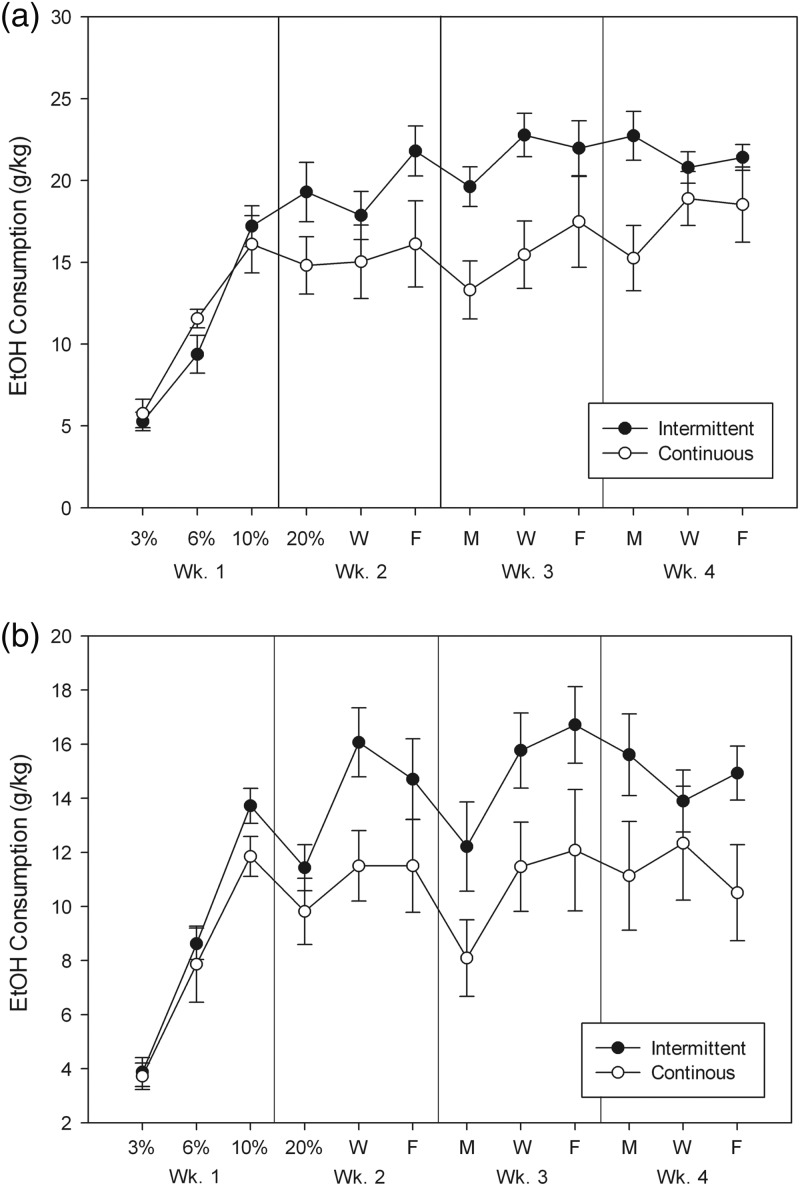
Results: Neither HDID or C57BL/6J male mice offered ethanol every other day during only a 4-h access period showed greater daily intake than mice offered ethanol daily for 4 h. There was a small increase in drinking with 24 h IA in C57BL/6J mice. An experiment with HDID mice and their control heterogeneous stock stock modeled closely after a published study with C57BL/6J mice (Hwa, Chu, Levinson SA et al. Persistent escalation of alcohol drinking in C57BL/6J mice with intermittent access to 20% ethanol. Alcohol Clin Exp Res 2011;35:1938-1947) showed no significant elevation with 24 h IA exposure in either sex of any genotype. Finally, a near replication of the Hwa et al. study showed modestly greater intake in C57BL/6J mice, confirming the efficacy of 24 h IA.
Conclusion: We conclude that 4 h of IA is likely insufficient to elevate drinking in mice. The lack of effect in HDID mice and their controls further suggests that not all genotypes respond to intermittency.
Figures
References
-
- Amit Z, Stern MH. A further investigation of alcohol preference in the laboratory rat induced by hypothalamic stimulation. Psychopharmacologia. 1971;21:317–27. - PubMed
-
- Amit Z, Stern MH, Wise RA. Alcohol preference in the laboratory rat induced by hypothalamic stimulation. Psychopharmacologia. 1970;17:367–77. - PubMed
-
- Bell RL, Kimpel MW, Rodd ZA, et al. Protein expression changes in the nucleus accumbens and amygdala of inbred alcohol-preferring rats given either continuous or scheduled access to ethanol. Alcohol. 2006a;40:3–17. - PubMed
-
- Bell RL, Rodd ZA, Lumeng L, et al. The alcohol-preferring P rat and animal models of excessive alcohol drinking. Addict Biol. 2006b;11:270–88. - PubMed
Publication types
MeSH terms
Substances
Grants and funding
LinkOut - more resources
Full Text Sources
Medical
Molecular Biology Databases
