


Aging and osteoarthritis: an inevitable encounter?
- PMID: 22720159
- PMCID: PMC3376541
- DOI: 10.1155/2012/950192
Aging and osteoarthritis: an inevitable encounter?
Abstract
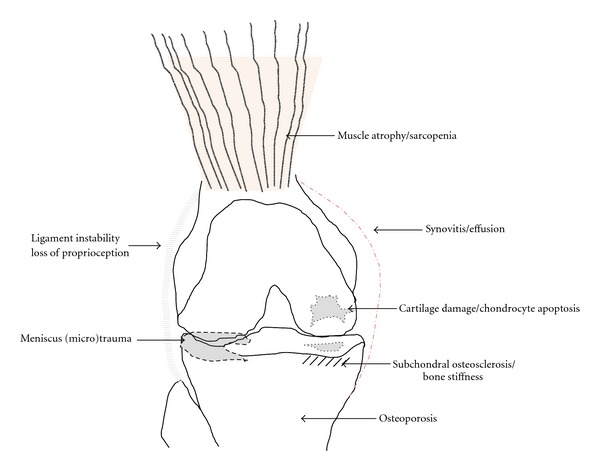
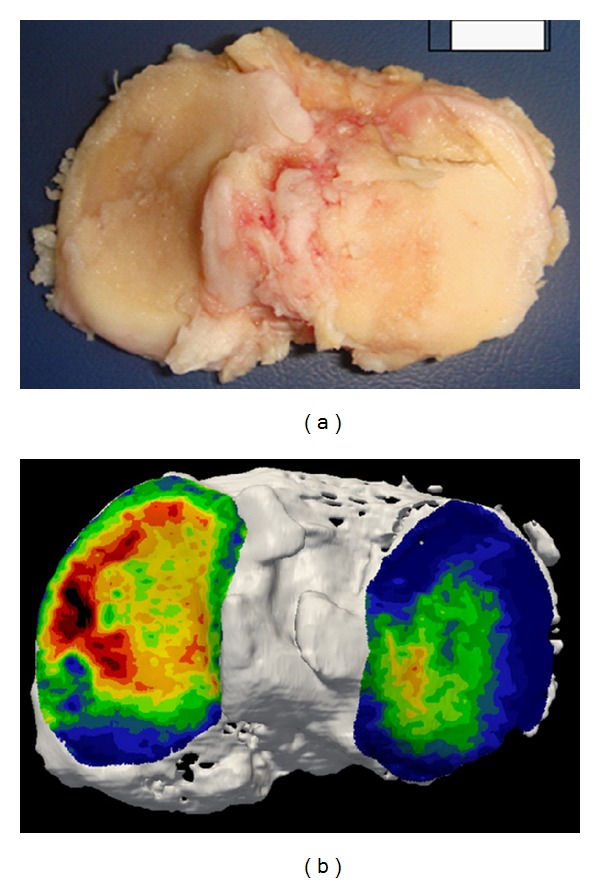
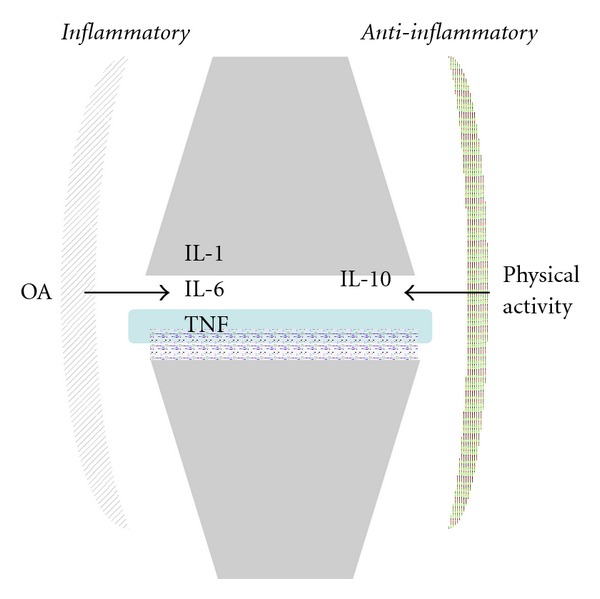
Osteoarthritis (OA) is a major health burden of our time. Age is the most prominent risk factor for the development and progression of OA. The mechanistic influence of aging on OA has different facets. On a molecular level, matrix proteins such as collagen or proteoglycans are modified, which alters cartilage function. Collagen cross-linking within the bone results in impaired plasticity and increased stiffness. Synovial or fat tissue, menisci but also ligaments and muscles play an important role in the pathogenesis of OA. In the elderly, sarcopenia or other causes of muscle atrophy are frequently encountered, leading to a decreased stability of the joint. Inflammation in form of cellular infiltration of synovial tissue or subchondral bone and expression of inflammatory cytokines is more and more recognized as trigger of OA. It has been demonstrated that joint movement can exhibit anti-inflammatory mechanisms. Therefore physical activity or physiotherapy in the elderly should be encouraged, also in order to increase the muscle mass. A reduced stem cell capacity in the elderly is likely associated with a decrease of repair mechanisms of the musculoskeletal system. New treatment strategies, for example with mesenchymal stem cells (MSC) are investigated, despite clear evidence for their efficacy is lacking.
Figures
References
-
- Bijlsma JW, Berenbaum F, Lafeber FP. Osteoarthritis: an update with relevance for clinical practice. The Lancet. 2011;377(9783):2115–2126. - PubMed
-
- Aigner T, Rose J, Martin J, Buckwalter J. Aging theories of primary osteoarthritis: from epidemiology to molecular biology. Rejuvenation Research. 2004;7(2):134–145. - PubMed
-
- Verzijl N, DeGroot J, Ben ZC, et al. Crosslinking by advanced glycation end products increases the stiffness of the collagen network in human articular cartilage: a possible mechanism through which age is a risk factor for osteoarthritis. Arthritis & Rheumatism. 2002;46(1):114–123. - PubMed
-
- Martin JA, Ellerbroek SM, Buckwalter JA. Age-related decline in chondrocyte response to insulin-like growth factor-I: the role of growth factor binding proteins. Journal of Orthopaedic Research. 1997;15(4):491–498. - PubMed
LinkOut - more resources
Full Text Sources
