


PIM-1 kinase interacts with the DNA binding domain of the vitamin D receptor: a further kinase implicated in 1,25-(OH)2D3 signaling
- PMID: 22720752
- PMCID: PMC3404970
- DOI: 10.1186/1471-2199-13-18
PIM-1 kinase interacts with the DNA binding domain of the vitamin D receptor: a further kinase implicated in 1,25-(OH)2D3 signaling
Abstract
Background: The vitamin D3 receptor (VDR) is responsible for mediating the pleiotropic and, in part, cell-type-specific effects of 1,25-dihydroxyvitamin D3 (calcitriol) on the cardiovascular and the muscle system, on the bone development and maintenance, mineral homeostasis, cell proliferation, cell differentiation, vitamin D metabolism, and immune response modulation.
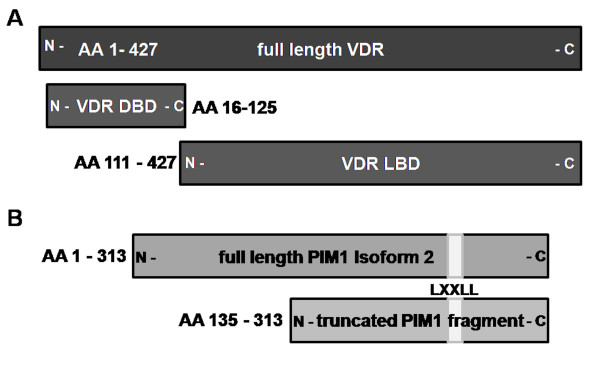
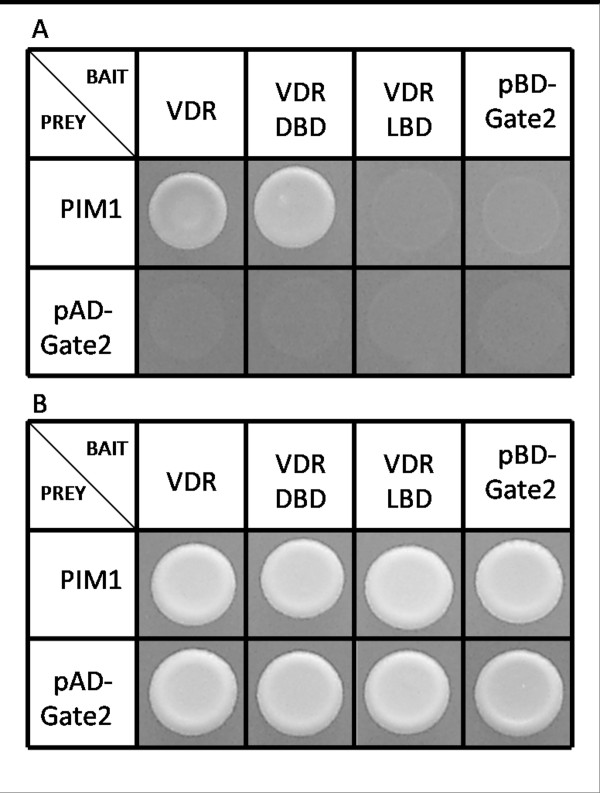
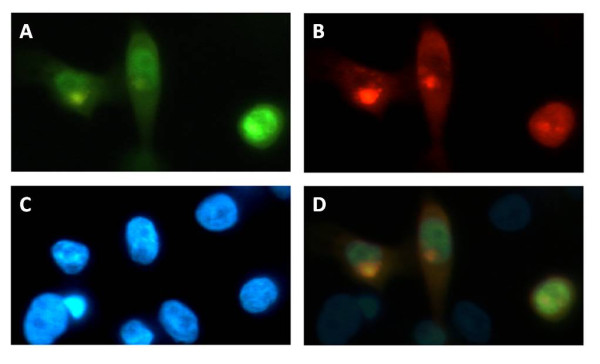
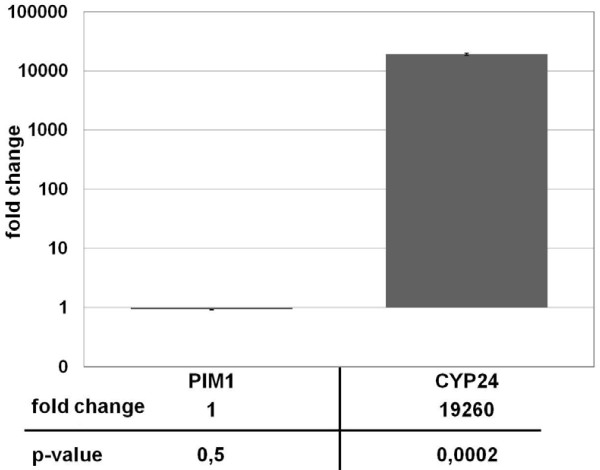
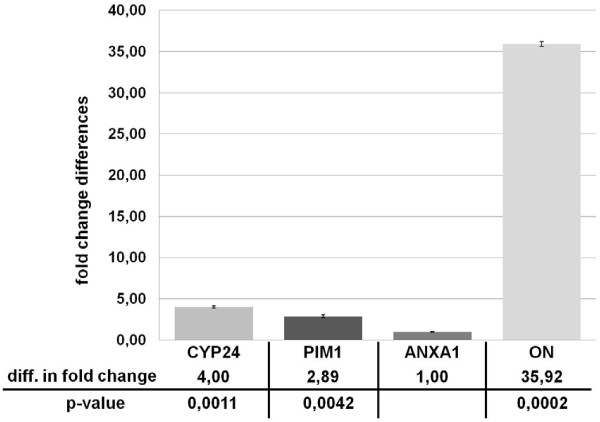
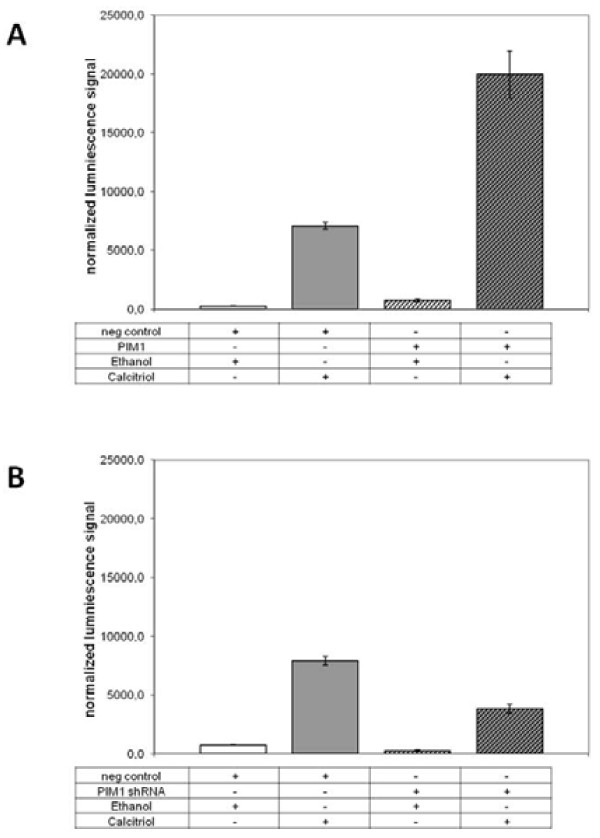
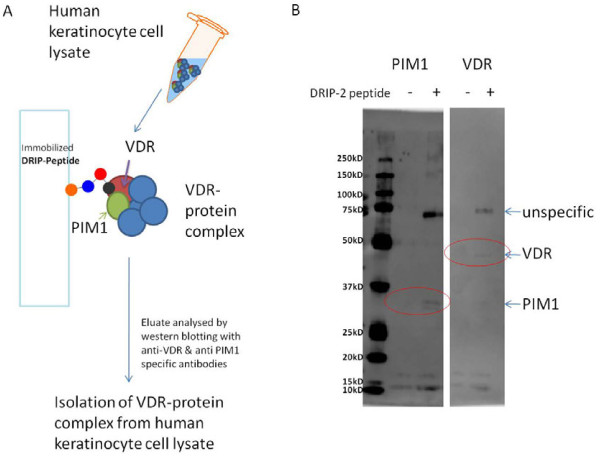
Results: Based on data obtained from genome-wide yeast two-hybrid screenings, domain mapping studies, intracellular co-localization approaches as well as reporter transcription assay measurements, we show here that the C-terminus of human PIM-1 kinase isoform2 (amino acid residues 135-313), a serine/threonine kinase of the calcium/calmodulin-regulated kinase family, directly interacts with VDR through the receptor's DNA-binding domain. We further demonstrate that PIM-1 modulates calcitriol signaling in HaCaT keratinocytes by enhancing both endogenous calcitriol response gene transcription (osteopontin) and an extrachromosomal DR3 reporter response.
Conclusion: These results, taken together with previous reports of involvement of kinase pathways in VDR transactivation, underscore the biological relevance of this novel protein-protein interaction.
Figures
References
-
- Carlberg C. Ligand-mediated conformational changes of the VDR are required for gene transactivation. J Steroid Biochem Mol Biol. 2004;89-90:227–232. - PubMed
MeSH terms
Substances
LinkOut - more resources
Full Text Sources
Molecular Biology Databases
Research Materials
