


Antibacterial activity of silver-doped hydroxyapatite nanoparticles against gram-positive and gram-negative bacteria
- PMID: 22721352
- PMCID: PMC3422172
- DOI: 10.1186/1556-276X-7-324
Antibacterial activity of silver-doped hydroxyapatite nanoparticles against gram-positive and gram-negative bacteria
Abstract
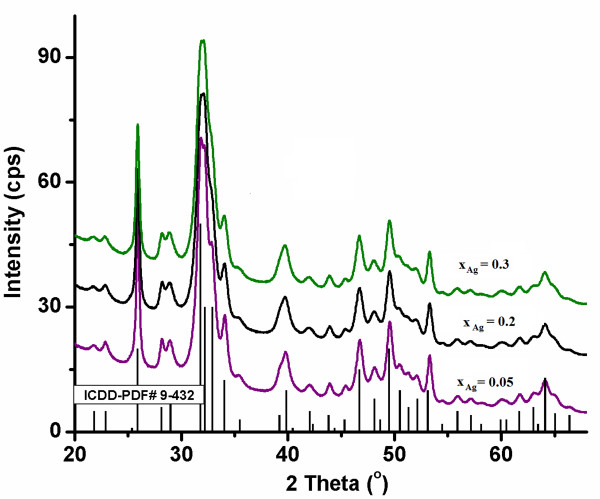
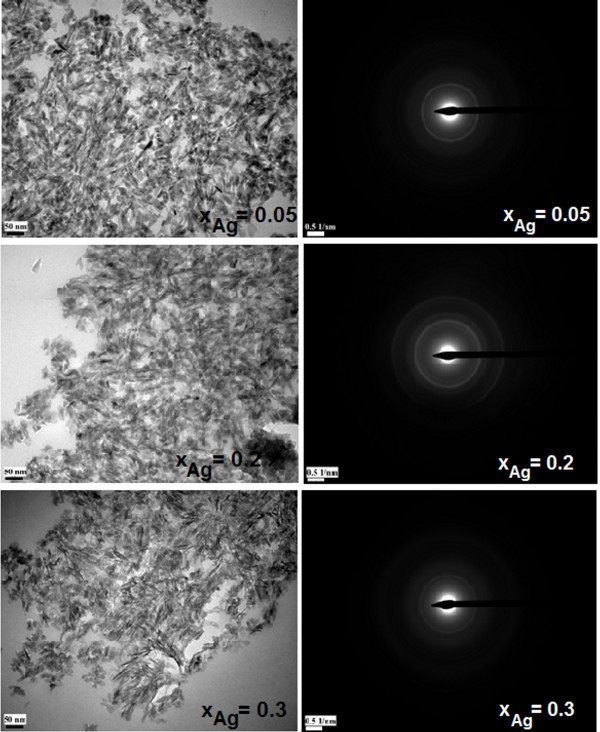
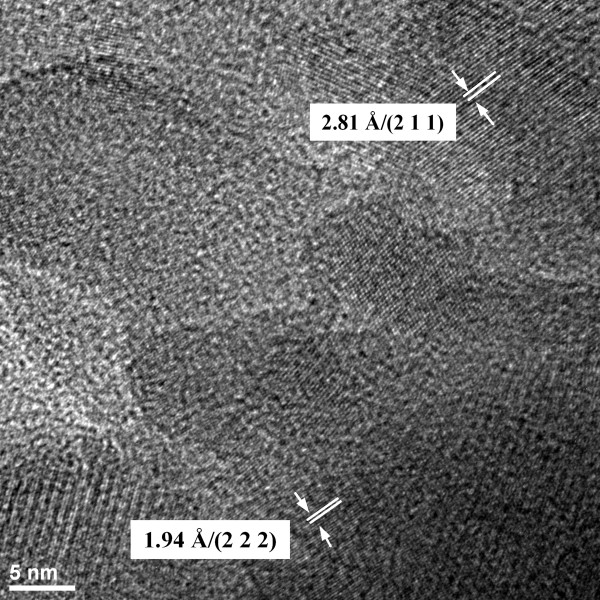
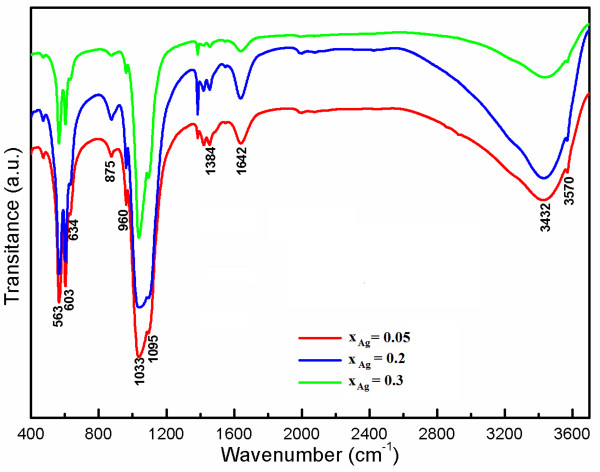
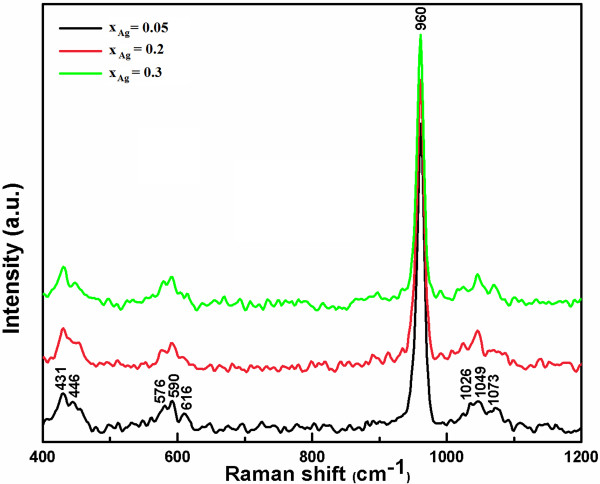
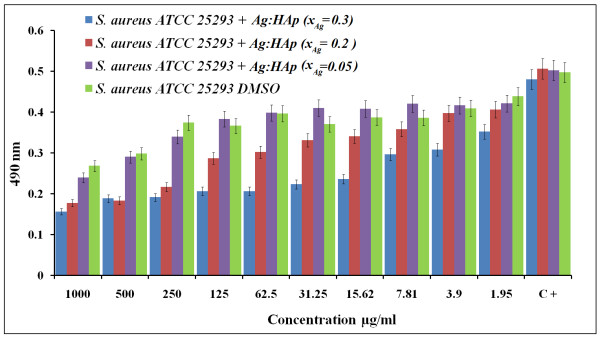
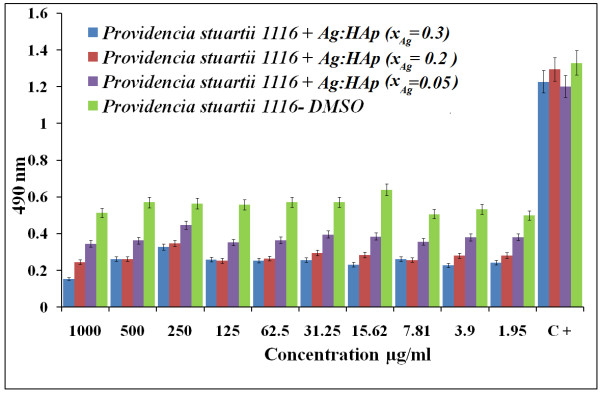
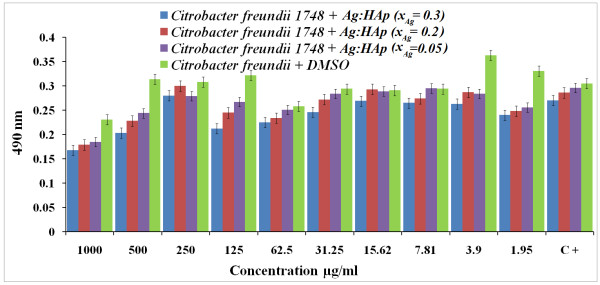
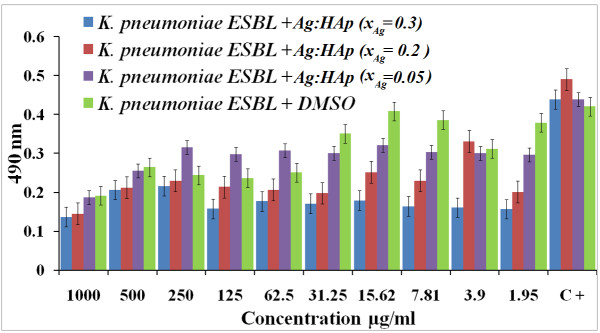
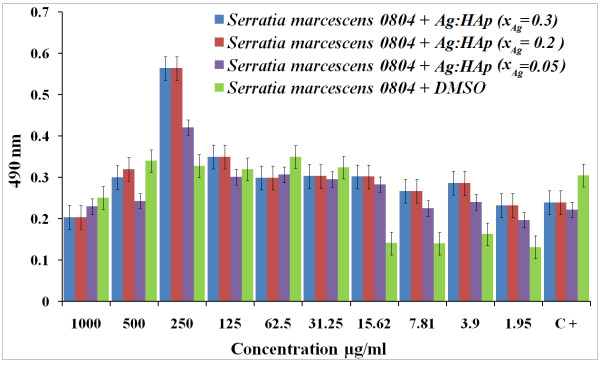
Ag-doped nanocrystalline hydroxyapatite nanoparticles (Ag:HAp-NPs) (Ca10-xAgx(PO4)6(OH)2, xAg = 0.05, 0.2, and 0.3) with antibacterial properties are of great interest in the development of new products. Coprecipitation method is a promising route for obtaining nanocrystalline Ag:HAp with antibacterial properties. X-ray diffraction identified HAp as an unique crystalline phase in each sample. The calculated lattice constants of a = b = 9.435 Å, c = 6.876 Å for xAg = 0.05, a = b = 9.443 Å, c = 6.875 Å for xAg = 0.2, and a = b = 9.445 Å, c = 6.877 Å for xAg = 0.3 are in good agreement with the standard of a = b = 9.418 Å, c = 6.884 Å (space group P63/m). The Fourier transform infrared and Raman spectra of the sintered HAp show the absorption bands characteristic to hydroxyapatite. The Ag:HAp nanoparticles are evaluated for their antibacterial activity against Staphylococcus aureus, Klebsiella pneumoniae, Providencia stuartii, Citrobacter freundii and Serratia marcescens. The results showed that the antibacterial activity of these materials, regardless of the sample types, was greatest against S. aureus, K. pneumoniae, P. stuartii, and C. freundii. The results of qualitative antibacterial tests revealed that the tested Ag:HAp-NPs had an important inhibitory activity on P. stuartii and C. freundii. The absorbance values measured at 490 nm of the P. stuartii and C. freundii in the presence of Ag:HAp-NPs decreased compared with those of organic solvent used (DMSO) for all the samples (xAg = 0.05, 0.2, and 0.3). Antibacterial activity increased with the increase of xAg in the samples. The Ag:HAp-NP concentration had little influence on the bacterial growth (P. stuartii).
Figures
References
LinkOut - more resources
Full Text Sources
Miscellaneous
