


Fitness analyses of all possible point mutations for regions of genes in yeast
- PMID: 22722372
- PMCID: PMC3509169
- DOI: 10.1038/nprot.2012.069
Fitness analyses of all possible point mutations for regions of genes in yeast
Abstract
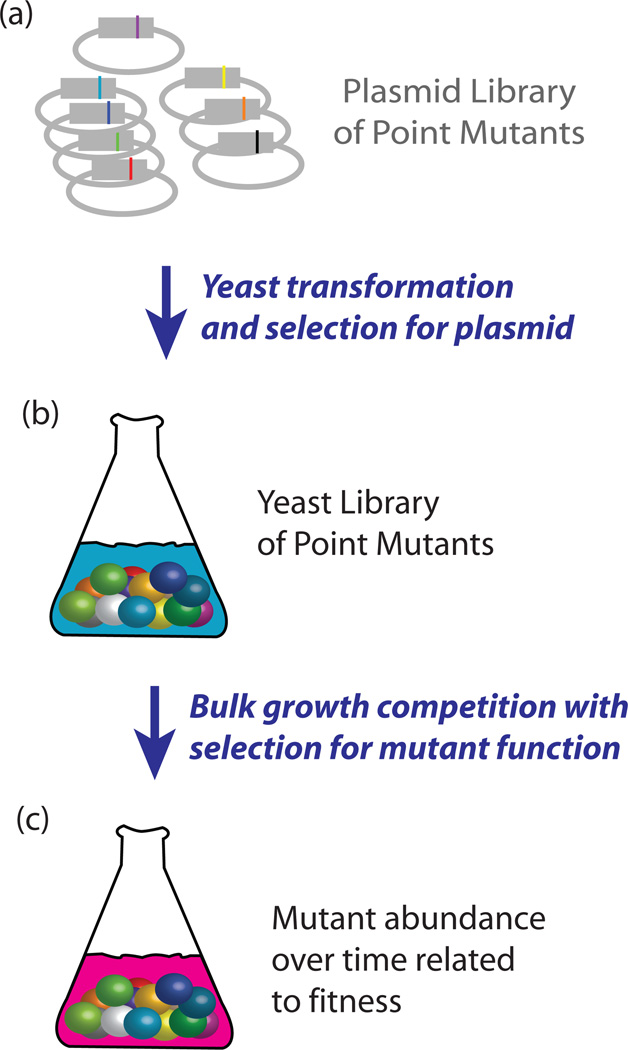
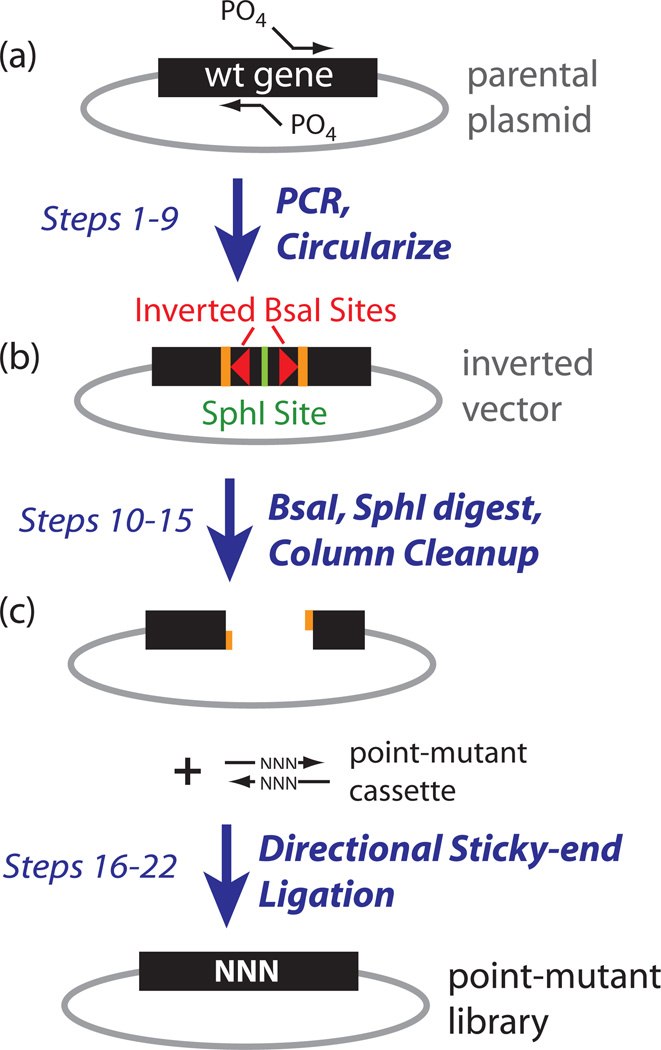
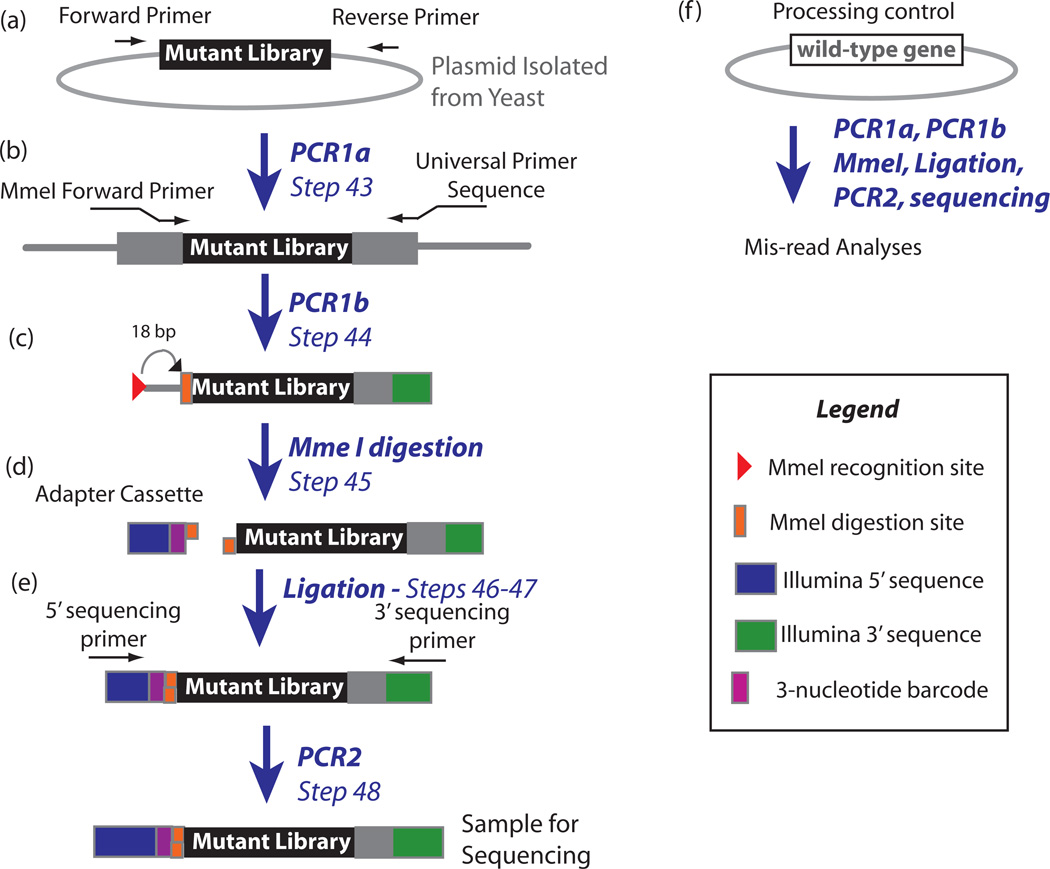
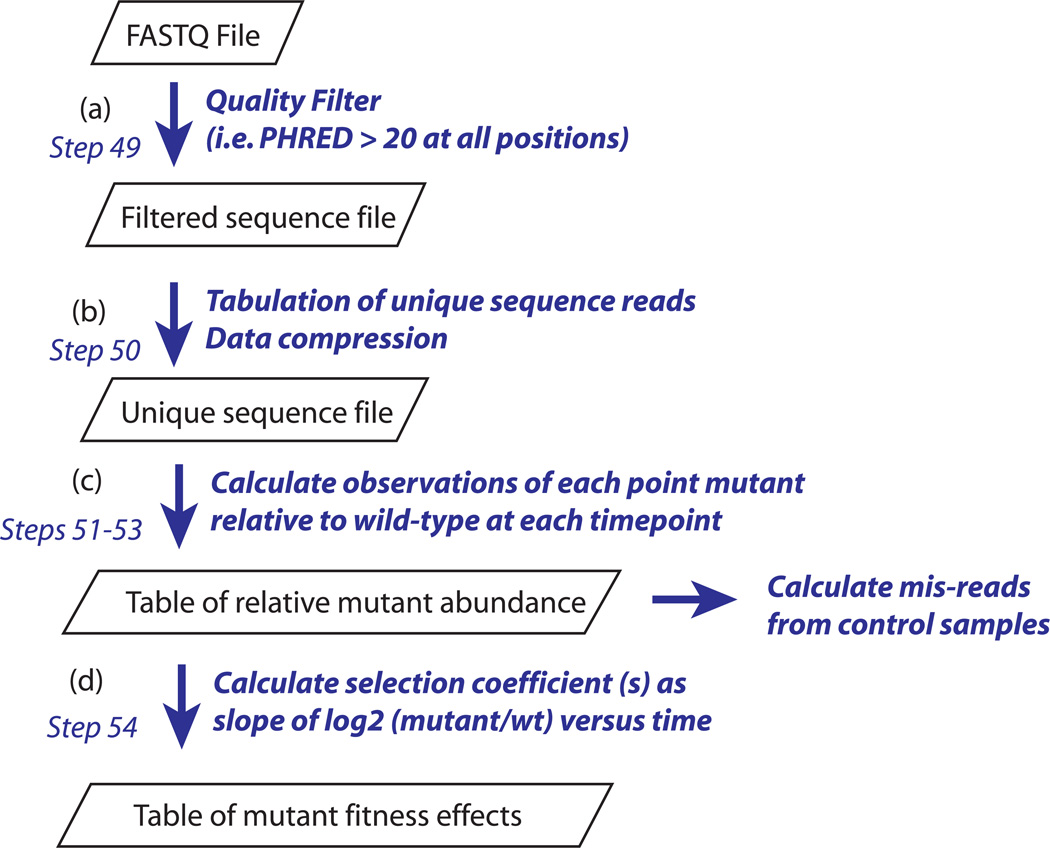
Deep sequencing can accurately measure the relative abundance of hundreds of mutations in a single bulk competition experiment, which can give a direct readout of the fitness of each mutant. Here we describe a protocol that we previously developed and optimized to measure the fitness effects of all possible individual codon substitutions for 10-aa regions of essential genes in yeast. Starting with a conditional strain (i.e., a temperature-sensitive strain), we describe how to efficiently generate plasmid libraries of point mutants that can then be transformed to generate libraries of yeast. The yeast libraries are competed under conditions that select for mutant function. Deep-sequencing analyses are used to determine the relative fitness of all mutants. This approach is faster and cheaper per mutant compared with analyzing individually isolated mutants. The protocol can be performed in ∼4 weeks and many 10-aa regions can be analyzed in parallel.
Figures
References
-
- Jensen JD, Wong A, Aquadro CF. Approaches for identifying targets of positive selection. Trends Genet. 2007;23:568–577. - PubMed
-
- Hegreness M, Shoresh N, Hartl D, Kishony R. An equivalence principle for the incorporation of favorable mutations in asexual populations. Science. 2006;311:1615–1617. - PubMed
-
- Lind PA, Berg OG, Andersson DI. Mutational robustness of ribosomal protein genes. Science. 2010;330:825–827. - PubMed
Publication types
MeSH terms
Substances
Grants and funding
LinkOut - more resources
Full Text Sources
Other Literature Sources
Molecular Biology Databases
