


Estrogen modulates NFκB signaling by enhancing IκBα levels and blocking p65 binding at the promoters of inflammatory genes via estrogen receptor-β
- PMID: 22723832
- PMCID: PMC3378567
- DOI: 10.1371/journal.pone.0036890
Estrogen modulates NFκB signaling by enhancing IκBα levels and blocking p65 binding at the promoters of inflammatory genes via estrogen receptor-β
Abstract
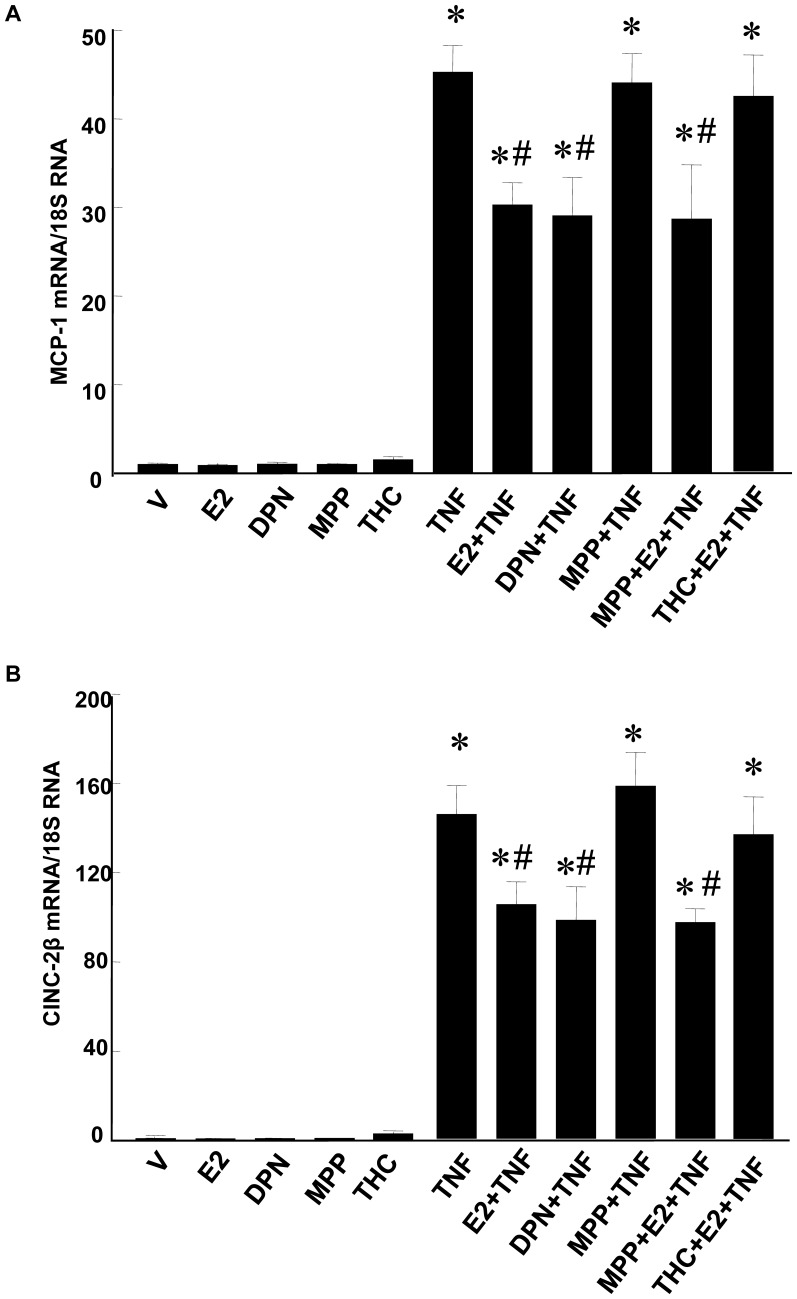
Background: NFκB signaling is critical for expression of genes involved in the vascular injury response. We have shown that estrogen (17β-estradiol, E2) inhibits expression of these genes in an estrogen receptor (ER)-dependent manner in injured rat carotid arteries and in tumor necrosis factor (TNF)-α treated rat aortic smooth muscle cells (RASMCs). This study tested whether E2 inhibits NFκB signaling in RASMCs and defined the mechanisms.
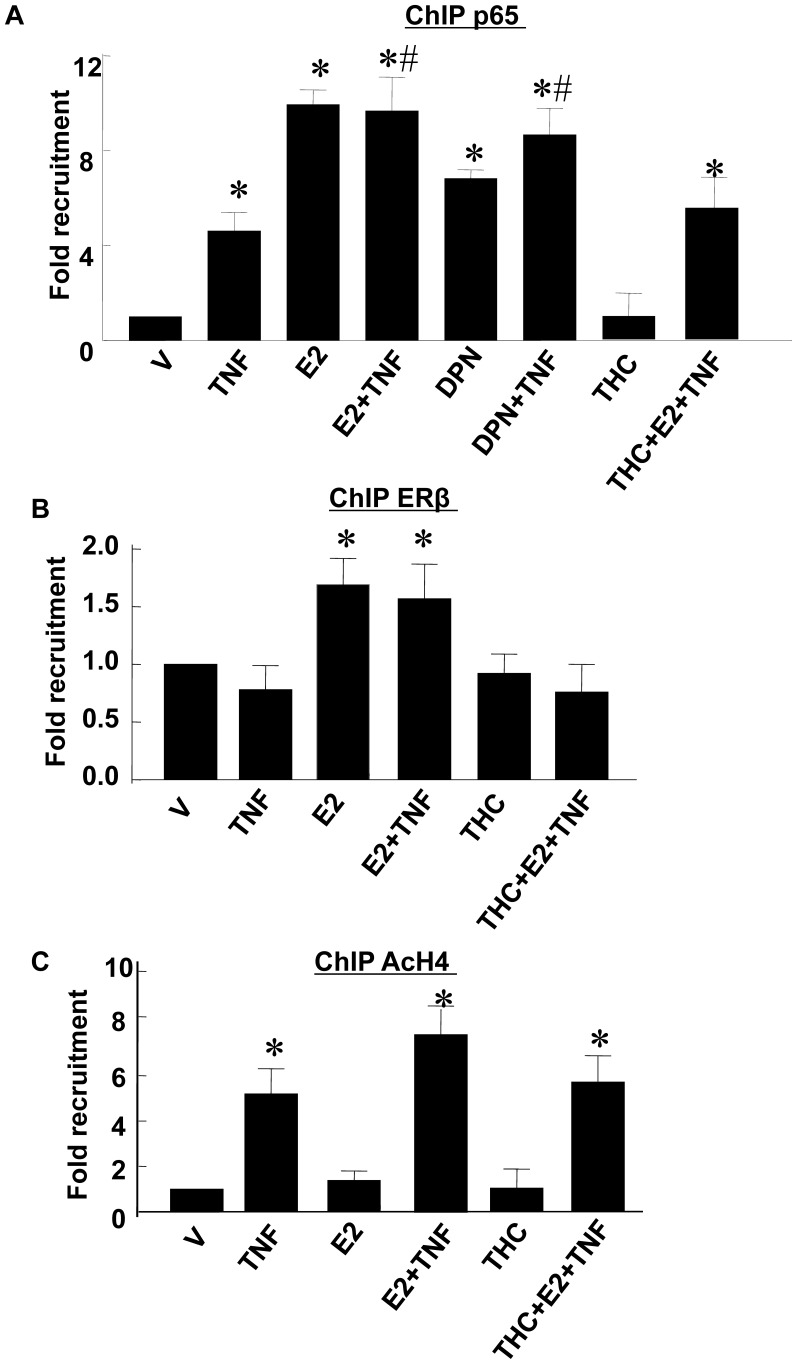
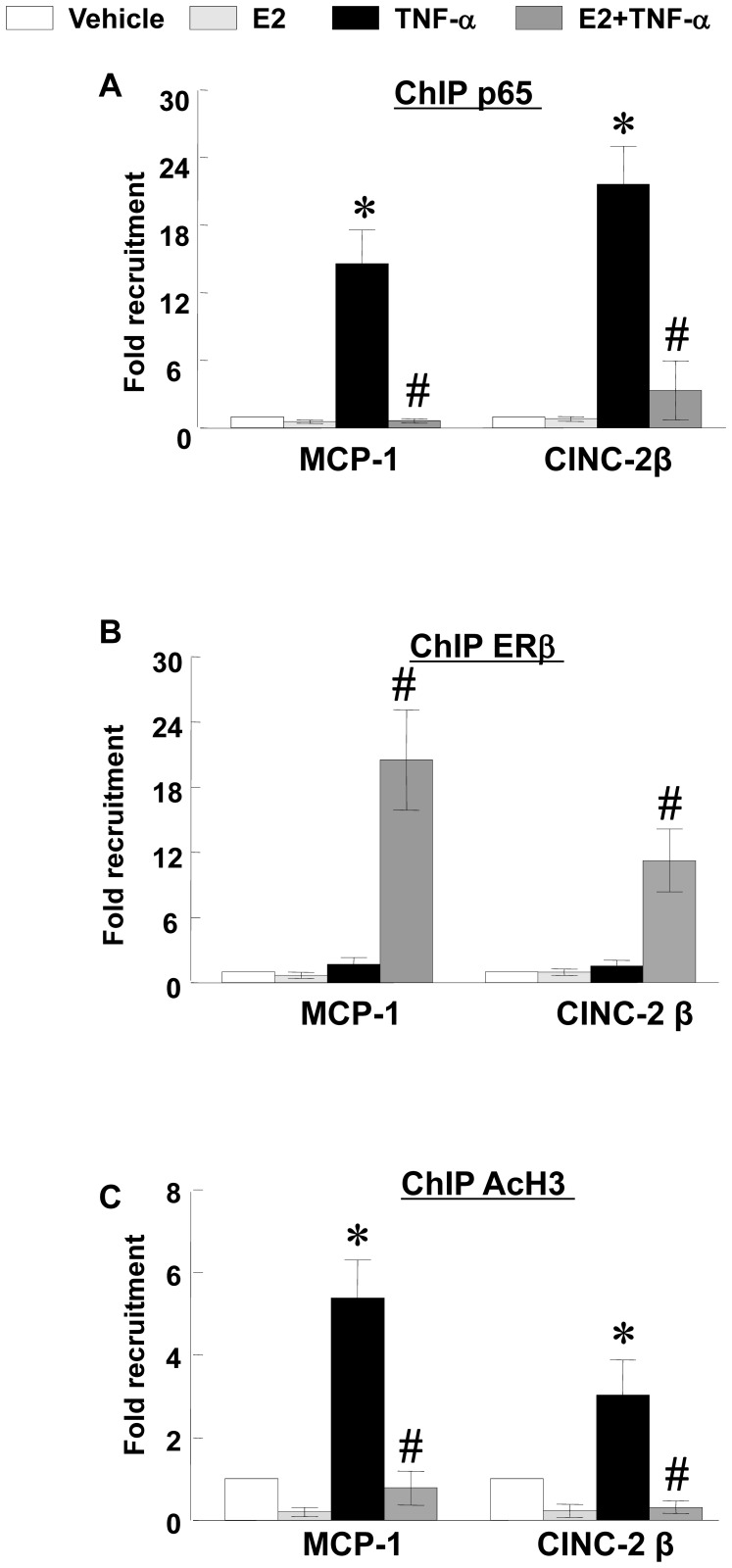
Methodology/principal findings: TNF-α treated RASMCs demonstrated rapid degradation of IκBα (10-30 min), followed by dramatic increases in IκBα mRNA and protein synthesis (40-60 min). E2 enhanced TNF-α induced IκBα synthesis without affecting IκBα degradation. Chromatin immunoprecipitation (ChIP) assays revealed that E2 pretreatment both enhanced TNF-α induced binding of NFκB p65 to the IκBα promoter and suppressed TNF-α induced binding of NFκB p65 to and reduced the levels of acetylated histone 3 at promoters of monocyte chemotactic protein (MCP)-1 and cytokine-induced neutrophil chemoattractant (CINC)-2β genes. ChIP analyses also demonstrated that ERβ can be recruited to the promoters of MCP-1 and CINC-2β during co-treatment with TNF-α and E2.
Conclusions: These data demonstrate that E2 inhibits inflammation in RASMCs by two distinct mechanisms: promoting new synthesis of IκBα, thus accelerating a negative feedback loop in NFκB signaling, and directly inhibiting binding of NFκB to the promoters of inflammatory genes. This first demonstration of multifaceted modulation of NFκB signaling by E2 may represent a novel mechanism by which E2 protects the vasculature against inflammatory injury.
Conflict of interest statement
Figures


References
-
- Ross R. Atherosclerosis – an inflammatory disease. N Engl J Med. 1999;340:115– 126. - PubMed
-
- Okamoto E, Couse T, De Leon H, Vinten-Johansen J, Goodman RB, et al. Perivascular inflammation after balloon angioplasty of porcine coronary arteries. Circulation. 2001;104:2228– 2235. - PubMed
-
- Buffon A, Biasucci LM, Liuzzo G, D’Onofrio G, Crea F, et al. Widespread coronary inflammation in unstable angina. N Engl J Med. 2002;347:5– 12. - PubMed
-
- Welt FG, Rogers C. Inflammation and restenosis in the stent era. Arterioscler Thromb Vasc Biol. 2002;22:1769– 1776. - PubMed
-
- Libby P. Inflammation in atherosclerosis. Nature. 2002;420:868– 874. - PubMed
Publication types
MeSH terms
Substances
Grants and funding
- HL75211/HL/NHLBI NIH HHS/United States
- R01 HL087980/HL/NHLBI NIH HHS/United States
- HL044195/HL/NHLBI NIH HHS/United States
- R01 HL080017/HL/NHLBI NIH HHS/United States
- HL087980/HL/NHLBI NIH HHS/United States
- R01 HL075211/HL/NHLBI NIH HHS/United States
- P60 DK079626/DK/NIDDK NIH HHS/United States
- T35 HL007473/HL/NHLBI NIH HHS/United States
- P60 DK-079626/DK/NIDDK NIH HHS/United States
- HL080017/HL/NHLBI NIH HHS/United States
- T32 HL007457/HL/NHLBI NIH HHS/United States
- HL07457/HL/NHLBI NIH HHS/United States
- R01 HL044195/HL/NHLBI NIH HHS/United States
LinkOut - more resources
Full Text Sources
Miscellaneous
