


Rethinking inflammation: neural circuits in the regulation of immunity
- PMID: 22725962
- PMCID: PMC4536565
- DOI: 10.1111/j.1600-065X.2012.01138.x
Rethinking inflammation: neural circuits in the regulation of immunity
Abstract
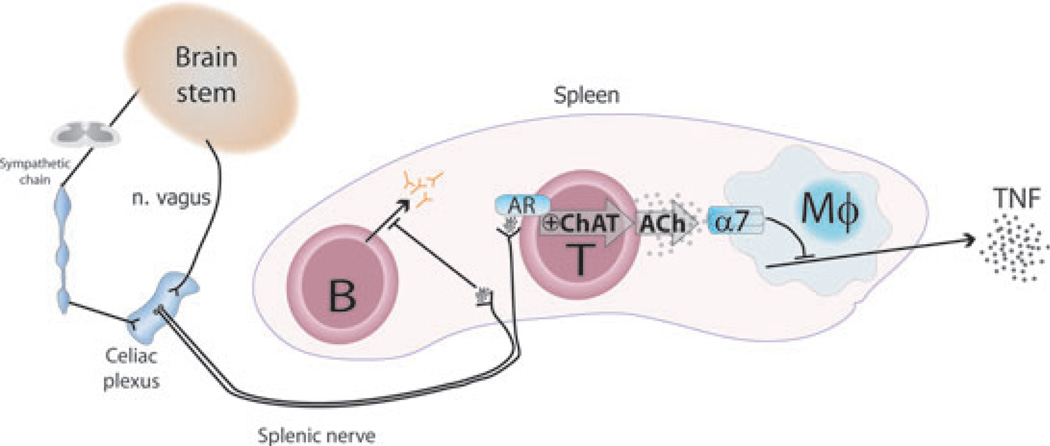
Neural reflex circuits regulate cytokine release to prevent potentially damaging inflammation and maintain homeostasis. In the inflammatory reflex, sensory input elicited by infection or injury travels through the afferent vagus nerve to integrative regions in the brainstem, and efferent nerves carry outbound signals that terminate in the spleen and other tissues. Neurotransmitters from peripheral autonomic nerves subsequently promote acetylcholine-release from a subset of CD4(+) T cells that relay the neural signal to other immune cells, e.g. through activation of α7 nicotinic acetylcholine receptors on macrophages. Here, we review recent progress in the understanding of the inflammatory reflex and discuss potential therapeutic implications of current findings in this evolving field.
© 2012 John Wiley & Sons A/S.
Conflict of interest statement
M.R.B and P.S.O. have no conflicts of interest to declare.
Figures


References
-
- Backhed F, Ley RE, Sonnenburg JL, Peterson DA, Gordon JI. Host-bacterial mutualism in the human intestine. Science. 2005;307:1915–1920. - PubMed
Publication types
MeSH terms
Substances
Grants and funding
LinkOut - more resources
Full Text Sources
Other Literature Sources
Research Materials
