


Completeness of case ascertainment for surveillance of autism spectrum disorders using the autism developmental disabilities monitoring network methodology
- PMID: 22726859
- PMCID: PMC4165334
- DOI: 10.1016/j.dhjo.2012.03.004
Completeness of case ascertainment for surveillance of autism spectrum disorders using the autism developmental disabilities monitoring network methodology
Abstract
Background: The Autism and Developmental Disabilities Monitoring Network (ADDM), sponsored by the Centers for Disease Control and Prevention, is the largest-scale project ever undertaken to identify the prevalence of Autism Spectrum Disorders (ASD) in the United States.
Objective: The objective of the present study was to examine the accuracy of the ADDM methodology in terms of completeness of case ascertainment; that is, to assess the success of the ADDM Network in identifying and accurately classifying all existing cases of ASD among 8-year-old children in the target study areas.
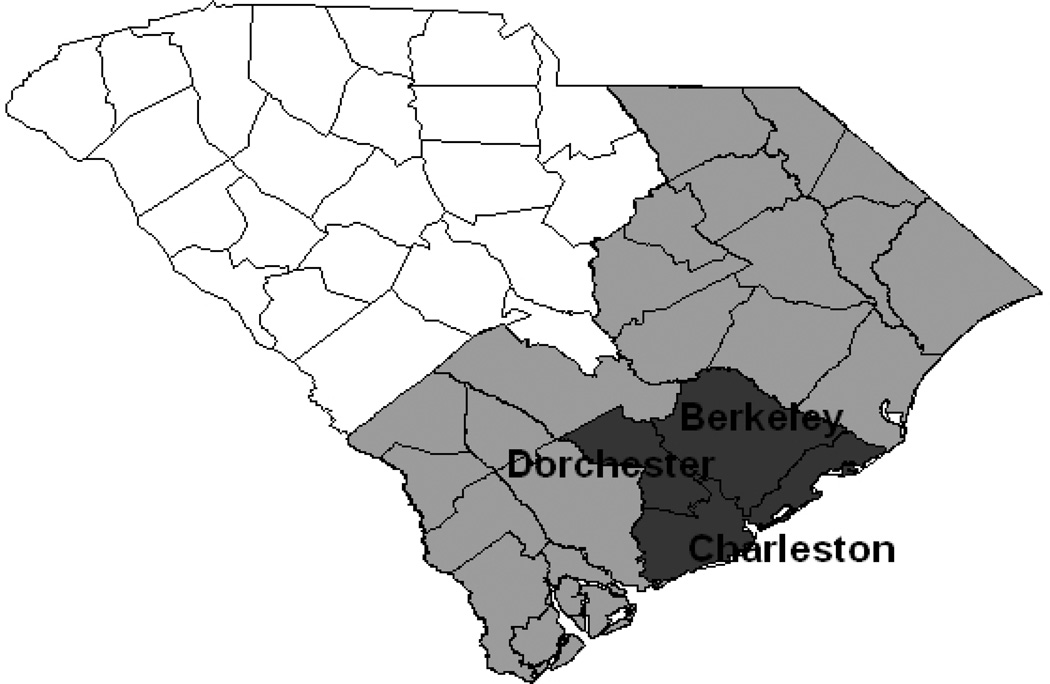
Methods: To accomplish this objective, the ADDM methodology was applied to a selected region of South Carolina for 8-year olds in 2000 (birth year 1992) and again seven years later for the same region and birth year.
Results: For this region and birth year, completeness of case ascertainment was high, with prevalence estimates of 7.6 per 1000 at both ages 8- and 15-years. For children common to both surveillance years, concordance in case status was also high (82%).
Conclusions: Given that prevalence did not change within this region and birth year, continued research is needed to better understand the changes in prevalence estimates being found by the ADDM network across surveillance groups.
Copyright © 2012 Elsevier Inc. All rights reserved.
Figures
References
-
- Prevalence of autism spectrum disorders – Autism and Developmental Disabilities Monitoring Network, six sites, United States, 2000. MMWR SS. 2007;56:1–12. - PubMed
-
- Prevalence of autism spectrum disorders – Autism and Developmental Disabilities Monitoring Network, 14 sites, United States, 2002. MMWR SS. 2007;56:13–29. - PubMed
-
- CDC. Prevalence of autism spectrum disorders- Autism and Developmental Disabilities Monitoring Network, United States, 2006. Surveillance Summaries, December 18, 2009. MMWR. 2009;58(SS-10):1–20. - PubMed
-
- Avchen RN, Wiggins LD, Devine O, et al. Evaluation of a records-review surveillance system used to determine the prevalence of autism spectrum disorders. J Autism Dev Disord. 2011;41:227–236. - PubMed
-
- Rice C, Baio J, Van Naarden Braun K, et al. A public health collaboration for the surveillance of autism spectrum disorders. Paediatr Perinat Epidemiol. 2007;21:179–190. - PubMed
Publication types
MeSH terms
Grants and funding
LinkOut - more resources
Full Text Sources
Medical
