


Risk factors for 30-day hospital readmission among general surgery patients
- PMID: 22726893
- PMCID: PMC3423490
- DOI: 10.1016/j.jamcollsurg.2012.05.024
Risk factors for 30-day hospital readmission among general surgery patients
Abstract
Background: Hospital readmission within 30 days of an index hospitalization is receiving increased scrutiny as a marker of poor-quality patient care. This study identifies factors associated with 30-day readmission after general surgery procedures.
Study design: Using standard National Surgical Quality Improvement Project protocol, preoperative, intraoperative, and postoperative outcomes were collected on patients undergoing inpatient general surgery procedures at a single academic center between 2009 and 2011. Data were merged with our institutional clinical data warehouse to identify unplanned 30-day readmissions. Demographics, comorbidities, type of procedure, postoperative complications, and ICD-9 coding data were reviewed for patients who were readmitted. Univariate and multivariate analysis was used to identify risk factors associated with 30-day readmission.
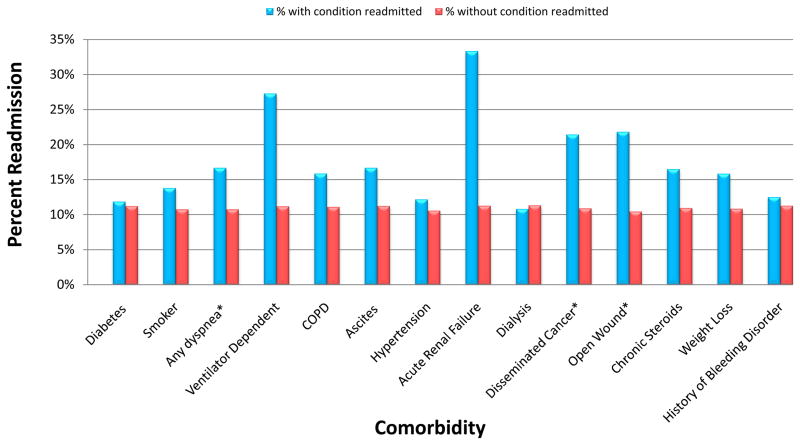
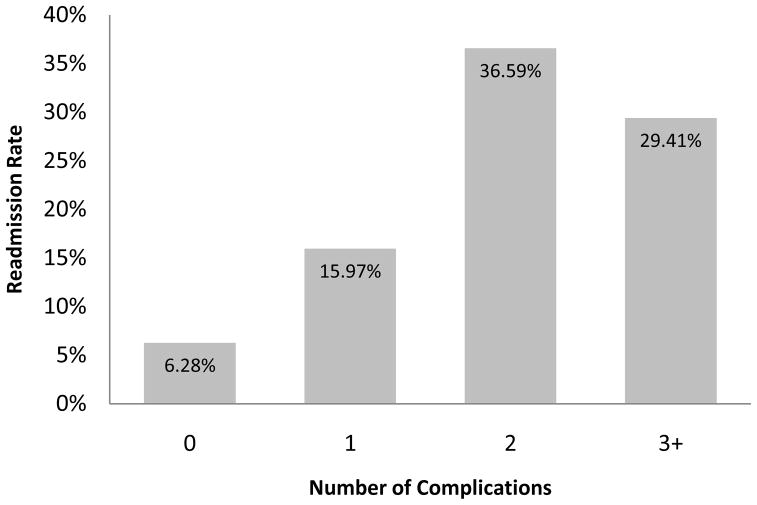
Results: One thousand four hundred and forty-two general surgery patients were reviewed. One hundred and sixty-three (11.3%) were readmitted within 30 days of discharge. The most common reasons for readmission were gastrointestinal problem/complication (27.6%), surgical infection (22.1%), and failure to thrive/malnutrition (10.4%). Comorbidities associated with risk of readmission included disseminated cancer, dyspnea, and preoperative open wound (p < 0.05 for all variables). Surgical procedures associated with higher rates of readmission included pancreatectomy, colectomy, and liver resection. Postoperative occurrences leading to increased risk of readmission were blood transfusion, postoperative pulmonary complication, wound complication, sepsis/shock, urinary tract infection, and vascular complications. Multivariable analysis demonstrates that the most significant independent risk factor for readmission is the occurrence of any postoperative complication (odds ratio = 4.20; 95% CI, 2.89-6.13).
Conclusions: Risk factors for readmission after general surgery procedures are multifactorial, however, postoperative complications appear to drive readmissions in surgical patients. Taking appropriate steps to minimize postoperative complications will decrease postoperative readmissions.
Copyright © 2012 American College of Surgeons. Published by Elsevier Inc. All rights reserved.
Figures
References
-
-
The Patient Protection and Affordable Care Act. 111th United States Congress. March 23, 2010.
-
-
- Friedman B, Basu J. The rate and cost of hospital readmissions for preventable conditions. Med Care Res Rev. 2004;61:225–240. - PubMed
-
- Kent TS, Sachs TE, Callery MP, Vollmer CM., Jr Readmission after major pancreatic resection: a necessary evil? J Am Coll Surg. 2011;213:515–523. - PubMed
Publication types
MeSH terms
Grants and funding
LinkOut - more resources
Full Text Sources
Other Literature Sources
Medical
