Chronic hepatitis C and antiviral treatment regimens: where can psychology contribute?
- PMID: 22730952
- PMCID: PMC3504622
- DOI: 10.1037/a0029030
Chronic hepatitis C and antiviral treatment regimens: where can psychology contribute?
Abstract
Objective: Our goal was to evaluate the existing literature on psychological, social, and behavioral aspects of chronic hepatitis C viral (HCV) infection and antiviral treatment; provide the state of the behavioral science in areas that presently hinder HCV-related health outcomes; and make recommendations for areas in which clinical psychology can make significant contributions.
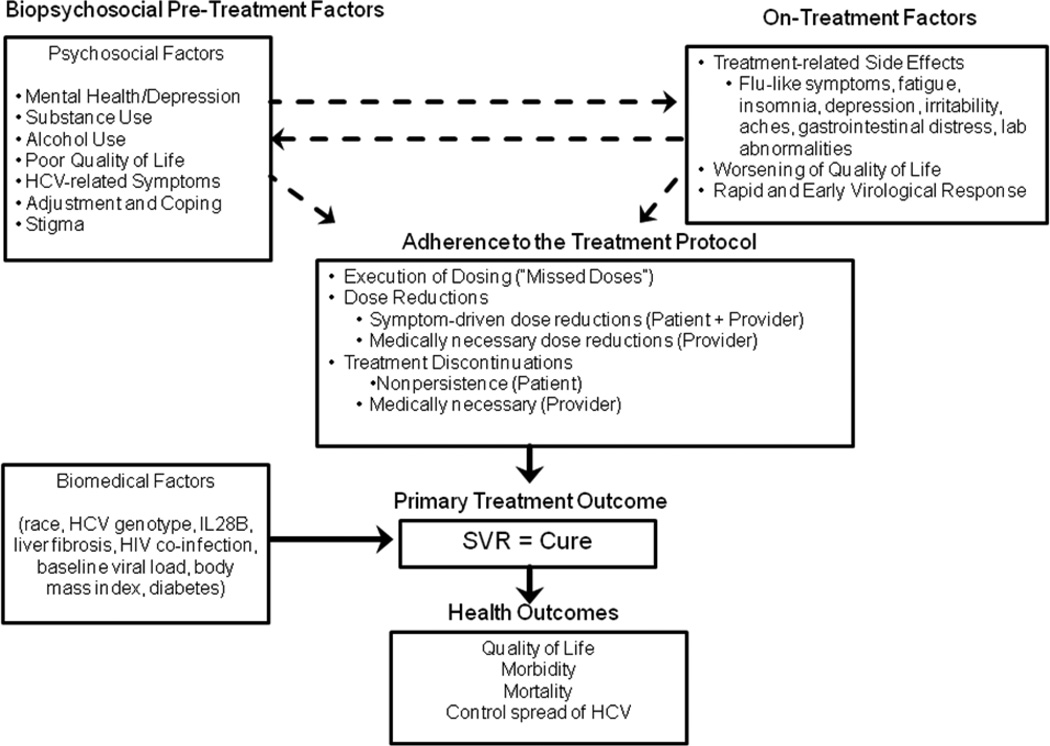
Method: The extant literature on HCV and antiviral therapy was reviewed as related to biopsychosocial factors such as mental health, substance/alcohol use, quality of life, coping, stigma, racial disparities, side effects, treatment adherence, integrated care, and psychological interventions.
Results: For reasons that have not been well elucidated, individuals infected with HCV experience psychological and somatic problems and report poor health-related quality of life. Preexisting conditions, including poor mental health and alcohol/substance use, can interfere with access to and successful completion of HCV treatment. Perceived stigma is highly prevalent and associated with psychological distress. Racial disparities exist for HCV prevalence, treatment uptake, and treatment success. During HCV treatment, patients experience exacerbation of symptoms, treatment side effects, and poorer quality of life, making it difficult to complete treatment. Despite pharmacological advances in HCV treatment, improvements in clinical and public health outcomes have not been realized. The reasons for this lack of impact are multifactorial, but include suboptimal referral and access to care for many patients, treatment-related side effects, treatment nonadherence, and lack of empirically based approaches.
Conclusions: Biomedical advances in HCV and antiviral treatment have created a fertile field in which psychologists are uniquely positioned to make important contributions to HCV management and treatment.
Figures
References
-
- Alam I, Stainbrook T, Cecil B, Kistler KD. Enhanced adherence to HCV therapy with higher dose ribavirin formulation: final analyses from the ADHERE registry. Aliment.Pharmacol.Ther. 2010;32(4):535–542. - PubMed
-
- Alter MJ, Kruszon-Moran D, Nainan OV, McQuillan GM, Gao F, Moyer LA, et al. The prevalence of hepatitis C virus infection in the United States, 1988 through, 1994. N.Engl.J.Med. 1999;341(8):556–562. - PubMed
-
- Anand BS, Currie S, Dieperink E, Bini EJ, Shen H, Ho SB, et al. Alcohol use and treatment of hepatitis C virus: results of a national multicenter study. Gastroenterology. 2006;130(6):1607–1616. - PubMed
-
- Antoni M, Ironson G, Schneiderman N. Treatments That Work. New York: Oxford University Press; 2007. Cognitive-Behavioral Stress Management.
Publication types
MeSH terms
Substances
Grants and funding
LinkOut - more resources
Full Text Sources
Other Literature Sources