


Allergic reactions to foods in preschool-aged children in a prospective observational food allergy study
- PMID: 22732173
- PMCID: PMC3382915
- DOI: 10.1542/peds.2011-1762
Allergic reactions to foods in preschool-aged children in a prospective observational food allergy study
Abstract
Objective: To examine circumstances of allergic reactions to foods in a cohort of preschool-aged children.
Methods: We conducted a prospective, 5-site observational study of 512 infants aged 3 to 15 months with documented or likely allergy to milk or egg, and collected data prospectively examining allergic reactions.
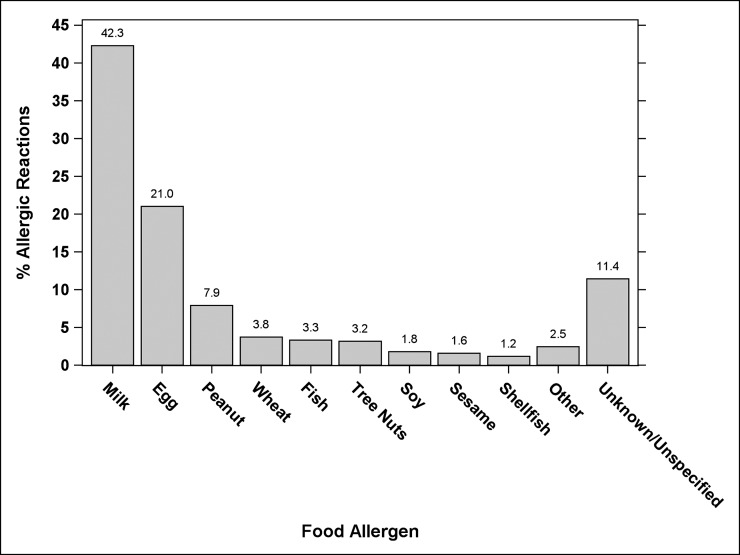
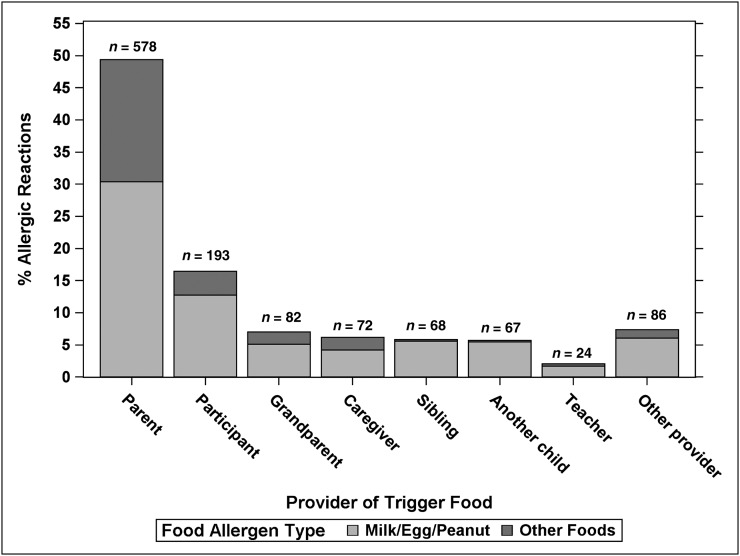
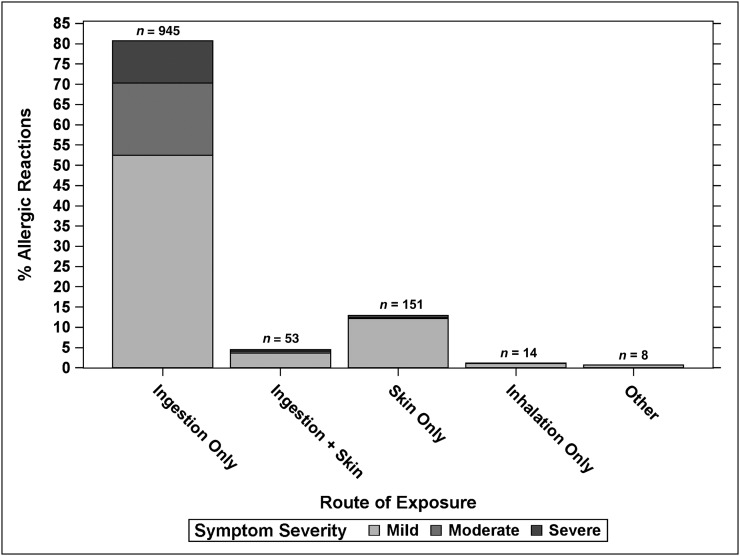
Results: Over a median follow-up of 36 months (range: 0-48.4), the annualized reaction rate was 0.81 per year (367/512 subjects reporting 1171 reactions [95% confidence interval: 0.76-0.85]). Overall, 269/512 (52.5%) reported >1 reaction. The majority of reactions (71.2%) were triggered by milk (495 [42.3%]), egg (246 [21.0%]), and peanut (93 [7.9%]), with accidental exposures attributed to unintentional ingestion, label-reading errors, and cross-contact. Foods were provided by persons other than parents in 50.6% of reactions. Of 834 reactions to milk, egg, or peanut, 93 (11.2%) were attributed to purposeful exposures to these avoided foods. A higher number of food allergies (P < .0001) and higher food-specific immunoglobulin E (P < .0001) were associated with reactions. Of the 11.4% of reactions (n = 134) that were severe, 29.9% were treated with epinephrine. Factors resulting in undertreatment included lack of recognition of severity, epinephrine being unavailable, and fears about epinephrine administration.
Conclusions: There was a high frequency of reactions caused by accidental and nonaccidental exposures. Undertreatment of severe reactions with epinephrine was a substantial problem. Areas for improved education include the need for constant vigilance, accurate label reading, avoidance of nonaccidental exposure, prevention of cross-contamination, appropriate epinephrine administration, and education of all caretakers.
Figures
References
-
- Gupta RS, Springston EE, Warrier MR, et al. . The prevalence, severity, and distribution of childhood food allergy in the United States. Pediatrics. 2011;128(1). Available at: www.pediatrics.org/cgi/content/full/128/1/e9. - PubMed
-
- Branum AM, Lukacs SL. Food allergy among children in the United States. Pediatrics. 2009;124(6):1549–1555 - PubMed
-
- Bock SA, Muñoz-Furlong A, Sampson HA. Further fatalities caused by anaphylactic reactions to food, 2001-2006. J Allergy Clin Immunol. 2007;119(4):1016–1018 - PubMed
-
- Sicherer SH, Burks AW, Sampson HA. Clinical features of acute allergic reactions to peanut and tree nuts in children. Pediatrics. 1998;102(1). Available at: www.pediatrics.org/cgi/content/full/102/1/e6. - PubMed
Publication types
MeSH terms
Substances
Grants and funding
LinkOut - more resources
Full Text Sources
Other Literature Sources
Medical
