


Parametric studies of antipsychotic-induced sensitization in the conditioned avoidance response model: roles of number of drug exposure, drug dose, and test-retest interval
- PMID: 22732209
- PMCID: PMC4756434
- DOI: 10.1097/FBP.0b013e32835651ea
Parametric studies of antipsychotic-induced sensitization in the conditioned avoidance response model: roles of number of drug exposure, drug dose, and test-retest interval
Abstract
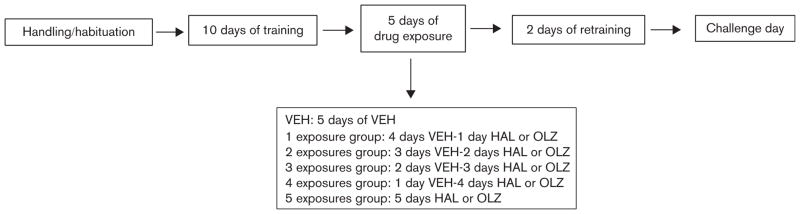
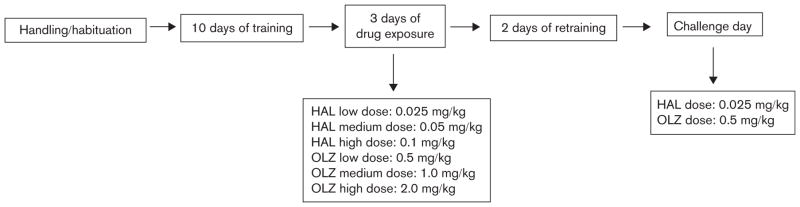
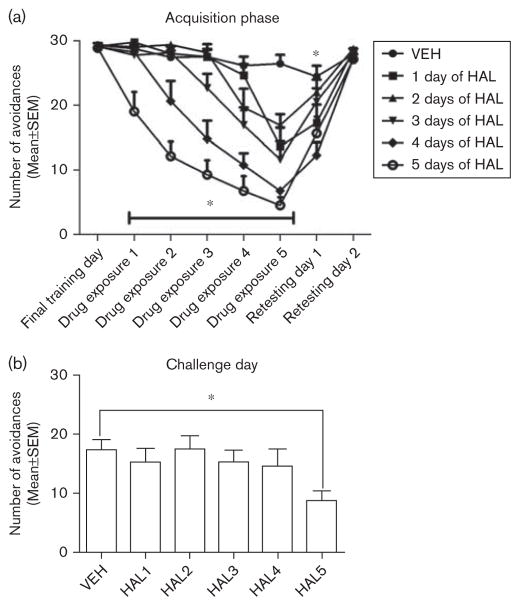
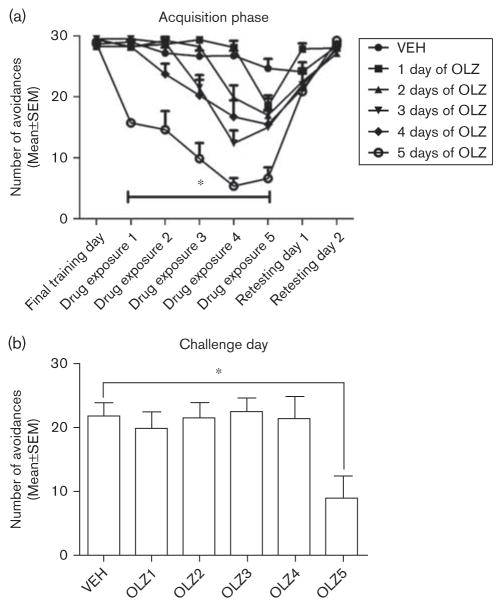
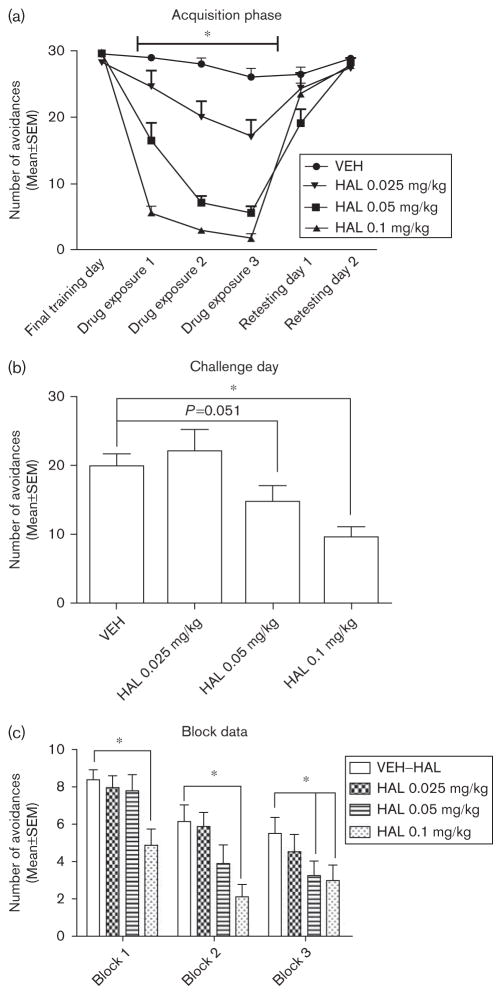
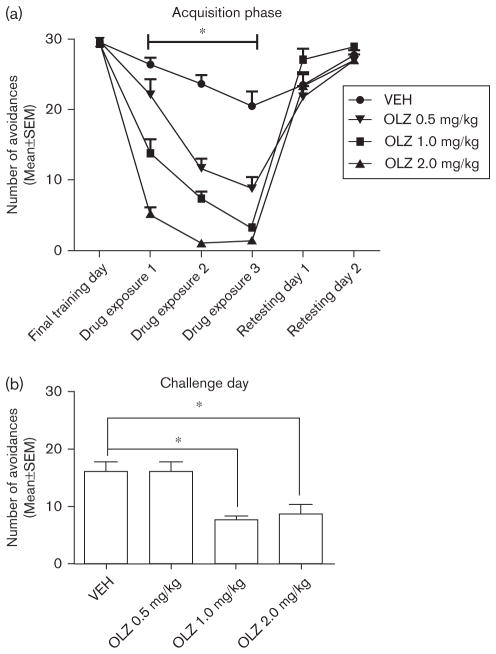
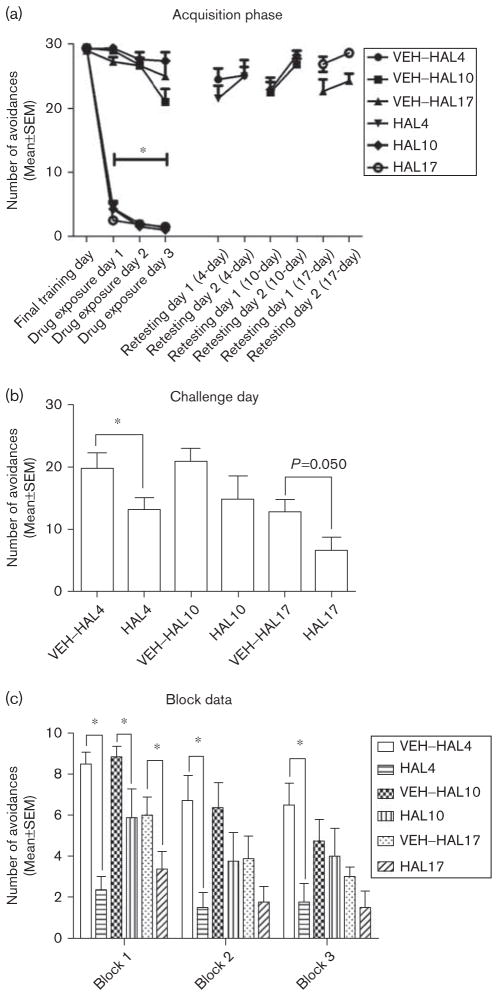
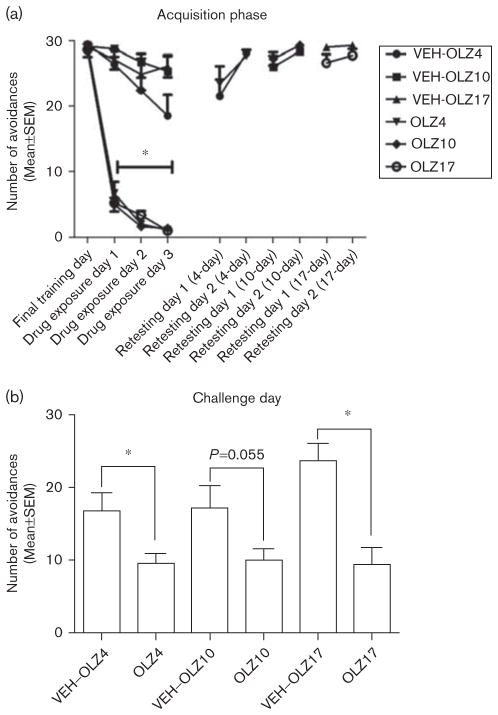
Repeated haloperidol and olanzapine treatment produces an enhanced disruption of avoidance responding, a validated measure of antipsychotic activity. Experimental parameters affecting this sensitization-like effect have not been thoroughly examined. The present study investigated the role of three parameters (number of injections, dose, and interval between initial exposure and challenge) in antipsychotic sensitization in the conditioned avoidance response paradigm. Well-trained Sprague-Dawley rats received different numbers of drug treatment (1-5 days) or different doses of haloperidol (0.025-0.10 mg/kg, subcutaneously) or olanzapine (0.5-2.0 mg/kg, subcutaneously). After certain time intervals (4, 10 or 17 days), they were tested for the expression of haloperidol or olanzapine sensitization in a challenge test in which all rats were injected with a lower dose of haloperidol (0.025 mg/kg) or olanzapine (0.5 mg/kg). Throughout the drug-treatment period, both haloperidol and olanzapine dose-dependently enhanced their disruption of avoidance responding. Three days later, the sensitization induced by a low dose of haloperidol (0.025 mg/kg) or olanzapine (0.5 mg/kg) was only apparent in rats that received treatment for 5 days, but not in those that received treatment for 1-4 days. The sensitization induced by the medium and high doses of haloperidol (0.05 and 0.10 mg/kg) or olanzapine (1.0 and 2.0 mg/kg) was still robust even with only 3 days of treatment. The sensitization induced by a 3-day haloperidol (0.10 mg/kg) and olanzapine (2.0 mg/kg) treatment was long-lasting, still detectable 17 days after the last drug treatment. This study suggests that antipsychotic sensitization is a robust behavioral phenomenon. Its induction and expression are strongly influenced by parameters such as number of drug exposures, drug dose, and test-retest interval. Given the importance of antipsychotic sensitization in the maintenance of antipsychotic effects in the clinic, this study introduces a paradigm that can be used to investigate the behavioral and neurobiological mechanisms underlying antipsychotic sensitization.
Conflict of interest statement
There are no conflicts of interest.
Figures

References
-
- Amtage J, Schmidt WJ. Context-dependent catalepsy intensification is due to classical conditioning and sensitization. Behav Pharmacol. 2003;14:563–567. - PubMed
-
- Anagnostaras SG, Robinson TE. Sensitization to the psychomotor stimulant effects of amphetamine: modulation by associative learning. Behav Neurosci. 1996;110:1397–1414. - PubMed
-
- Antelman SM, Gershon S. Clinical application of time-dependent sensitization to antidepressant therapy. Prog Neuropsychopharmacol Biol Psychiatry. 1998;22:65–78. - PubMed
-
- Antelman SM, Levine J, Gershon S. Time-dependent sensitization: the odyssey of a scientific heresy from the laboratory to the door of the clinic. Mol Psychiatry. 2000;5:350–356. - PubMed
-
- Barnes DE, Robinson B, Csernansky JG, Bellows EP. Sensitization versus tolerance to haloperidol-induced catalepsy: multiple determinants. Pharmacol Biochem Behav. 1990;36:883–887. - PubMed
Publication types
MeSH terms
Substances
Grants and funding
LinkOut - more resources
Full Text Sources
