


Genomic sequencing of Plasmodium falciparum malaria parasites from Senegal reveals the demographic history of the population
- PMID: 22734050
- PMCID: PMC3472501
- DOI: 10.1093/molbev/mss161
Genomic sequencing of Plasmodium falciparum malaria parasites from Senegal reveals the demographic history of the population
Abstract
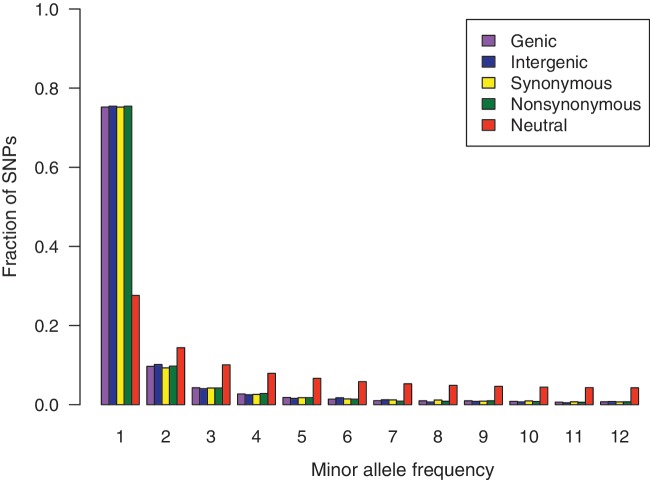
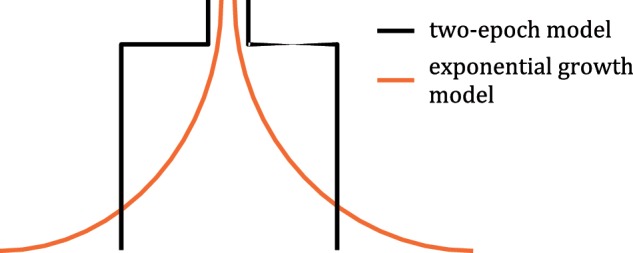
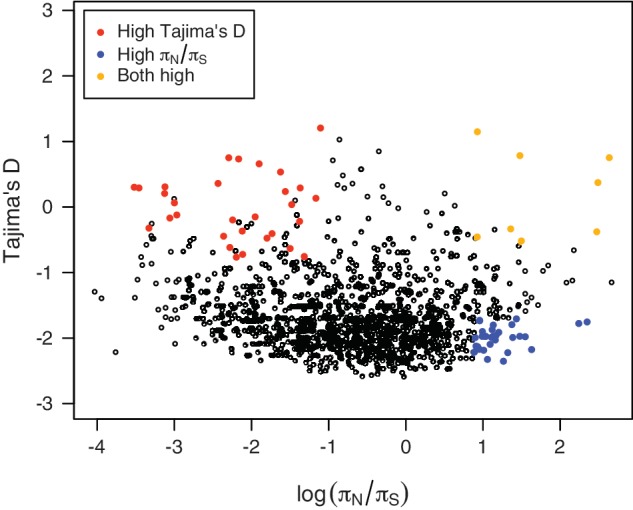
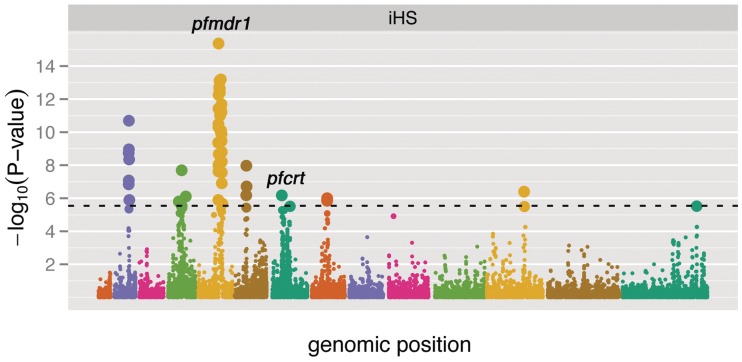
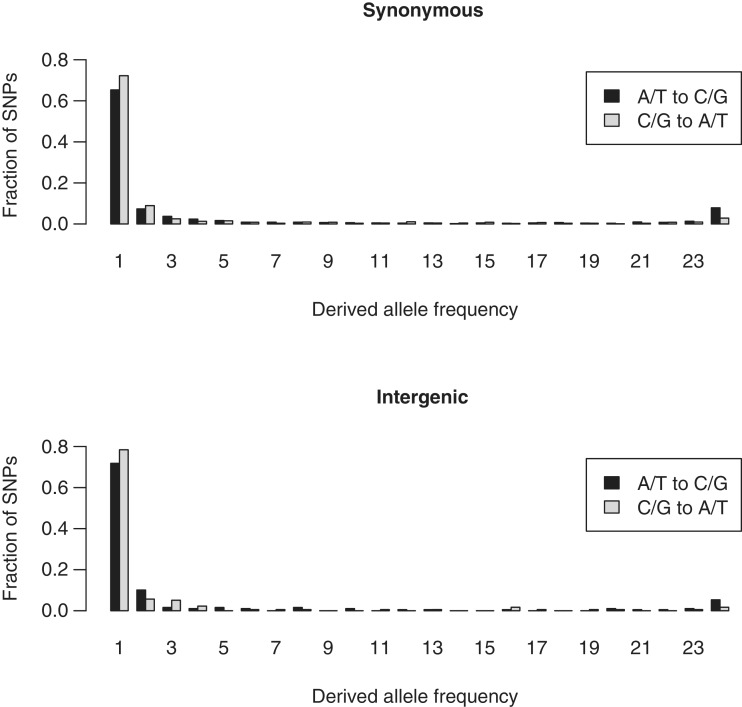
Malaria is a deadly disease that causes nearly one million deaths each year. To develop methods to control and eradicate malaria, it is important to understand the genetic basis of Plasmodium falciparum adaptations to antimalarial treatments and the human immune system while taking into account its demographic history. To study the demographic history and identify genes under selection more efficiently, we sequenced the complete genomes of 25 culture-adapted P. falciparum isolates from three sites in Senegal. We show that there is no significant population structure among these Senegal sampling sites. By fitting demographic models to the synonymous allele-frequency spectrum, we also estimated a major 60-fold population expansion of this parasite population ∼20,000-40,000 years ago. Using inferred demographic history as a null model for coalescent simulation, we identified candidate genes under selection, including genes identified before, such as pfcrt and PfAMA1, as well as new candidate genes. Interestingly, we also found selection against G/C to A/T changes that offsets the large mutational bias toward A/T, and two unusual patterns: similar synonymous and nonsynonymous allele-frequency spectra, and 18% of genes having a nonsynonymous-to-synonymous polymorphism ratio >1.
Figures
References
-
- Anderson TJ, Haubold B, Williams JT, et al. (16 co-authors) Microsatellite markers reveal a spectrum of population structures in the malaria parasite Plasmodium falciparum. Mol Biol Evol. 2000;17(10):1467–1482. - PubMed
-
- Baron JM, Higgins JM, Dzik WH. A revised timeline for the origin of Plasmodium falciparum as a human pathogen. J Mol Evol. 2011;73(5–6):297–304. - PubMed
-
- Bethke LL, Zilversmit M, Nielsen K, Daily J, Volkman SK, Ndiaye D, Lozovsky ER, Hartl DL, Wirth DF. Duplication, gene conversion, and genetic diversity in the species-specific acyl-CoA synthetase gene family of Plasmodium falciparum. Mol Biochem Parasitol. 2006;150(1):10–24. - PubMed
-
- Carlton J. The Plasmodium vivax genome sequencing project. Trends Parasitol. 2003;19(5):227–231. - PubMed
-
- Chanda I, Pan A, Dutta C. Proteome composition in Plasmodium falciparum: higher usage of GC-rich nonsynonymous codons in highly expressed genes. J Mol Evol. 2005;61(4):513–523. - PubMed
Publication types
MeSH terms
Substances
Grants and funding
LinkOut - more resources
Full Text Sources
Miscellaneous
