


Oxidative stress and programmed cell death in yeast
- PMID: 22737670
- PMCID: PMC3380282
- DOI: 10.3389/fonc.2012.00064
Oxidative stress and programmed cell death in yeast
Abstract
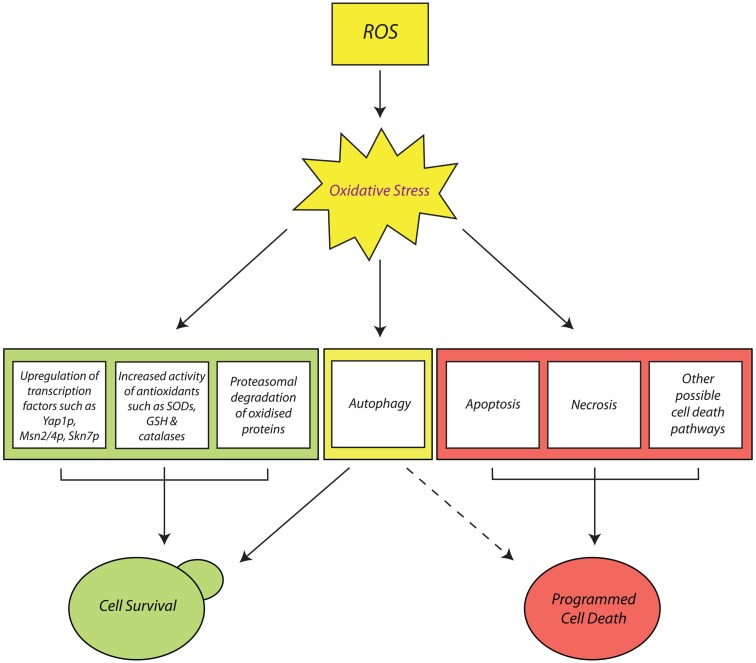
Yeasts, such as Saccharomyces cerevisiae, have long served as useful models for the study of oxidative stress, an event associated with cell death and severe human pathologies. This review will discuss oxidative stress in yeast, in terms of sources of reactive oxygen species (ROS), their molecular targets, and the metabolic responses elicited by cellular ROS accumulation. Responses of yeast to accumulated ROS include upregulation of antioxidants mediated by complex transcriptional changes, activation of pro-survival pathways such as mitophagy, and programmed cell death (PCD) which, apart from apoptosis, includes pathways such as autophagy and necrosis, a form of cell death long considered accidental and uncoordinated. The role of ROS in yeast aging will also be discussed.
Keywords: aging; apoptosis; autophagy; mitophagy; necrosis; oxidative stress; yeast.
Figures
References
-
- Ahn S. H., Cheung W. L., Hsu J. Y., Diaz R. L., Smith M. M., Allis C. D. (2005). Sterile 20 kinase phosphorylates histone H2B at serine 10 during hydrogen peroxide-induced apoptosis in S. cerevisiae. Cell 120, 25–36 - PubMed
LinkOut - more resources
Full Text Sources
Molecular Biology Databases
