


To tell or not to tell? A systematic review of ethical reflections on incidental findings arising in genetics contexts
- PMID: 22739341
- PMCID: PMC3573190
- DOI: 10.1038/ejhg.2012.130
To tell or not to tell? A systematic review of ethical reflections on incidental findings arising in genetics contexts
Abstract
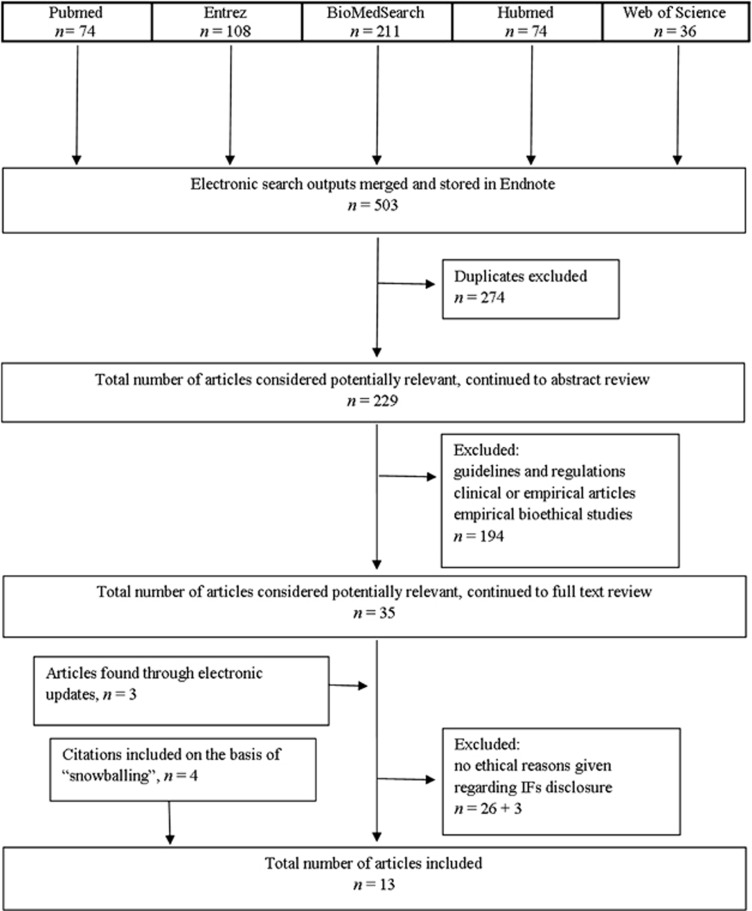
Any test that produces visual images or digital or genetic sequences will tend to produce incidental findings because more will be visible than what was originally sought. We conducted a systematic review of the ethical reasons presented in the literature for and against the disclosure of incidental findings arising in clinical and research genetics contexts. A search of electronic databases resulted in 13 articles included for systematic review. Articles presented reasons for and against disclosure, and reasons for proceeding with caution when making decisions about disclosure. One major recommendation of the reviewed articles is in favor of qualified disclosure: incidental findings with confirmed clinical utility where there is the possibility of treatment or prevention should be disclosed, with exceptions. A second type of recommendation is that disclosure should proceed with caution, especially in the context of new genetic technologies and genetic testing involving minors. It is also recommended that the number of possible incidental findings be limited even before genetic testing is carried out. Such a policy, which we advocate, would show preference for non-disclosure.
Figures
References
Publication types
MeSH terms
LinkOut - more resources
Full Text Sources
Medical
