


Identification of MW polyomavirus, a novel polyomavirus in human stool
- PMID: 22740408
- PMCID: PMC3457274
- DOI: 10.1128/JVI.01210-12
Identification of MW polyomavirus, a novel polyomavirus in human stool
Abstract
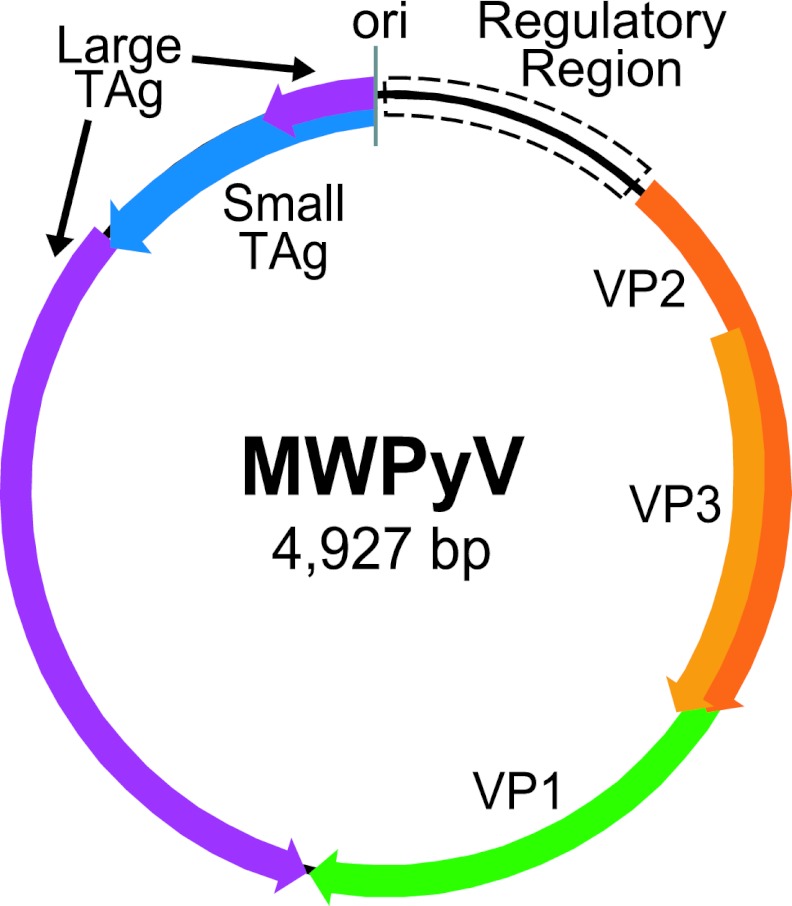
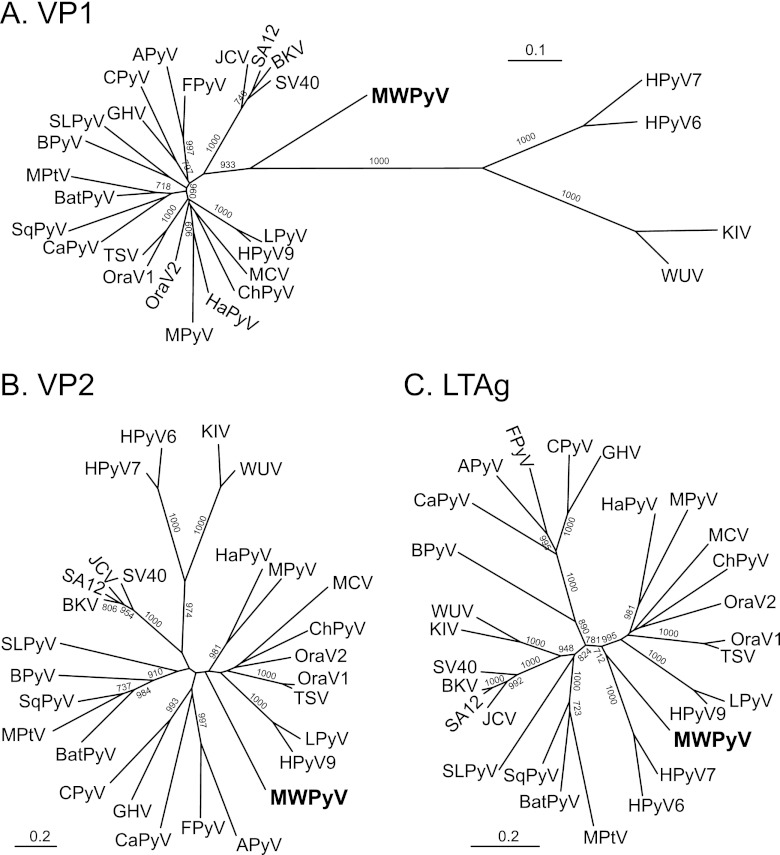
We have discovered a novel polyomavirus present in multiple human stool samples. The virus was initially identified by shotgun pyrosequencing of DNA purified from virus-like particles isolated from a stool sample collected from a healthy child from Malawi. We subsequently sequenced the virus' 4,927-bp genome, which has been provisionally named MW polyomavirus (MWPyV). The virus has genomic features characteristic of the family Polyomaviridae but is highly divergent from other members of this family. It is predicted to encode the large T antigen and small T antigen early proteins and the VP1, VP2, and VP3 structural proteins. A real-time PCR assay was designed and used to screen 514 stool samples from children with diarrhea in St. Louis, MO; 12 specimens were positive for MWPyV. Comparison of the whole-genome sequences of the index Malawi case and one St. Louis case demonstrated that the two strains of MWPyV varied by 5.3% at the nucleotide level. The number of polyomaviruses found in the human body continues to grow, raising the question of how many more species have yet to be identified and what roles they play in humans with and without manifest disease.
Figures
References
Publication types
MeSH terms
Substances
Associated data
- Actions
- Actions
Grants and funding
LinkOut - more resources
Full Text Sources
Other Literature Sources
Research Materials
