


Bax expression is predictive of favorable clinical outcome in chemonaive advanced gastric cancer patients treated with capecitabine, oxaliplatin, and irinotecan regimen
- PMID: 22741034
- PMCID: PMC3384269
- DOI: 10.1596/tlo.12151
Bax expression is predictive of favorable clinical outcome in chemonaive advanced gastric cancer patients treated with capecitabine, oxaliplatin, and irinotecan regimen
Abstract
Objective: Bax protein is a key mediator of apoptosis, and it might be related to chemosensitivity. The purpose of this study was to evaluate the prognostic role of Bax in patients with advanced gastric cancer treated with triplet chemotherapy COI regimen (capecitabine, oxaliplatin, and irinotecan).
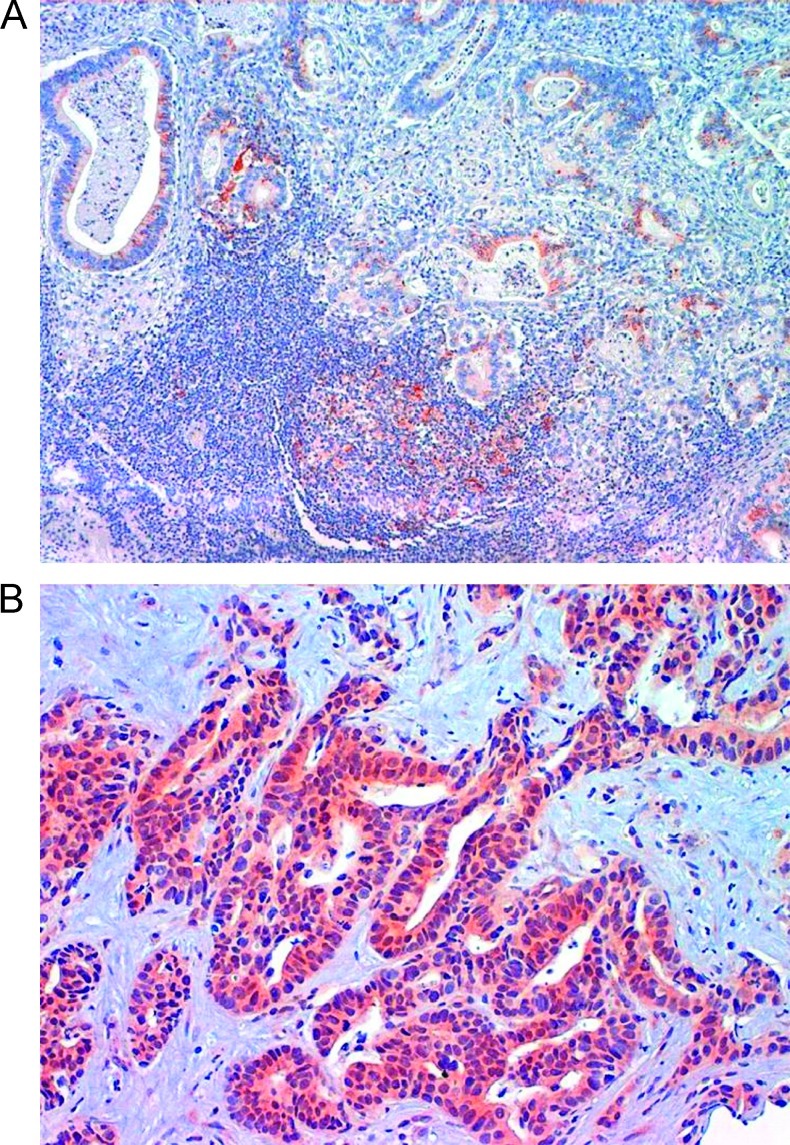
Methods: Pretreatment tissue blocks were available for 23 consecutive patients, selected for good performance status (ECOG ≤ 1) and consenting for treatment with first-line COI at a single institution. Bax levels were classified as positive or negative by immunohistochemistry (bax N20; Santa Cruz Biotechnology) and related to outcome in terms of response rate, progression-free survival, and overall survival.
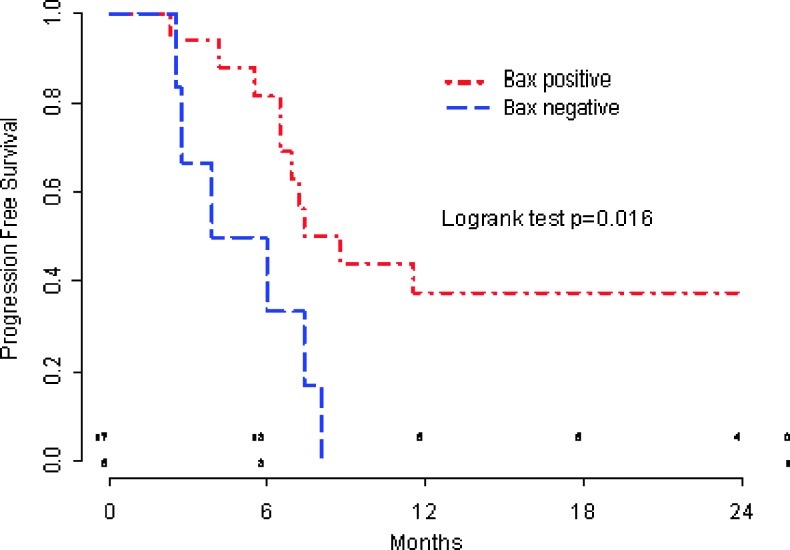
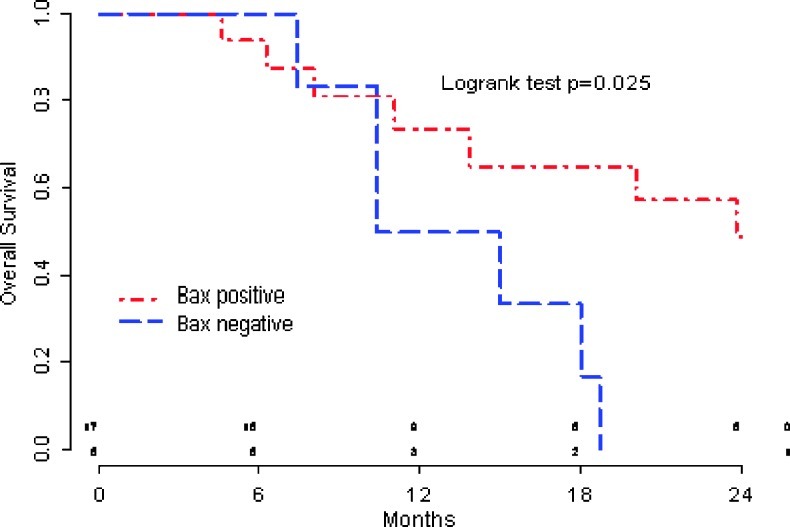
Results: Bax-negative and -positive samples were 26% and 74%, respectively. Bax expression was associated with significantly higher response rate (87% vs 33%), progression-free survival (8.7 vs 4.9 months, P = .016), and overall survival (23.8 vs 12.7 months, P = .025). In multivariate analysis including Bax and performance status, low Bax independently predicted worse outcome, along with suboptimal performance status.
Conclusions: In advanced gastric cancer, Bax expression was related to clinical benefit with COI regimen. Whether Bax is a prognostic or mixed prognostic/predictive factor warrants prospective confirmation. It is to be defined if Bax predicts sensitivity to platinum analogs or to whatever chemotherapy regimen.
Conflict of interest statement
All authors have no conflicts of interest.
Figures
References
-
- Parkin DM. International variation. Oncogene. 2004;23:6329–6340. - PubMed
-
- Grimelius B, Ekstrom K, Hoffman K, Graf W, Sjoden PO, Haglund U, Svensson C, Enander LK, Linne T, Sellstrom H, et al. Randomized comparison between chemotherapy plus best supportive care with best supportive care in advanced gastric cancer. Ann Oncol. 1997;8:163–168. - PubMed
-
- Wagner AD, Grothe W, Haerting J, Kleber G, Grothey A, Fleig WE. Chemotherapy in advanced gastric cancer: a systematic review and meta-analysis based on aggregate data. J Clin Oncol. 2006;24:2903–2909. - PubMed
-
- Cunningham D, Starling N, Rao S, Iveson T, Nicolson M, Coxon F, Middleton G, Daniel F, Oates J, Norman AR. Capecitabine and oxaliplatin for advanced esophagogastric cancer. N Engl J Med. 2008;358:36–46. - PubMed
-
- Bang YJ, Van Cutsem E, Feyereislova A, Chung HC, Shen L, Sawaki A, Lordick F, Ohtsu A, Omuro Y, Satoh T, et al. Trastuzumab in combination with chemotherapy versus chemotherapy alone for treatment of HER2-positive advanced gastric or gastro-oesophageal junction cancer (ToGA): a phase 3, open-label, randomised controlled trial. Lancet. 2010;376:687–697. - PubMed
LinkOut - more resources
Full Text Sources
Research Materials