


A human laboratory study investigating the effects of quetiapine on marijuana withdrawal and relapse in daily marijuana smokers
- PMID: 22741619
- PMCID: PMC3465638
- DOI: 10.1111/j.1369-1600.2012.00461.x
A human laboratory study investigating the effects of quetiapine on marijuana withdrawal and relapse in daily marijuana smokers
Abstract
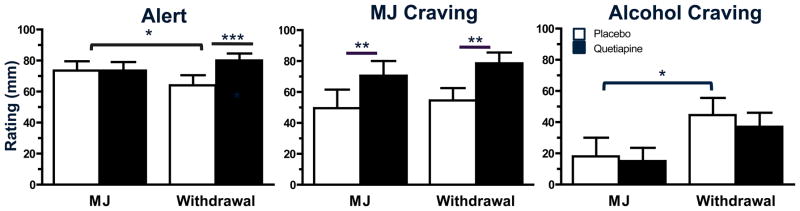
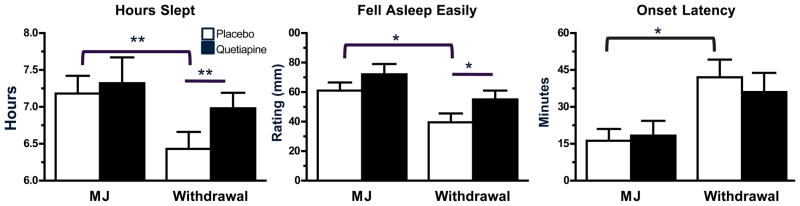
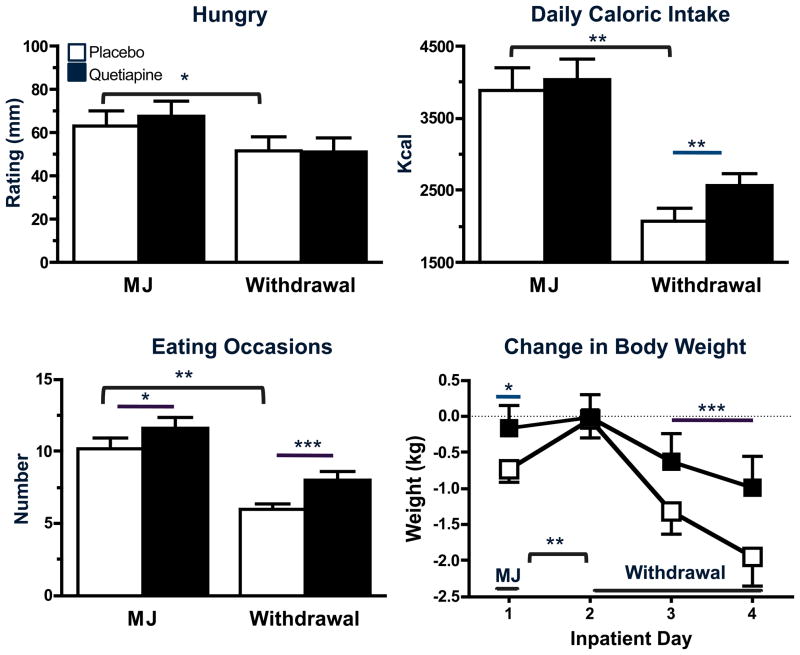
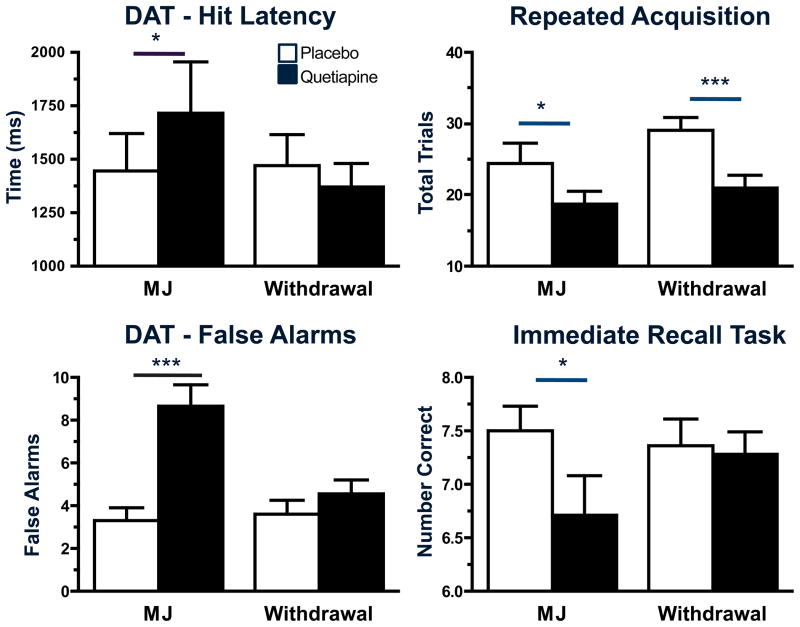
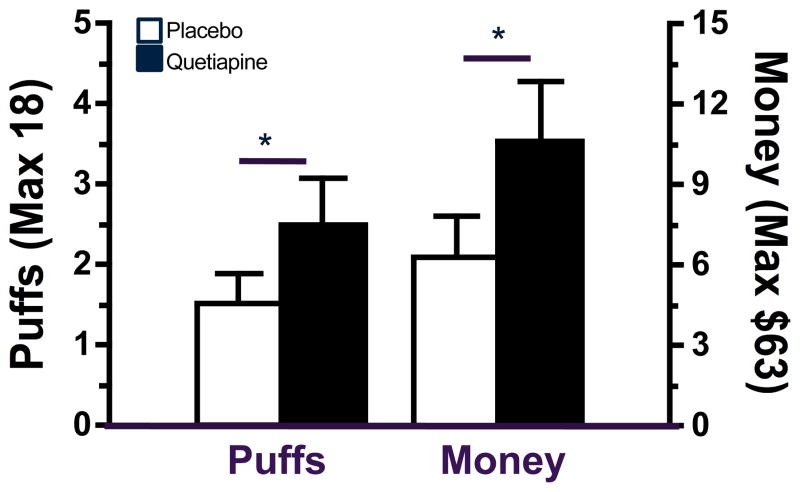
Marijuana withdrawal contributes to the high relapse rates in individuals seeking treatment for marijuana-use disorders. Quetiapine, an atypical antipsychotic, reduces characteristic symptoms of marijuana withdrawal in a variety of psychiatric conditions, including mood lability, sleep disruption and anorexia. This human laboratory study investigated the effectiveness of quetiapine to decrease marijuana withdrawal and relapse to marijuana use in non-treatment-seeking marijuana smokers. Volunteers were maintained on placebo or quetiapine (200 mg/day) in this double-blind, counter-balanced, within-subject study consisting of two 15-day medication phases, the last 8 days of which were in-patient. On the first in-patient day, active marijuana [6.2% delta (9)-tetrahydrocannabinol (THC)] was repeatedly smoked under controlled conditions. For the next 3 days, inactive marijuana (0.0% THC) was available for self-administration (withdrawal). On the subsequent 4 days, active marijuana (6.2% THC) was available for self-administration (relapse). Volunteers (n = 14) who smoked an average of 10 marijuana cigarettes/day, 7 days/week, completed the study. Under placebo, withdrawal was marked by increased subjective ratings of negative mood, decreased sleep quality, and decreased caloric intake and weight loss. Compared with placebo, quetiapine improved sleep quality, increased caloric intake and decreased weight loss. However, quetiapine increased marijuana craving and marijuana self-administration during the relapse phase. These data do not suggest that quetiapine shows promise as a potential treatment for marijuana dependence.
Keywords: Marijuana; relapse; withdrawal.
© 2012 The Authors, Addiction Biology © 2012 Society for the Study of Addiction.
Figures
References
-
- Allsop DJ, Norberg MM, Copeland J, Fu S, Budney AJ. The cannabis withdrawal scale development: patterns and predictors of cannabis withdrawal and distress. Drug Alcohol Depend. 2011;119(1–2):123–9. - PubMed
-
- Buckley PF. Broad therapeutic uses of atypical antipsychotic medications. Biol Psychiatry. 2001;50(11):912–24. - PubMed
-
- Budney AJ, Hughes JR, Moore BA, Novy PL. Marijuana abstinence effects in marijuana smokers maintained in their home environment. Arch Gen Psychiatry. 2001;58(10):917–24. - PubMed
-
- Budney AJ, Moore BA, Vandrey RG, Hughes JR. The time course and significance of cannabis withdrawal. J Abnorm Psychol. 2003;112(3):393–402. - PubMed
Publication types
MeSH terms
Substances
Grants and funding
LinkOut - more resources
Full Text Sources
Medical
