


Review
doi: 10.1097/JNN.0b013e3182527571.
Neuroplasticity and successful cognitive aging: a brief overview for nursing
Affiliations
- PMID: 22743813
- PMCID: PMC3828033
- DOI: 10.1097/JNN.0b013e3182527571
Item in Clipboard
Review
Neuroplasticity and successful cognitive aging: a brief overview for nursing
J Neurosci Nurs.
2012 Aug.
Abstract
The brain remains dynamic even in older age and can benefit from mental exercises. Thus, it is important to understand the concepts of positive and negative neuroplasticity and how these mechanisms either support or detract from cognitive reserve. This article provides a brief review of these key concepts using four exemplary studies that clearly show the effects that these neurological mechanisms exert on cognitive reserve and cognitive functioning. From this review, a working knowledge of how neuroplasticity and cognitive reserve are expressed in patients will be provided along with how this information can be incorporated into nursing practice and research.
Figures
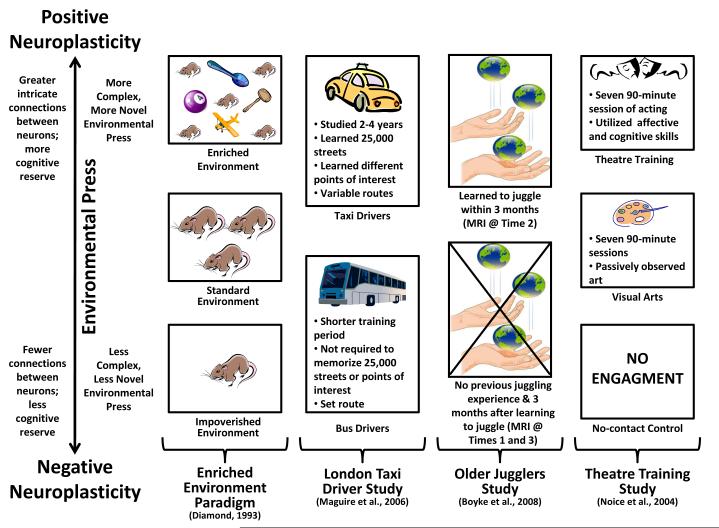
The interaction of environmental press on positive and negative neuroplasticity.
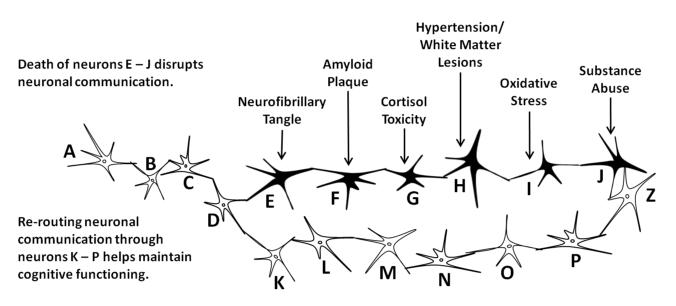
Cognitive reserve and cognitive functioning.
References
-
- Akbaraly TN, Hininger-Favier I, Carrière I, Arnaud J, Gourlet V, Roussel AM, Berr C. Plasma selenium over time and cognitive decline in the elderly. Epidemiology. 2007;18(1):52–58. doi: 10.1097/01.ede.0000248202.83695.4e. - PubMed
-
- Anstey KJ. Alcohol exposure and cognitive development: An example of why we need a contextualized, dynamic life course approach to cognitive aging – a mini-review. Gerontology. 2008;54(5):283–291. doi: 10.1159/000161735. - PubMed
-
- Ball K, Edwards JD, Ross LA. The impact of speed of processing training on cognitive and everyday functions. Journals of Gerontology Series B: Psychological Sciences and Social Sciences. 2007;62(Spec No 1):19–31. doi: 62/suppl_Special_Issue_1/19. - PubMed
Publication types
MeSH terms
Grants and funding
LinkOut - more resources
Full Text Sources
Medical
