


Functional outcomes of adults with 22q11.2 deletion syndrome
- PMID: 22744446
- PMCID: PMC3465579
- DOI: 10.1038/gim.2012.66
Functional outcomes of adults with 22q11.2 deletion syndrome
Abstract
Purpose: The 22q11.2 deletion syndrome is a common multisystem genomic disorder with congenital and later-onset manifestations, including congenital heart disease, intellectual disability, and psychiatric illness, that may affect long-term functioning. There are limited data on adult functioning in 22q11.2 deletion syndrome.
Methods: We used the Vineland Adaptive Behavior Scales to assess functioning in 100 adults with 22q11.2 deletion syndrome (n = 46 male; mean age = 28.8 (standard deviation = 9.7) years) where intellect ranged from average to borderline (n = 57) to mild intellectual disability (n = 43).
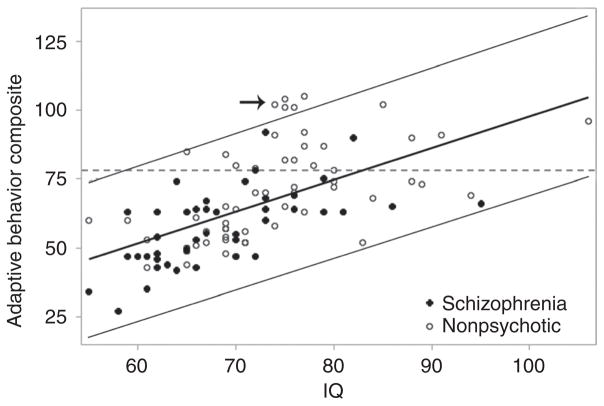
Results: More than 75% of the subjects scored in the functional deficit range. Although personal, vocational, and financial demographics confirmed widespread functional impairment, daily living skills and employment were relative strengths. Intelligence quotient was a significant predictor (P < 0.001) of overall and domain-specific adaptive functioning skills. A diagnosis of schizophrenia was a significant predictor (P < 0.05) of overall adaptive functioning, daily living skills, and socialization scores. Notably, congenital heart disease, history of mood/anxiety disorders, sex, and age were not significant predictors of functioning.
Conclusion: Despite functional impairment in adulthood that is primarily mediated by cognitive and psychiatric phenotypes, relative strengths in activities of daily living and employment have important implications for services and long-term planning. These results may help to inform expectations about outcomes for patients with 22q11.2 deletion syndrome.
Conflict of interest statement
The authors declare no conflict of interest.
Figures
References
Publication types
MeSH terms
Grants and funding
LinkOut - more resources
Full Text Sources
Medical
