


Assessment of echocardiography and biomarkers for the extended prediction of cardiotoxicity in patients treated with anthracyclines, taxanes, and trastuzumab
- PMID: 22744937
- PMCID: PMC3703313
- DOI: 10.1161/CIRCIMAGING.112.973321
Assessment of echocardiography and biomarkers for the extended prediction of cardiotoxicity in patients treated with anthracyclines, taxanes, and trastuzumab
Abstract
Background: Because cancer patients survive longer, the impact of cardiotoxicity associated with the use of cancer treatments escalates. The present study investigates whether early alterations of myocardial strain and blood biomarkers predict incident cardiotoxicity in patients with breast cancer during treatment with anthracyclines, taxanes, and trastuzumab.
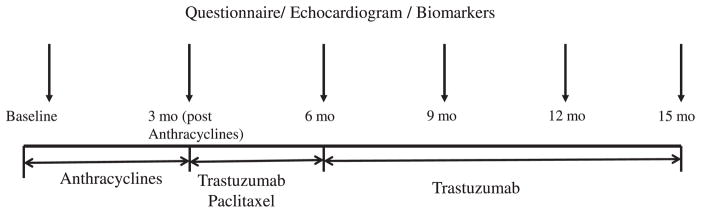
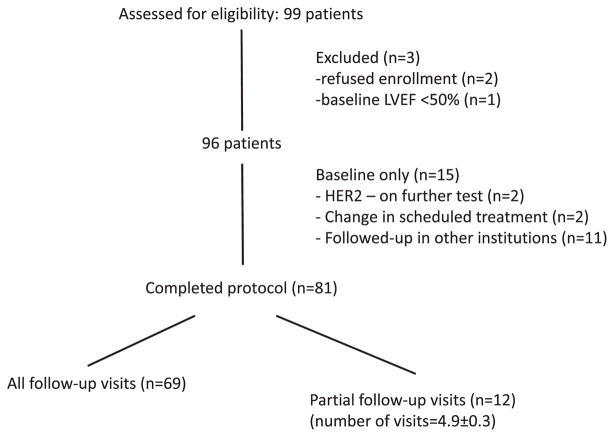
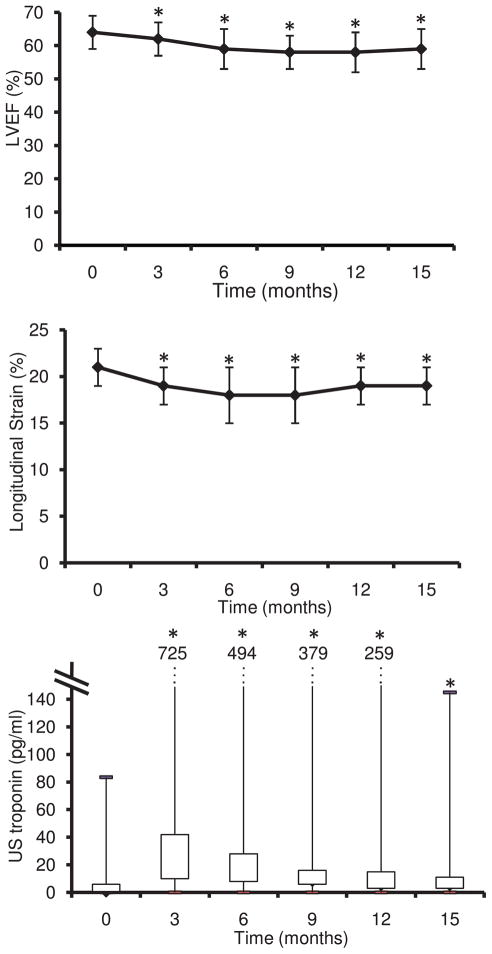
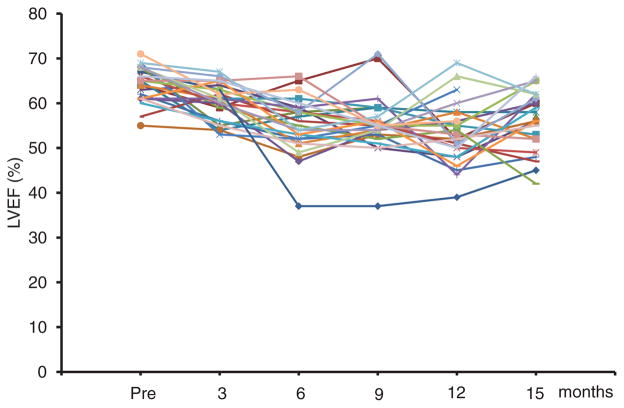
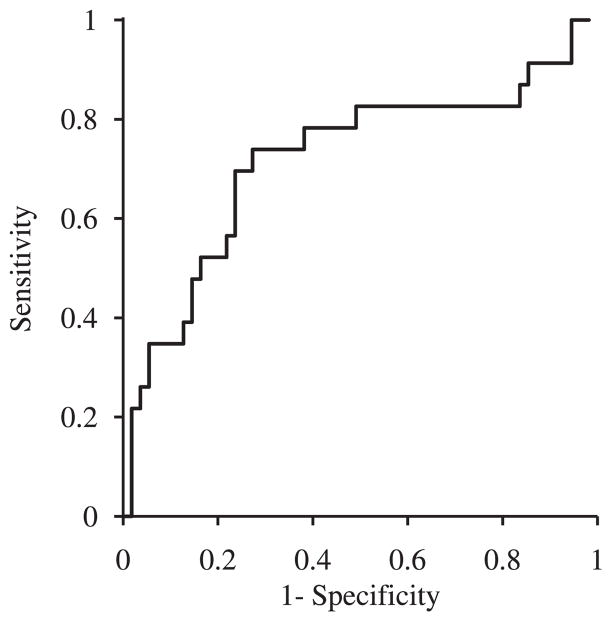
Methods and results: Eighty-one women with newly diagnosed human epidermal growth factor receptor 2-positive breast cancer, treated with anthracyclines followed by taxanes and trastuzumab were enrolled to be evaluated every 3 months during their cancer therapy (total of 15 months) using echocardiograms and blood samples. Left ventricular ejection fraction, peak systolic longitudinal, radial, and circumferential myocardial strain were calculated. Ultrasensitive troponin I, N-terminal pro-B-type natriuretic peptide, and the interleukin family member (ST2) were also measured. Left ventricular ejection fraction decreased (64 ± 5% to 59 ± 6%; P<0.0001) over 15 months. Twenty-six patients (32%, [22%-43%]) developed cardiotoxicity as defined by the Cardiac Review and Evaluation Committee Reviewing Trastuzumab; of these patients, 5 (6%, [2%-14%]) had symptoms of heart failure. Peak systolic longitudinal myocardial strain and ultrasensitive troponin I measured at the completion of anthracyclines treatment predicted the subsequent development of cardiotoxicity; no significant associations were observed for left ventricular ejection fraction, N-terminal pro-B-type natriuretic peptide, and ST2. Longitudinal strain was <19% in all patients who later developed heart failure.
Conclusions: In patients with breast cancer treated with anthracyclines, taxanes, and trastuzumab, systolic longitudinal myocardial strain and ultrasensitive troponin I measured at the completion of anthracyclines therapy are useful in the prediction of subsequent cardiotoxicity and may help guide treatment to avoid cardiac side-effects.
Figures
Comment in
-
Screening for long-term cardiac status during cancer treatment.Circ Cardiovasc Imaging. 2012 Sep 1;5(5):555-8. doi: 10.1161/CIRCIMAGING.112.977751. Circ Cardiovasc Imaging. 2012. PMID: 22991285 No abstract available.
-
Ultrasensitive cardiac troponin and myocardial strain predict cardiotoxicity.Biomark Med. 2012 Dec;6(6):785-8. doi: 10.2217/bmm.12.68. Biomark Med. 2012. PMID: 23227843 No abstract available.
References
-
- Guglin M, Cutro R, Mishkin JD. Trastuzumab-induced cardiomyopathy. J Card Fail. 2008;14:437–444. - PubMed
-
- Ewer MS, Vooletich MT, Durand JB, Woods ML, Davis JR, Valero V, Lenihan DJ. Reversibility of trastuzumab-related cardiotoxicity: new insights based on clinical course and response to medical treatment. J Clin Oncol. 2005;23:7820–7826. - PubMed
-
- Jensen BV, Skovsgaard T, Nielsen SL. Functional monitoring of anthracy-cline cardiotoxicity: a prospective, blinded, long-term observational study of outcome in 120 patients. Ann Oncol. 2002;13:699–709. - PubMed
-
- Neilan TG, Jassal DS, Perez-Sanz TM, Raher MJ, Pradhan AD, Buys ES, Ichinose F, Bayne DB, Halpern EF, Weyman AE, Derumeaux G, Bloch KD, Picard MH, Scherrer-Crosbie M. Tissue Doppler imaging predicts left ventricular dysfunction and mortality in a murine model of cardiac injury. Eur Heart J. 2006;27:1868–1875. - PubMed
-
- Ganame J, Claus P, Eyskens B, Uyttebroeck A, Renard M, D’hooge J, Gewillig M, Bijnens B, Sutherland GR, Mertens L. Acute cardiac functional and morphological changes after Anthracycline infusions in children. Am J Cardiol. 2007;99:974–977. - PubMed
Publication types
MeSH terms
Substances
Grants and funding
LinkOut - more resources
Full Text Sources
Medical
Research Materials
