


Bristol girls dance project feasibility trial: outcome and process evaluation results
- PMID: 22747608
- PMCID: PMC3411449
- DOI: 10.1186/1479-5868-9-83
Bristol girls dance project feasibility trial: outcome and process evaluation results
Abstract
Background: Many adolescent girls do not engage in sufficient physical activity (PA). This study examined the feasibility of conducting a cluster randomized controlled trial (RCT) to evaluate an after-school dance program to increase PA among 11-12 year old girls in Bristol, UK.
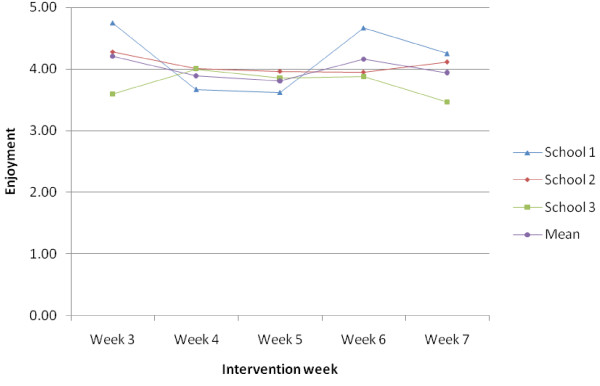
Methods: Three-arm, cluster RCT. Three secondary schools were assigned to intervention arm. Intervention participants received a 9-week dance program with 2, 90-minute dance classes per week. Participants at 2 control schools received incentives for data collection. Participants at 2 additional control schools received incentives and a delayed dance workshop. Accelerometer data were collected at baseline (time 0), during the last week of the dance program (time 1) and 20 weeks after the start of the study (time 2). Weekly attendance, enjoyment and perceived exertion were assessed in intervention participants. Post-study qualitative work was conducted with intervention participants and personnel.
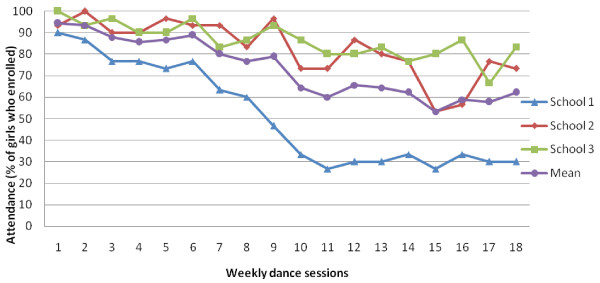
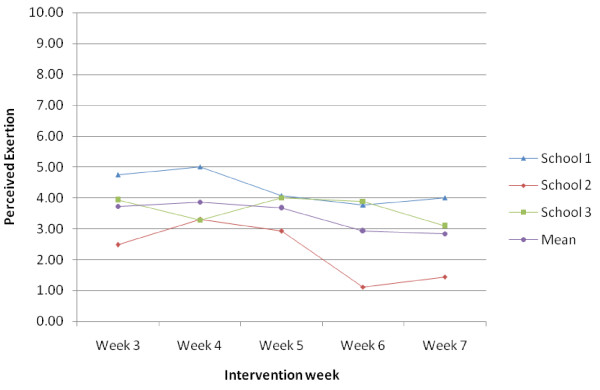
Results: 40.1% of girls provided consent to be in the study. The mean number of girls attending at least one dance session per week ranged from 15.4 to 25.9. There was greater number of participants for whom accelerometer data were collected in control arms. The mean attendance was 13.3 sessions (maximum=18). Perceived exertion ratings indicated that the girls did not find the sessions challenging. The dance teachers reported that the program content would benefit from revisions including less creative task time, a broader range of dance genres and improved behavioral management policies. At time 2, the 95% confidence intervals suggest between 5 and 12 minutes more weekday MVPA in the intervention group compared with the control incentives only group, and between 6 minutes fewer and 1 minute more compared with the control incentives plus workshop group. Between 14 and 24 schools would be required to detect a difference of 10 minutes in mean weekday MVPA between intervention and control groups.
Conclusions: It is possible to recruit 11-12 year old girls to participate in an after-school dance study. An after-school dance intervention has potential to positively affect the PA levels of 11-12 year old girls but an adequately powered RCT is required to test this intervention approach.
Figures
References
-
- Department of Health PA Health Improvement and Protection. Start Active: Stay Active: A report on physical activity from the four home countries’ Chief Medical Officers. , London; 2011.
-
- van Sluijs EM, McMinn AM, Griffin SJ. Effectiveness of interventions to promote physical activity in children and adolescents: systematic review of controlled trials. BMJ. 2007;335:703. doi: 10.1136/bmj.39320.843947.BE. - DOI - PMC - PubMed
Publication types
MeSH terms
Grants and funding
LinkOut - more resources
Full Text Sources
Medical
Miscellaneous
