


Characterization of the annulus fibrosus-vertebral body interface: identification of new structural features
- PMID: 22747710
- PMCID: PMC3512281
- DOI: 10.1111/j.1469-7580.2012.01537.x
Characterization of the annulus fibrosus-vertebral body interface: identification of new structural features
Abstract
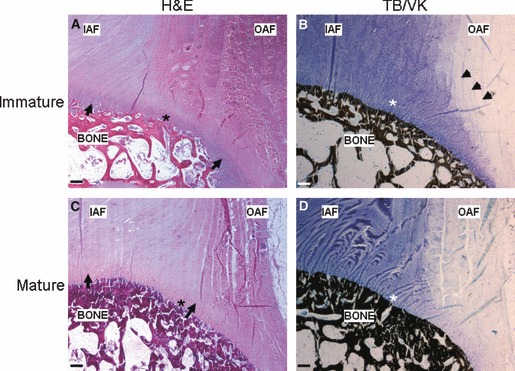
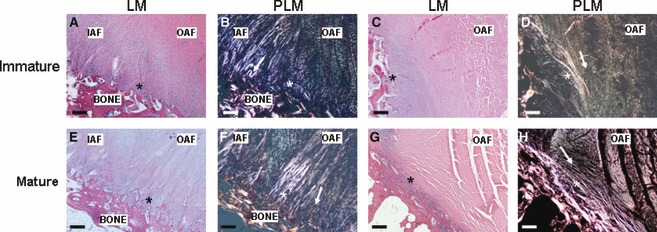
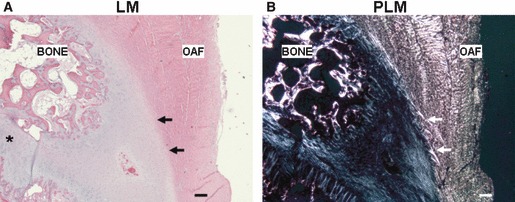
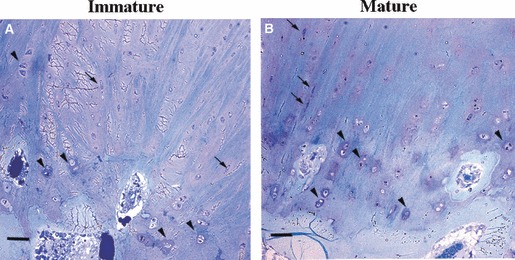
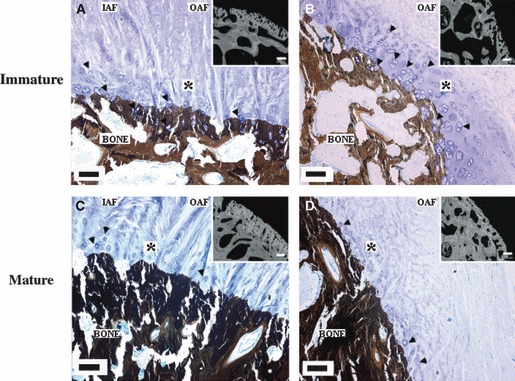
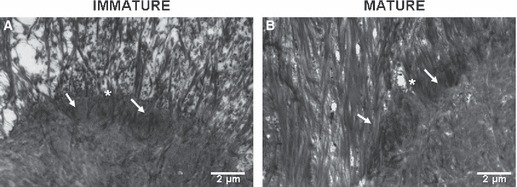
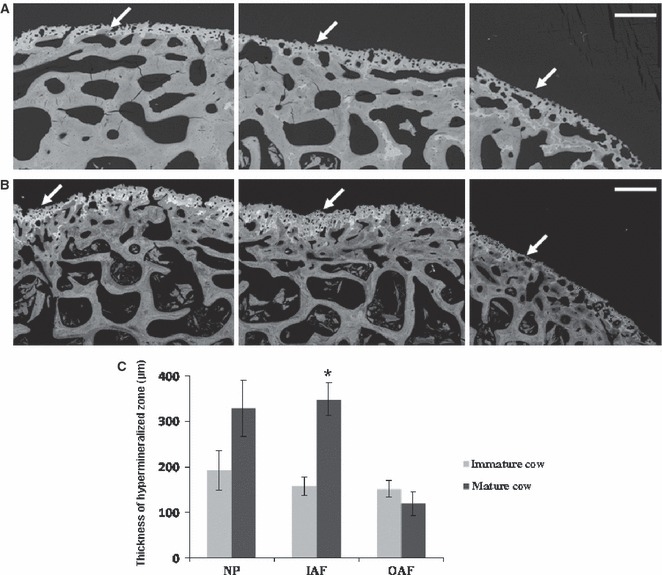
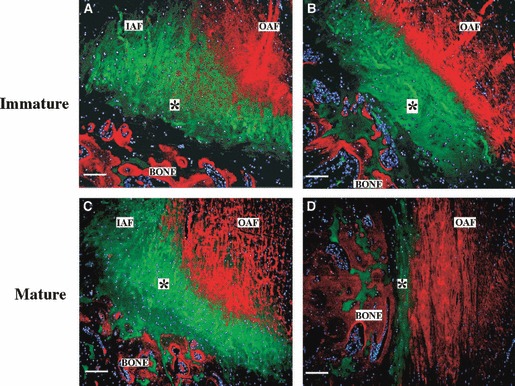
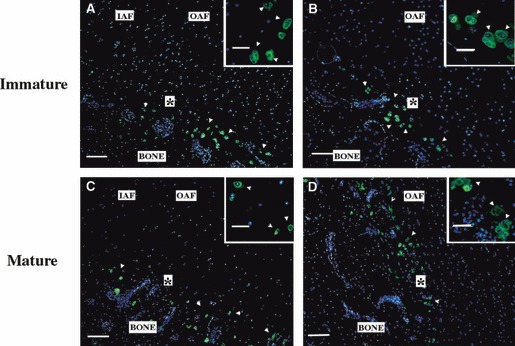
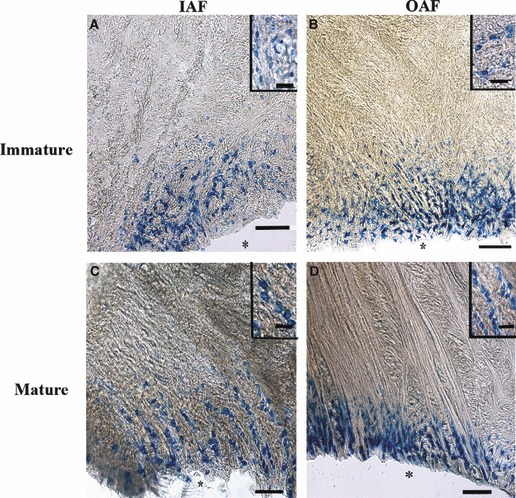
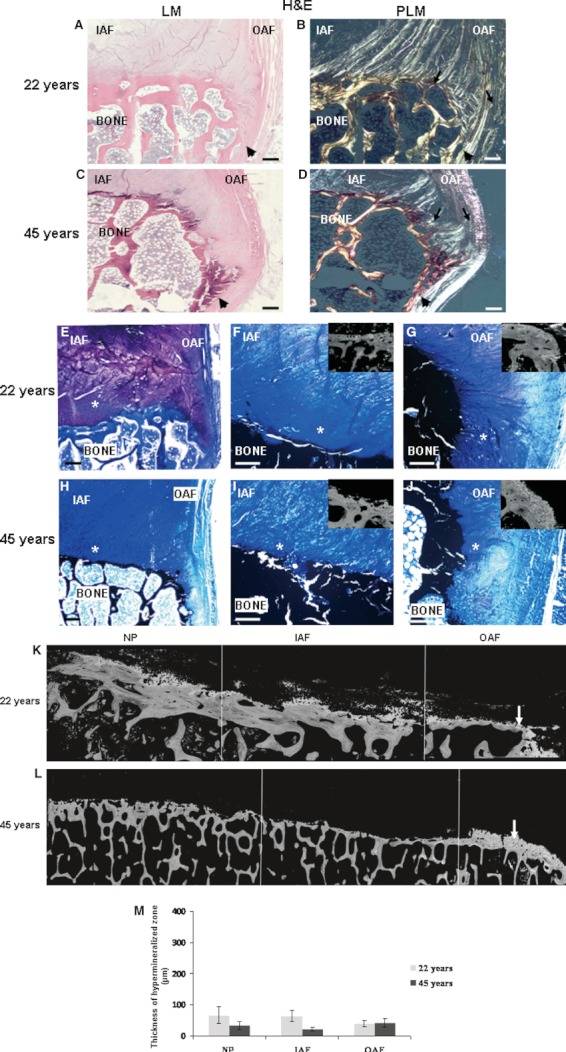
Current surgical treatments for degenerative intervertebral disc disease do not restore full normal spinal movement. Tissue engineering a functional disc replacement may be one way to circumvent this limitation, but will require an integration of the different tissues making up the disc for this approach to be successful. Hence, an in-depth characterization of the native tissue interfaces, including annulus insertion into bone is necessary, as knowledge of this interface is limited. The objective of this study was to characterize the annulus fibrosus-vertebral bone (AF-VB) interface in immature (6-9 months old) and mature (18-24 months old) bovine discs, as well as to define these structures for normal adult human (22 and 45 years old) discs. Histological assessment showed that collagen fibers in the inner annulus, which are predominantly type II collagen, all appear to insert into the mineralized endplate zone. In contrast, some of the collagen fibers of the outer annulus, predominantly type I collagen, insert into this endplate, while other fibers curve laterally, at an ∼ 90° angle, to the outer aspect of the bone, and merge with the periosteum. This is seen in both human and bovine discs. Where the AF inserts into the calcified zone of the AF-VB interface, it passes through a chondroid region, rich in type II collagen and proteoglycans. Annulus cells (elongated cells that are not surrounded by proteoglycans) are present at this interface. This cartilage zone is evident in both human and bovine discs. Type X collagen and alkaline phosphatase are localized to the interface region. Age-associated differences in bovine spines are observed when examining the interface thickness and the matrix composition of the cartilaginous endplate, as well as the thickness of the mineralized endplate. These findings will assist with the design of the AF-VB interface in the tissue engineered disc.
© 2012 The Authors. Journal of Anatomy © 2012 Anatomical Society.
Figures
References
-
- Adams MA, Roughley PJ. What is intervertebral disc degeneration, and what causes it? Spine. 2006;31:2151–2161. - PubMed
-
- Aigner T, Gresk-otter KR, Fairbank JC, et al. Variation with age in the pattern of type X collagen expression in normal and scoliotic human intervertebral discs. Calcif Tissue Int. 1998;63:263–268. - PubMed
-
- Attia M, Santerre JP, Kandel RA. The response of annulus fibrosus cell to fibronectin-coated nanofibrous polyurethane-anionic dihydroxyoligomer scaffolds. Biomaterials. 2011;32:450–460. - PubMed
-
- Ayad S, Abedin MZ, Grundy SM, et al. Isolation and characterisation of an unusual collagen from hyaline cartilage and intervertebral disc. FEBS Lett. 1981;123:195–199. - PubMed
Publication types
MeSH terms
Substances
Grants and funding
LinkOut - more resources
Full Text Sources
