


Elevated serum levels of interleukin-17A in children with autism
- PMID: 22748016
- PMCID: PMC3410815
- DOI: 10.1186/1742-2094-9-158
Elevated serum levels of interleukin-17A in children with autism
Abstract
Background: The T-helper (Th)1/Th2 dichotomy dominated the field of immune regulation until interleukin (IL)-17-expressing T cells (Th17) were proposed to be a third lineage of helper T cells, the key players in the pathogenesis of autoimmune disorders. Autoimmunity to brain tissue may play a pathogenic role in autism. IL-17A is a pro-inflammatory cytokine that has been shown to play an important role in various autoimmune neuroinflammatory diseases. The aim of this study was to measure serum levels of IL-17A in relation to the degree of the severity of autism.
Methods: Serum IL-17A levels were measured by ELISA in 45 children with autism and 40 matched healthy controls.
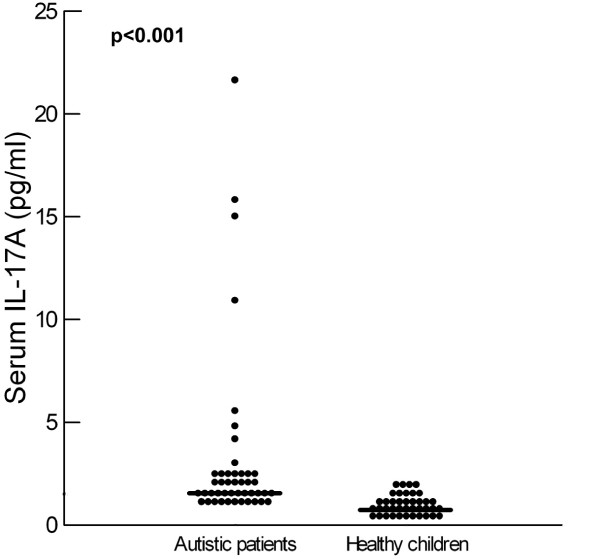
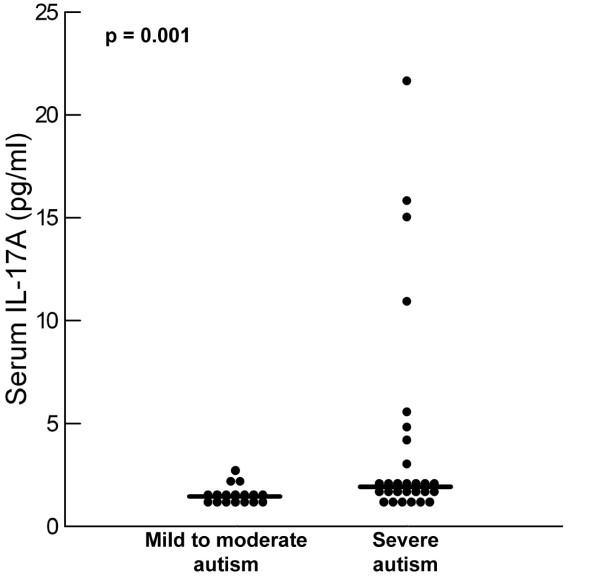
Results: Children with autism had significantly higher serum IL-17A levels than healthy controls (P <0.001), with increased serum levels of IL-17A found in 48.9% of the autism group. Patients with severe autism had significantly higher serum IL-17A levels than those with mild to moderate autism (P=0.01), and raised serum IL-17A levels were significantly more common in children with severe autism (67.9%) than in those with mild to moderate autism (17.6%), P=0.001.
Conclusions: Serum IL-17A levels were raised in the group with autism, and the levels correlated significantly with the severity of autism. This is the first study to measure levels of IL-17A in relation to the severity of autism, to our knowledge. Further research, with a larger subject population, is warranted to determine whether the increase of serum IL-17A levels plasma has a pathogenic role in autism, and whether anti- IL-17A therapy could be useful.
Figures
References
Publication types
MeSH terms
Substances
LinkOut - more resources
Full Text Sources
