. 2012 Aug;122(8):2837-46.
doi: 10.1172/JCI59373. Epub 2012 Jul 2.

Cyclocreatine treatment improves cognition in mice with creatine transporter deficiency

Affiliations

Cyclocreatine treatment improves cognition in mice with creatine transporter deficiency

Yuko Kurosawa et al. J Clin Invest. 2012 Aug.

Abstract

The second-largest cause of X-linked mental retardation is a deficiency in creatine transporter (CRT; encoded by SLC6A8), which leads to speech and language disorders with severe cognitive impairment. This syndrome, caused by the absence of creatine in the brain, is currently untreatable because CRT is required for creatine entry into brain cells. Here, we developed a brain-specific Slc6a8 knockout mouse (Slc6a8-/y) as an animal model of human CRT deficiency in order to explore potential therapies for this syndrome. The phenotype of the Slc6a8-/y mouse was comparable to that of human patients. We successfully treated the Slc6a8-/y mice with the creatine analog cyclocreatine. Brain cyclocreatine and cyclocreatine phosphate were detected after 9 weeks of cyclocreatine treatment in Slc6a8-/y mice, in contrast to the same mice treated with creatine or placebo. Cyclocreatine-treated Slc6a8-/y mice also exhibited a profound improvement in cognitive abilities, as seen with novel object recognition as well as spatial learning and memory tests. Thus, cyclocreatine appears promising as a potential therapy for CRT deficiency.


Figures
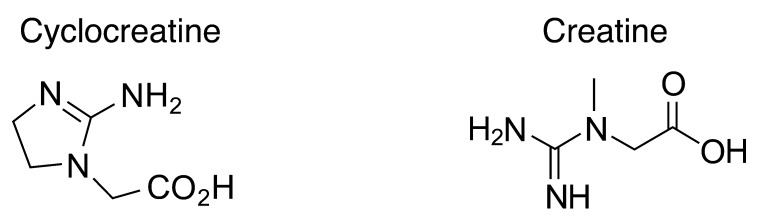
Figure 1
Figure 1. Chemical structural formulas of cyclocreatine and creatine.
Cyclocreatine is a kinetically similar analog of creatine that is phosphorylated and dephosphorylated by mitochondrial and cytosolic CKs. As a small, relatively planar molecule, cyclocreatine has the chemical characteristics to cross membranes.
Figure 2
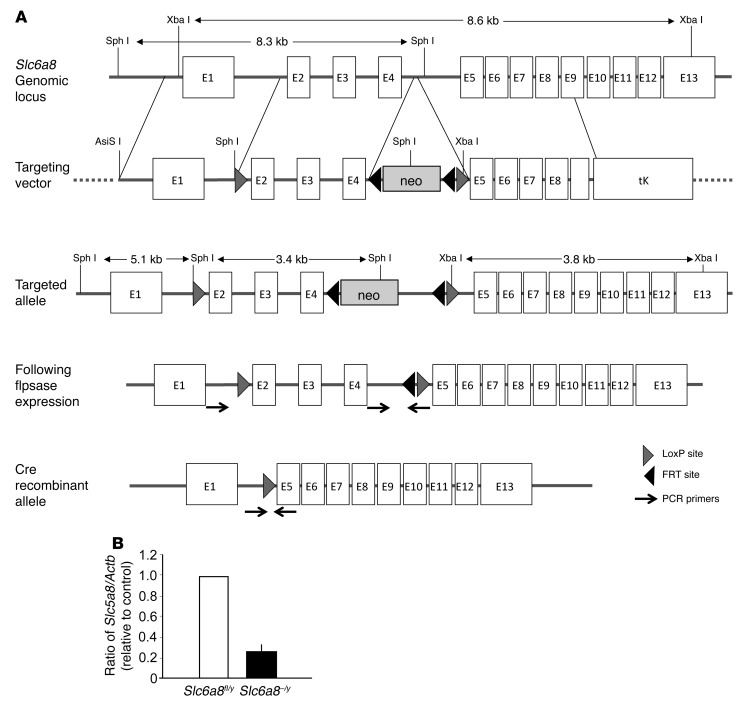
Figure 2. Brain-specific Slc6a8 knockout.
(A) Strategy for recombination and deletion of Slc6a8. The structure of the wild-type Slc6a8 locus, the targeted locus after recombination in embryonic stem cells, and the floxed allele after Flp-mediated deletion of the neo cassette are shown. Cre expression results in deletion of exons 2–4 (E2–E4). Exons are denoted by boxes; neo, loxP sequences, and FRT sequences are denoted by triangles. (B) Quantitation of Slc6a8 mRNA levels. Band intensities in gel images were measured and corrected by the intensity of Actb.
Figure 3
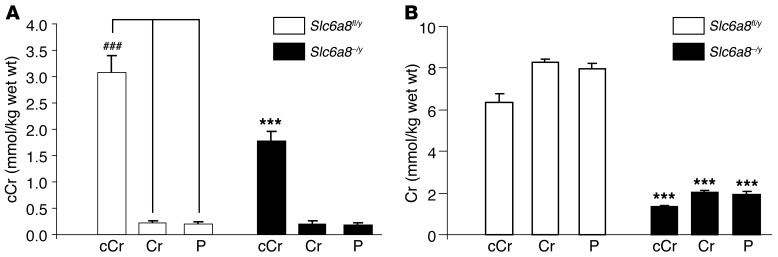
Figure 3. Increased cyclocreatine content in brain after cyclocreatine treatment.
(A) Cyclocreatine (cCr) and (B) creatine (Cr) content in brains of Slc6a8–/y mice (n = 7 [cyclocreatine]; 5 [creatine and placebo]) and Slc6a8fl/y littermate controls (n = 5 per group) after 9 weeks of treatment, measured by biochemical assays. P, placebo. Data are mean ± SEM. ***P ≤ 0.001 vs. Slc6a8fl/y; ###P ≤ 0.001 as indicated by brackets.
Figure 4
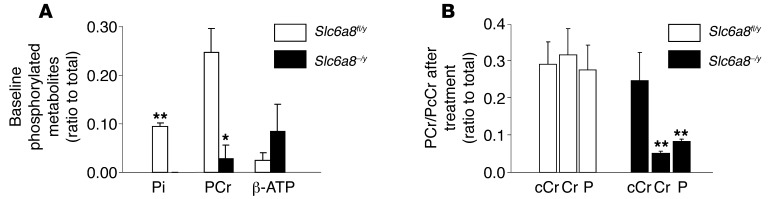
Figure 4. Phosphorylated metabolites in the brain, measured by 31P-MRS.
An indirect measure of the phosphate metabolites was determined by taking the peak height of the metabolite of interest and dividing by the sum of all the other phosphate metabolites. (A) Baseline measurements (n = 3 per group) of inorganic phosphate (Pi), phosphocreatine (PCr), and β-adenosine triphosphate (β-ATP). (B) Ratio of phosphocreatine plus phosphorylated cyclocreatine (PcCr) to total phosphorylated metabolites after 9 weeks of treatment (n = 3 per group). Data are mean ± SEM. *P ≤ 0.05, **P ≤ 0.01 vs. Slc6a8fl/y.
Figure 5
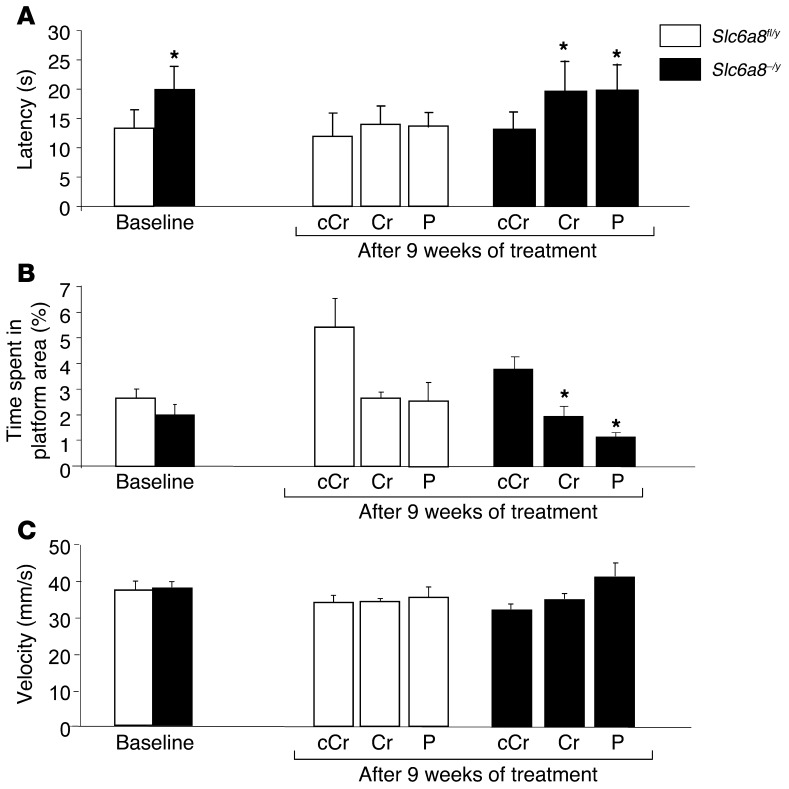
Figure 5. Improved spatial learning and memory in Slc6a8–/y mice after cyclocreatine treatment.
(A) Latency to hidden platform in trials, (B) percentage of time spent in platform area in probe trial, (C) and velocity of swimming in platform area in Morris water maze probe trial for Slc6a8–/y (n = 7 [cyclocreatine]; 5 [creatine and placebo]) and Slc6a8fl/y (n = 5 per group) mice before and after 9 weeks of treatment. Data are mean ± SEM. *P ≤ 0.05 vs. Slc6a8fl/y.
Figure 6
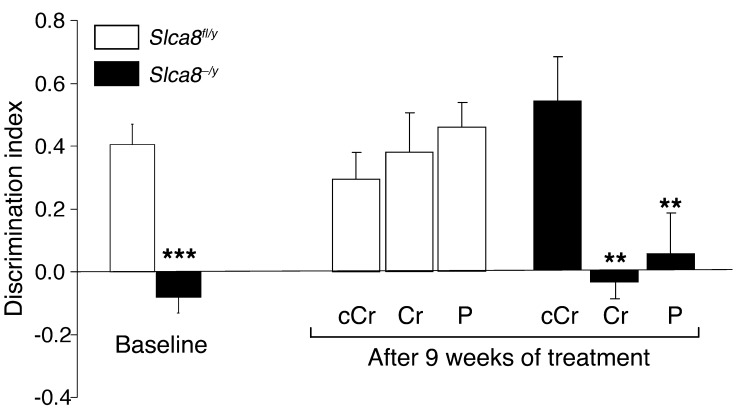
Figure 6. Improved object recognition memory in Slc6a8–/y mice after cyclocreatine treatment.
Novel object recognition tests were conducted 3 hours after familiarization in Slc6a8–/y (n = 7 [cyclocreatine]; 5 [creatine and placebo]) and Slc6a8fl/y (n = 5 per group) mice before and after 9 weeks of treatment. The discrimination index was calculated as the difference between new and familiar object exploration times divided by total time spent in object zones. Data are mean ± SEM. **P ≤ 0.01, ***P ≤ 0.001 vs. Slc6a8fl/y.
Figure 7
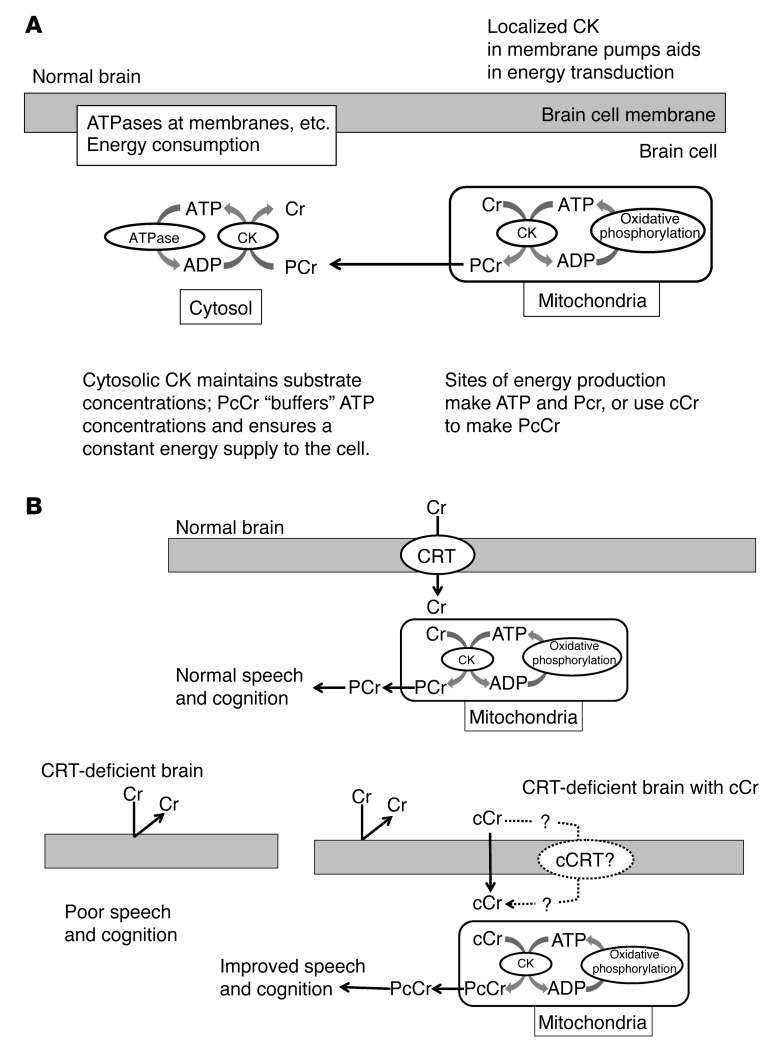
Figure 7. Creatine and cyclocreatine in brain function.
(A) The creatine/CK system is essential for shuttling energy from sites of energy production to sites of energy use. Creatine and phosphocreatine can modulate energy metabolism at the mitochondria and glycolytic pathways. When creatine is absent, energy supply can be insufficient or slow during energy demands. Having cyclocreatine and phospholylated cyclocreatine keeps ATP levels more constant and decreases pathophysiological consequences. (B) In contrast to the transport and use of creatine by the normal brain, with CRT deficiency, creatine cannot enter the brain, resulting in poor speech and cognition. In the cyclocreatine-treated CRT deficiency brain, cyclocreatine enters brain cells and works with the cell’s metabolism to improve speech and cognition.

References

    1. Wyss M, Kaddurah-Daouk R. Creatine and creatinine metabolism. Physiol Rev. 2000;80(3):1107–1213. - PubMed
    1. Snow RJ, Murphy RM. Creatine and the creatine transporter: a review. Mol Cell Biochem. 2001;224(1–2):169–181. doi: 10.1023/A:1011908606819. - DOI - PubMed
    1. Christie DL. Creatine and Creatine Kinase in Health and Disease. 2007. Functional insights into the creatine transporter. In: Salomons GS, Wyss M, eds. pp. 99–118. Dordrecht, The Netherlands: Springer; - PubMed
    1. Braissant O, Henry H, Villard AM, Speer O, Wallimann T, Bachmann C. Creatine synthesis and transport during rat embryogenesis: spatiotemporal expression of AGAT, GAMT and CT1. BMC Dev Biol. 2005;5:9. doi: 10.1186/1471-213X-5-9. - DOI - PMC - PubMed
    1. Braissant O, Henry H, Loup M, Eilers B, Bachmann C. Endogenous synthesis and transport of creatine in the rat brain: an in situ hybridization study. Mol Brain Res. 2001;86(1–2):193–201. doi: 10.1016/S0169-328X(00)00269-2. - DOI - PubMed

Publication types

MeSH terms