


Efficacy and safety of risedronate 150-mg once a month in the treatment of postmenopausal osteoporosis: 2-year data
- PMID: 22752050
- PMCID: PMC3536944
- DOI: 10.1007/s00198-012-2056-0
Efficacy and safety of risedronate 150-mg once a month in the treatment of postmenopausal osteoporosis: 2-year data
Abstract
This study showed that risedronate 150-mg once a month provides similar efficacy and safety at 2 years compared with risedronate 5-mg daily for the treatment of postmenopausal osteoporosis. This adds to the range of risedronate dosing options and provides an alternative for patients who prefer once-a-month dosing.
Introduction: Risedronate is effective in the treatment of postmenopausal osteoporosis in oral daily, weekly, or on two consecutive days per month doses. This 2-year randomized, double-blind, multicenter study assesses the efficacy and safety of a single risedronate 150-mg once-a-month oral dose compared with the 5-mg daily regimen.
Methods: Women with postmenopausal osteoporosis were randomly assigned to receive risedronate 5-mg daily (n = 642) or 150-mg once a month (n = 650) for 2 years. Bone mineral density (BMD), bone turnover markers, new vertebral fractures, and adverse events were evaluated. The primary efficacy endpoint was the mean percent change from baseline in lumbar spine BMD after 1 year.
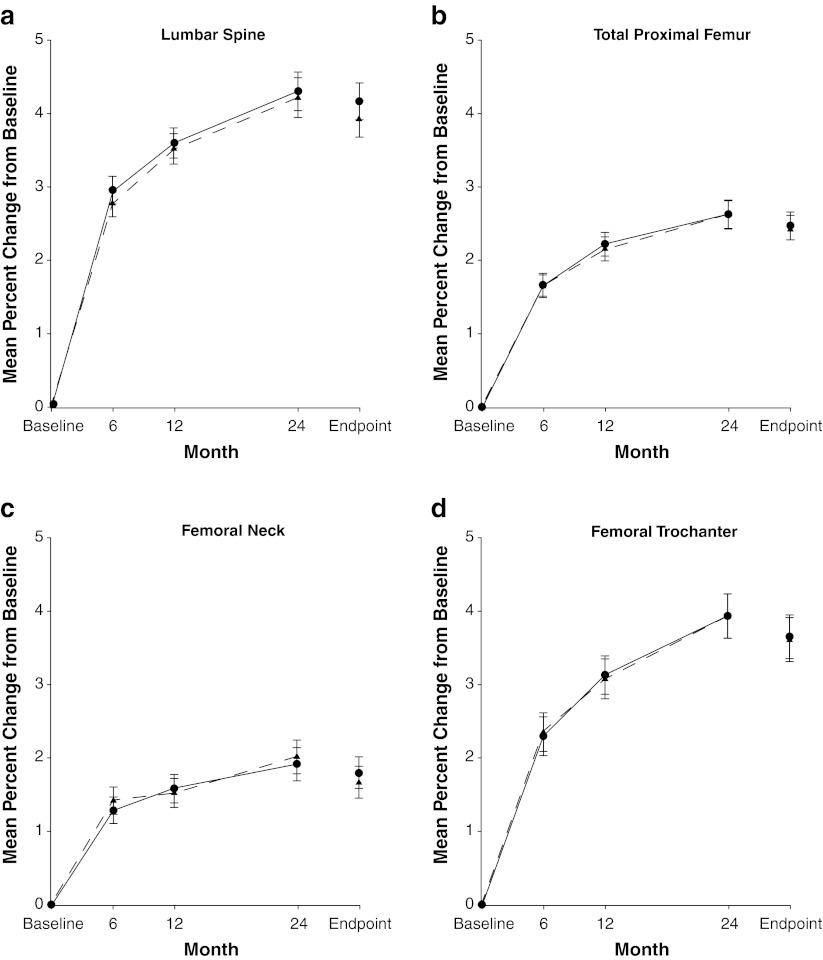
Results: Four hundred ninety-eight subjects in the daily group (77.6 %) and 513 subjects in the once-a-month group (78.9 %) completed the study. After 24 months, the mean percent change in lumbar spine BMD was 3.9 % (95 % confidence interval [CI], 3.43 to 4.42 %) and 4.2 % (95 % CI, 3.68 to 4.65 %) in the daily and once-a-month groups, respectively. The once-a-month regimen was determined to be non-inferior to the daily regimen. The mean percent changes in BMD at the hip were similar in both dose groups, as were changes in biochemical markers of bone turnover. The incidence of adverse events, adverse events leading to withdrawal, and upper gastrointestinal tract adverse events were similar in the two treatment groups.
Conclusions: After 2 years, treatment with risedronate 150-mg once a month provided similar efficacy and tolerability to daily dosing and provides an alternative for patients who prefer once-a-month oral dosing.
Figures


References
-
- Reginster J, Minne HW, Sorensen OH, Hooper M, Roux C, Brandi ML, et al. Randomized trial of the effects of risedronate on vertebral fractures in women with established postmenopausal osteoporosis. Vertebral Efficacy with Risedronate Therapy (VERT) Study Group. Osteoporos Int. 2000;11:83–91. doi: 10.1007/s001980050010. - DOI - PubMed
Publication types
MeSH terms
Substances
LinkOut - more resources
Full Text Sources
