Reduced GABA concentration in attention-deficit/hyperactivity disorder
- PMID: 22752239
- PMCID: PMC3970207
- DOI: 10.1001/archgenpsychiatry.2011.2280
Reduced GABA concentration in attention-deficit/hyperactivity disorder
Abstract
Context: Attention-deficit/hyperactivity disorder (ADHD) is a developmental disorder characterized by a deficit in behavioral inhibition. Recent evidence also suggests a deficit in cortical inhibition via the GABA (γ-aminobutyric acid)-ergic system.
Objective: To investigate the GABAergic component of ADHD using magnetic resonance spectroscopy.
Design: Cross-sectional study.
Setting: Participants were recruited through local schools, local pediatric and other community clinics, and through advertisement in regional publications. Magnetic resonance spectroscopy was performed within the research institute.
Participants: Children (age range, 8-12 years) in a typically developing control group vs a group with ADHD were compared.
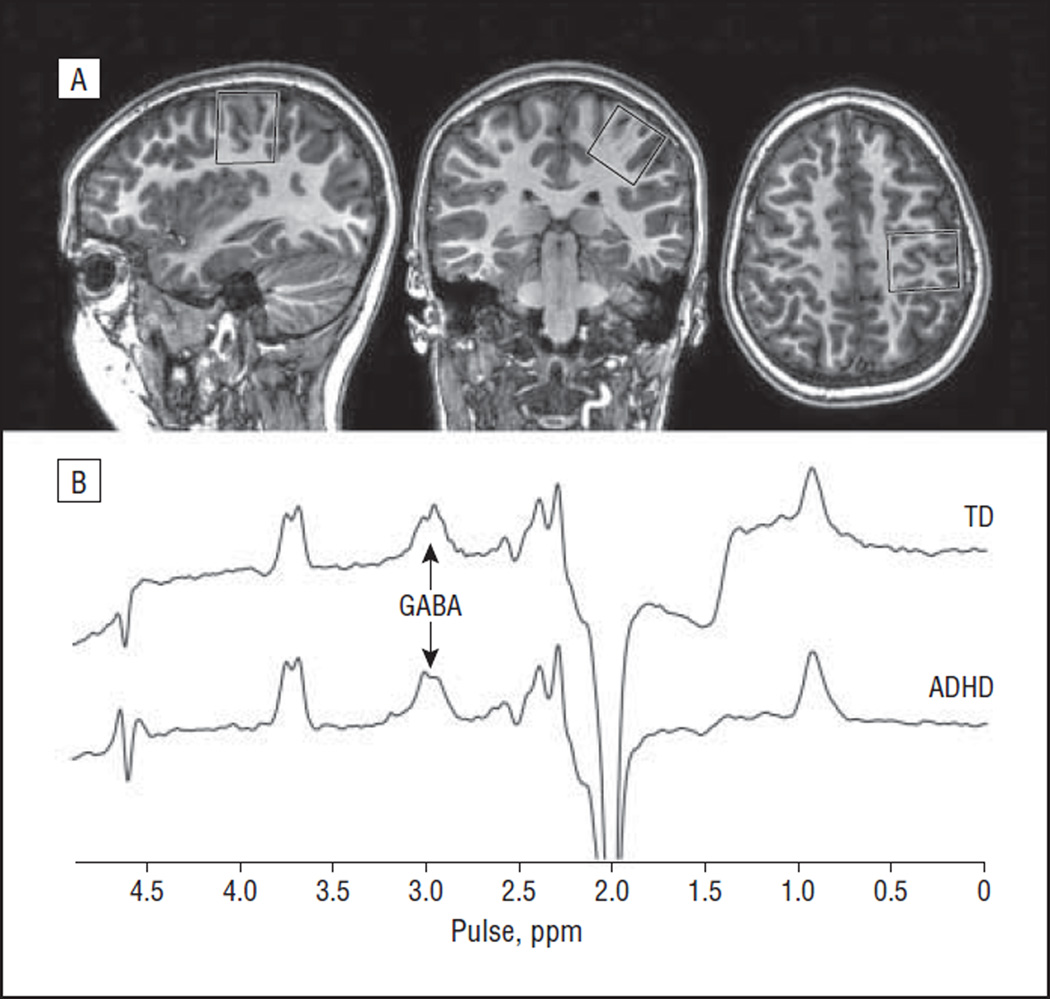
Main outcome measures: J-difference-edited magnetic resonance spectroscopy at 3 T was used to measure GABA concentration in a volume that included primary somatosensory and motor cortices.
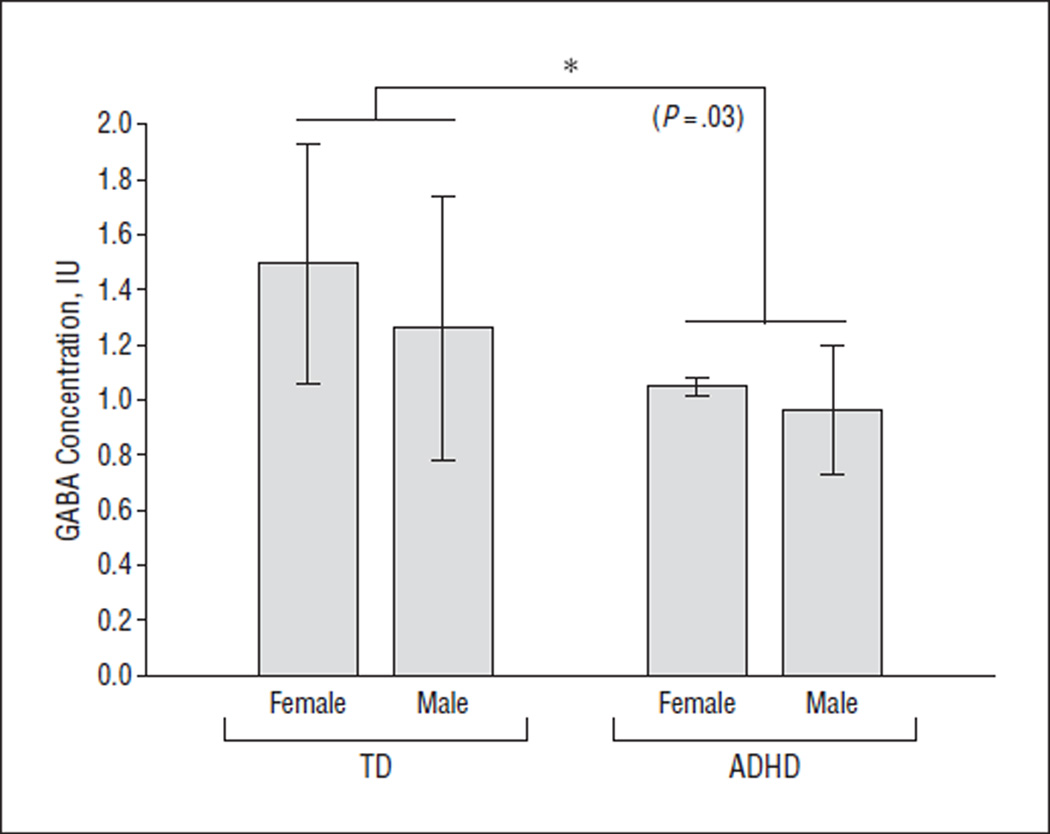
Results: GABA concentration is reduced in children with ADHD compared with typically developing control subjects.
Conclusion: Our finding of reduced GABA concentration in ADHD is concordant with recently reported deficits in short intracortical inhibition in ADHD and suggests a GABAergic deficit in ADHD.
Figures
References
-
- Tannock R. Attention deficit hyperactivity disorder: advances in cognitive, neurobiological, and genetic research. J Child Psychol Psychiatry. 1998;39(1):65–99. - PubMed
-
- Brown RT, Freeman WS, Perrin JM, Stein MT, Amler RW, Feldman HM, Pierce K, Wolraich ML. Prevalence and assessment of attention-deficit/hyperactivity disorder in primary care settings. [Accessed March 29, 2012.];Pediatrics. 2001 107(3):E43. - PubMed
-
- Barkley RA. Behavioral inhibition, sustained attention, and executive functions: constructing a unifying theory of ADHD. Psychol Bull. 1997;121(1):65–94. - PubMed
Publication types
MeSH terms
Substances
Grants and funding
LinkOut - more resources
Full Text Sources
Other Literature Sources
Medical