


Surgical treatment of the haemophilic pseudotumour: a single centre experience
- PMID: 22752668
- PMCID: PMC3460086
- DOI: 10.1007/s00264-012-1593-7
Surgical treatment of the haemophilic pseudotumour: a single centre experience
Abstract
Purpose: Haemophilic pseudotumour was defined by Fernandez de Valderrama and Matthews as a progressive cystic swelling involving muscle, produced by recurrent haemorrhage into muscles adjacent to the bone. The pseudotumour mainly occurs in the long bones and the pelvis. The treatment of the haemophilic pseudotumour poses a challenge, and extensive clinical experience is essential to appropriately address this serious complication in patients with haemophilia. Consequently, the aim of this study is to present our own clinical experience and treatment results of the haemophilic pseudotumour.
Methods: We retrospectively reviewed the records of 87 patients with bleeding disorders treated between 1967 and 2011 for musculoskeletal complications of congenital bleeding disorders. We identified six patients with a haemophilic pseudotumour who were treated at our department.
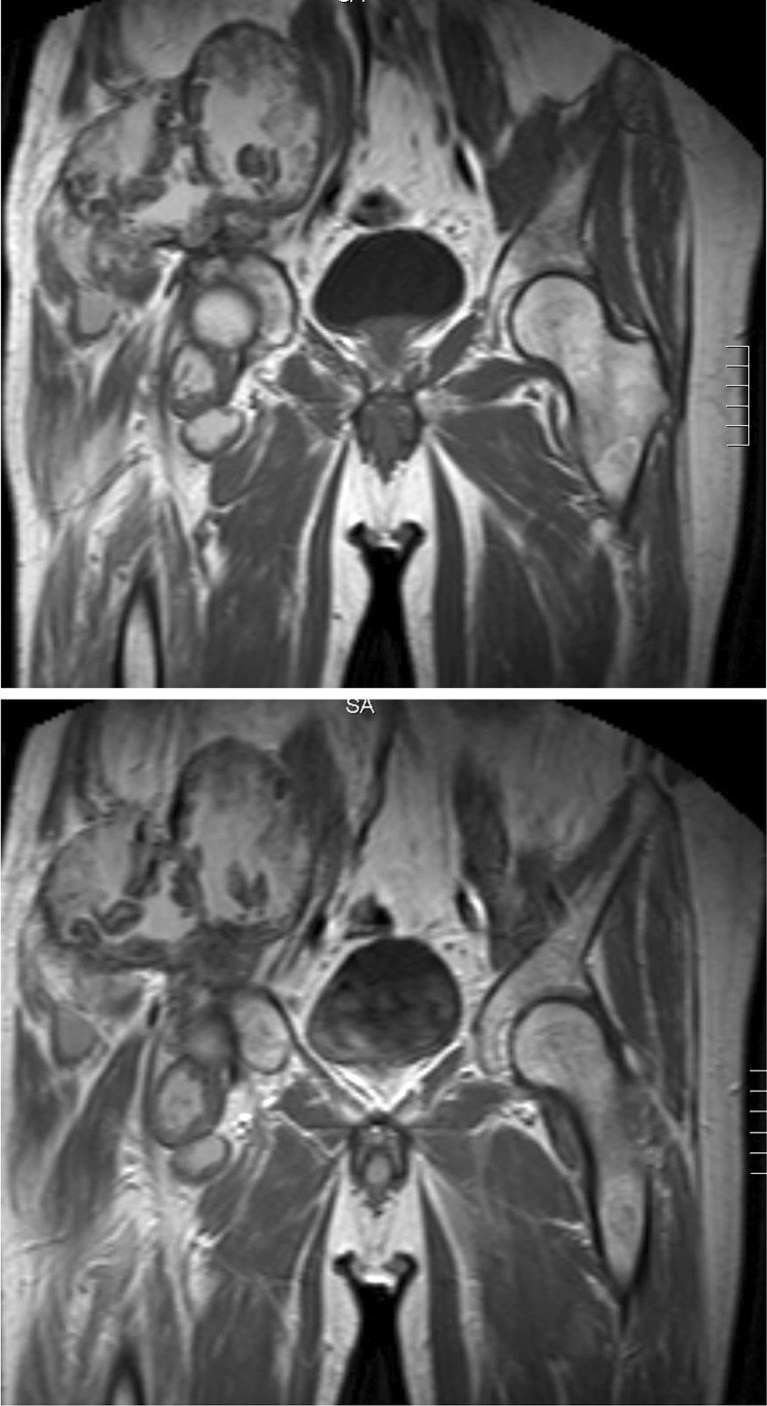
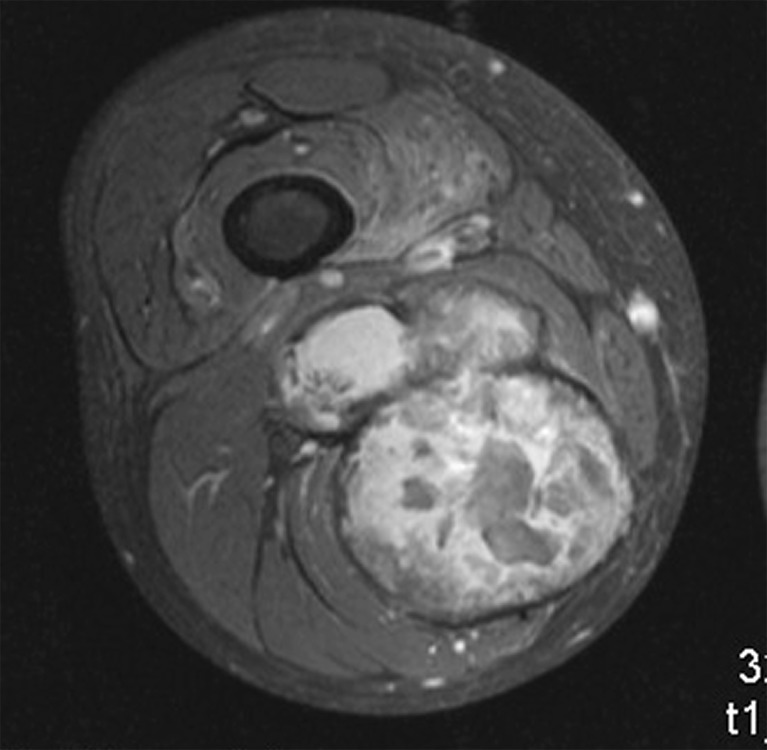
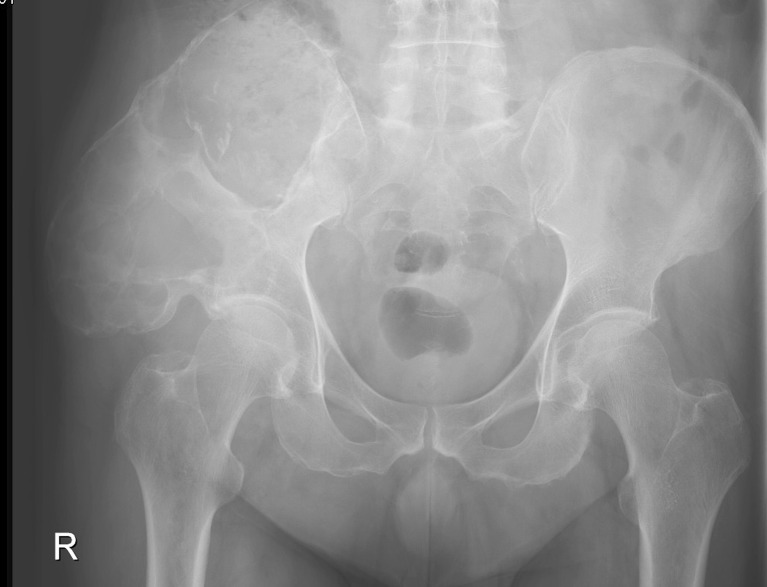
Results: The mean age at surgery was 45.9 (range, 40-61) years. The iliac bone was affected in three patients (one right, two left), the right tibia (distal diaphysis) in one, the right thigh in two and the right ulna (proximal part) in one patient. One patient had two pseudotumours. The perioperative course was easily controllable with adequate factor VIII substitution. At the latest follow-up after 8.4 (range, 4-24) years, normal healing with no recurrence was observed.
Conclusions: The haemophilic pseudotumour is a rare but severe complication of hereditary bleeding disorders. In the international literature the resection and postoperative course are described as challenging and difficult, requiring detailed preoperative planning. It is advisable to perform such operations in specialised centres with close co-operation between surgeons and haematologists.
Figures

References
-
- Fernandez de Valderrama JA, Matthews JM. The haemophilic pseudotumor or haemophilic subperiostal haematoma. J Bone Joint Surg. 1965;47-B:256–265. - PubMed
MeSH terms
LinkOut - more resources
Full Text Sources
Medical
