The integration of depressive behaviors and cardiac dysfunction during an operational measure of depression: investigating the role of negative social experiences in an animal model
- PMID: 22753634
- PMCID: PMC3392416
- DOI: 10.1097/PSY.0b013e31825ca8e5
The integration of depressive behaviors and cardiac dysfunction during an operational measure of depression: investigating the role of negative social experiences in an animal model
Abstract
Objective: There is a bidirectional association between depression and cardiovascular disease. The neurobiological mechanisms underlying this association may involve an inability to cope with disrupted social bonds. This study investigated in an animal model the integration of depressive behaviors and cardiac dysfunction after a disrupted social bond and during an operational measure of depression, relative to the protective effects of intact social bonds.
Methods: Depressive behaviors in the forced swim test and continuous electrocardiographic parameters were measured in 14 adult, female socially monogamous prairie voles (rodents), after 4 weeks of social pairing or isolation.
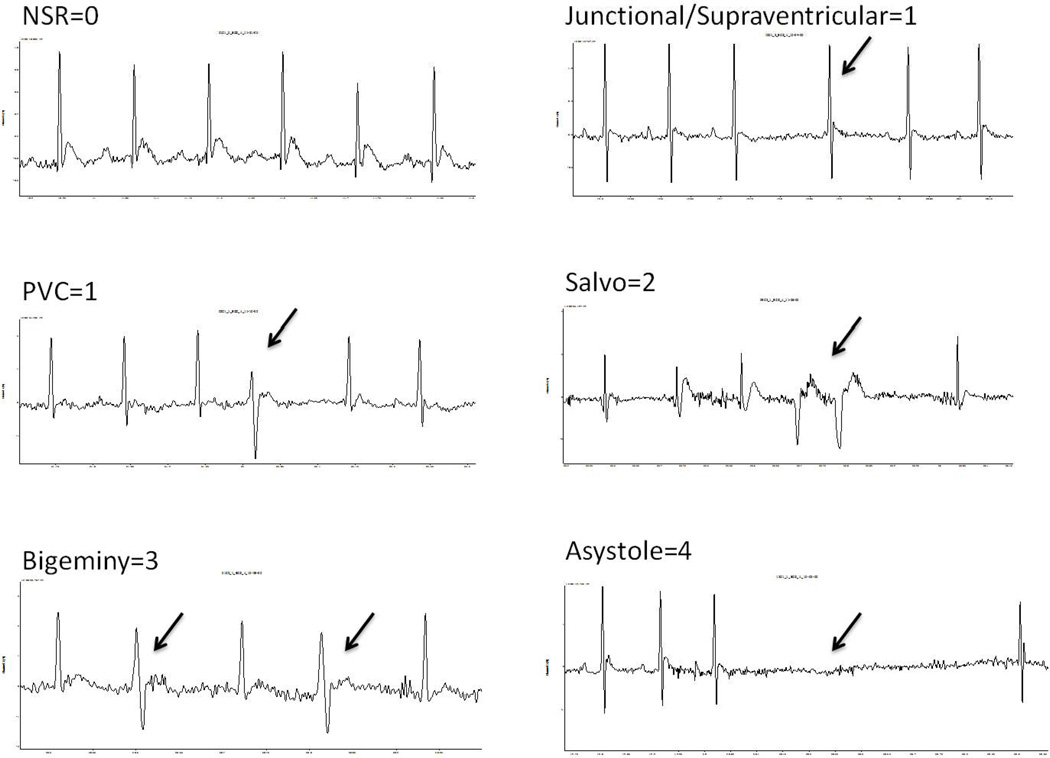
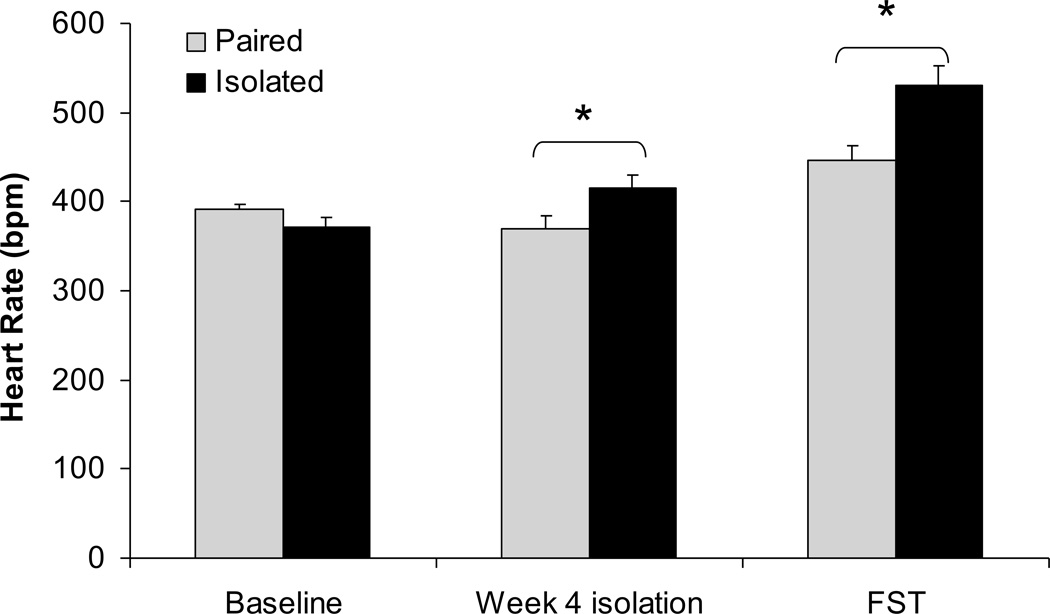
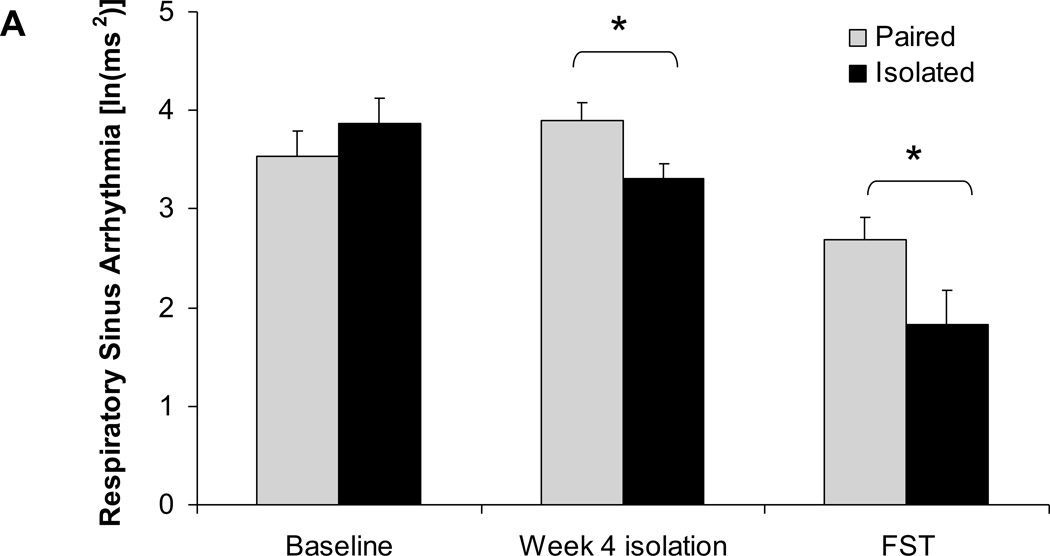
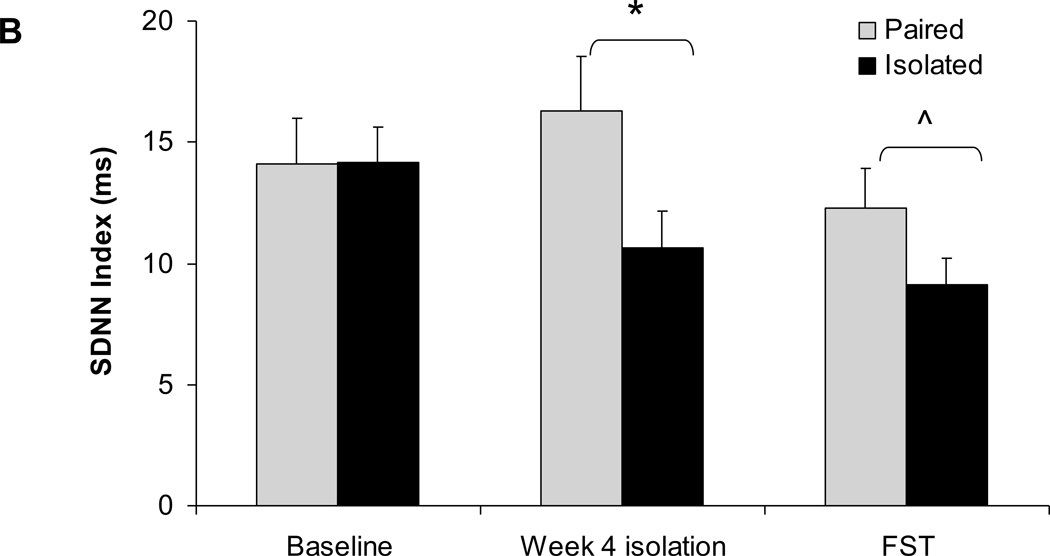
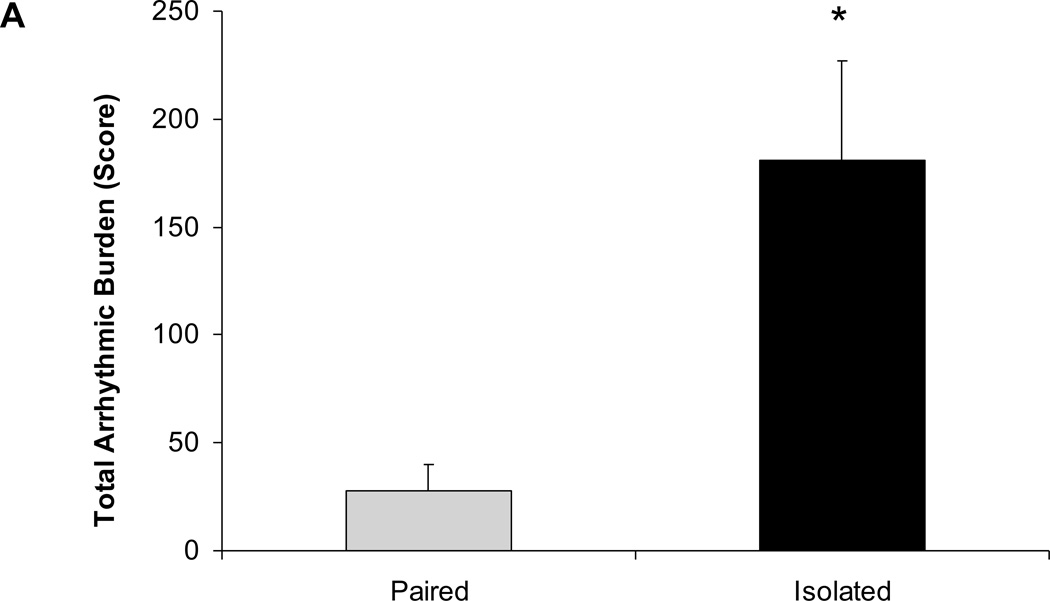
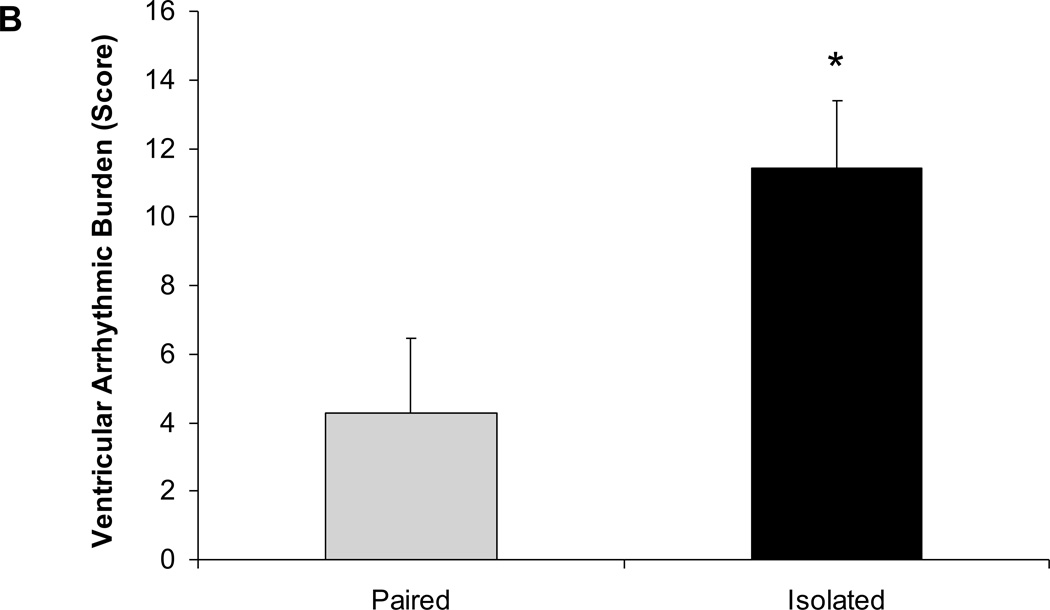
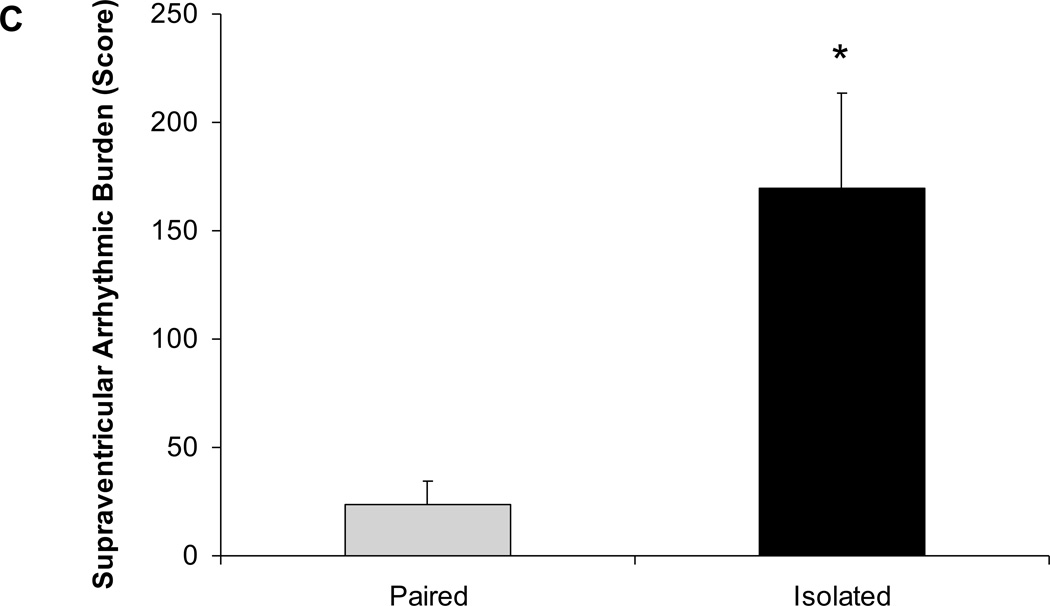
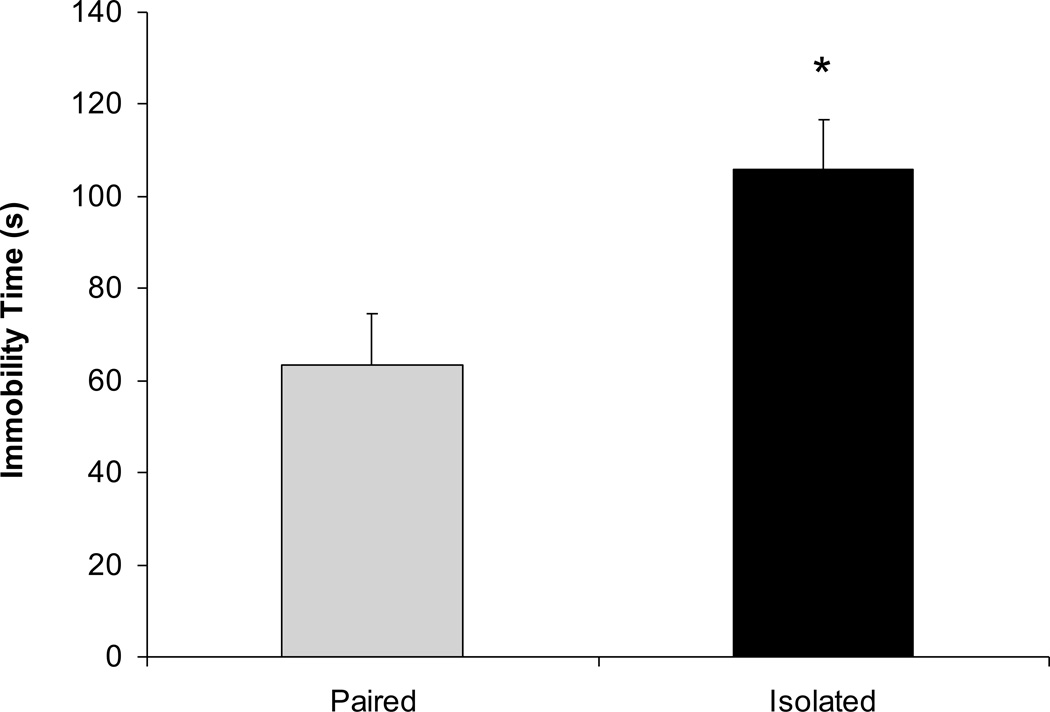
Results: After social isolation, animals exhibited (all values are mean ± standard error of the mean; isolated versus paired, respectively) increased heart rate (416 ± 14 versus 370 ± 14 bpm, p < .05) and reduced heart rate variability (3.3 ± 0.2 versus 3.9 ± 0.2 ln(ms(2))). During the forced swim test, isolated animals exhibited greater helpless behavior (immobility = 106 ± 11 versus 63 ± 11 seconds, p < .05), increased heart rate (530 ± 22 versus 447 ± 15 bpm, p < .05), reduced heart rate variability (1.8 ± 0.4 versus 2.7 ± 0.2 ln(ms(2)), p < .05), and increased arrhythmias (arrhythmic burden score = 181 ± 46 versus 28 ± 12, p < .05).
Conclusions: The display of depressive behaviors during an operational measure of depression is coupled with increased heart rate, reduced heart rate variability, and increased arrhythmias, indicative of dysfunctional behavioral and physiological stress coping abilities as a function of social isolation. In contrast, social pairing with a sibling is behaviorally protective and cardioprotective. The present results can provide insight into a possible social mechanism underlying the association between depression and cardiovascular disease in humans.
Figures
References
-
- Freedland KE, Rich MW, Skala JA, Carney RM, Dávila-Román VG, Jaffe AS. Prevalence of depression in hospitalized patients with congestive heart failure. Psychosom Med. 2003;65:119–128. - PubMed
-
- Barefoot JC, Schroll M. Symptoms of depression, acute myocardial infarction, and total mortality in a community sample. Circulation. 1996;93:1976–1980. - PubMed
-
- Frasure-Smith N, Lespérance F, Talajic M. Depression and 18-month prognosis after myocardial infarction. Circulation. 1995;91:999–1005. - PubMed
-
- Penninx BWJH, Beekman ATF, Honig A, Deeg DJH, Schoevers RA, van Eijk JTM, van Tilburg W. Depression and cardiac mortality: results from a community-based longitudinal study. Arch Gen Psychiatry. 2001;58:221–227. - PubMed
-
- Carney RM, Freedland KE. Depression, mortality, and medical morbidity in patients with coronary heart disease. Biol Psychiatry. 2003;54:241–247. - PubMed
Publication types
MeSH terms
Grants and funding
LinkOut - more resources
Full Text Sources
Medical