


A genome-wide association study of caffeine-related sleep disturbance: confirmation of a role for a common variant in the adenosine receptor
- PMID: 22754043
- PMCID: PMC3369232
- DOI: 10.5665/sleep.1962
A genome-wide association study of caffeine-related sleep disturbance: confirmation of a role for a common variant in the adenosine receptor
Abstract
Objectives: To identify common genetic variants that predispose to caffeine-induced insomnia and to test whether genes whose expression changes in the presence of caffeine are enriched for association with caffeine-induced insomnia.
Design: A hypothesis-free, genome-wide association study.
Setting: Community-based sample of Australian twins from the Australian Twin Registry.
Participants: After removal of individuals who said that they do not drink coffee, a total of 2,402 individuals from 1,470 families in the Australian Twin Registry provided both phenotype and genotype information.
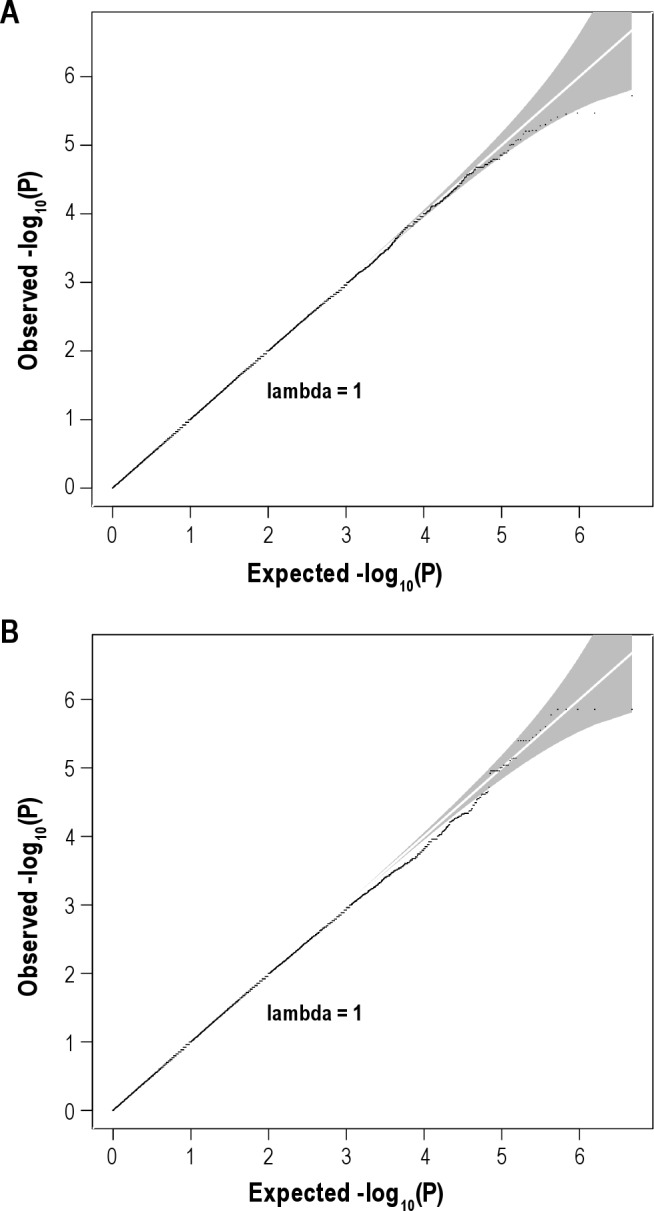
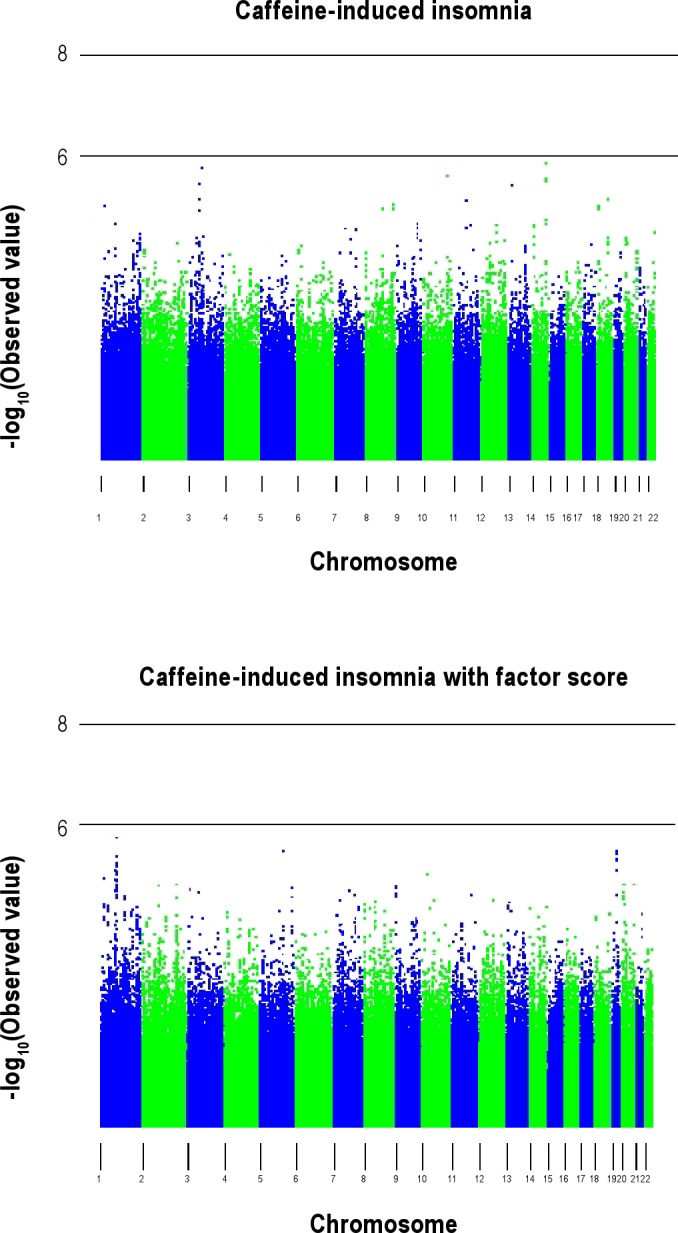
Measurements and results: A dichotomized scale based on whether participants reported ever or never experiencing caffeine-induced insomnia. A factor score based on responses to a number of questions regarding normal sleep habits was included as a covariate in the analysis. More than 2 million common single nucleotide polymorphisms (SNPs) were tested for association with caffeine-induced insomnia. No SNPs reached the genome-wide significance threshold. In the analysis that did not include the insomnia factor score as a covariate, the most significant SNP identified was an intronic SNP in the PRIMA1 gene (P = 1.4 × 10⁻⁶, odds ratio = 0.68 [0.53 - 0.89]). An intergenic SNP near the GBP4 gene on chromosome 1 was the most significant upon inclusion of the insomnia factor score into the model (P = 1.9 × 10⁻⁶, odds ratio = 0.70 [0.62 - 0.78]). A previously identified association with a polymorphism in the ADORA2A gene was replicated.
Conclusions: Several genes have been identified in the study as potentially influencing caffeine-induced insomnia. They will require replication in another sample. The results may have implications for understanding the biologic mechanisms underlying insomnia.
Keywords: Caffeine; genetics; insomnia.
Figures
Comment in
-
"No thanks, coffee keeps me awake": individual caffeine sensitivity depends on ADORA2A genotype.Sleep. 2012 Jul 1;35(7):899-900. doi: 10.5665/sleep.1942. Sleep. 2012. PMID: 22754033 Free PMC article. No abstract available.
References
-
- Fredholm BB, Battig K, Holmen J, Nehlig A, Zvartau EE. Actions of caffeine in the brain with special reference to factors that contribute to its widespread use. Pharmacol Rev. 1999;51:83–133. - PubMed
-
- Soroko S, Chang J, Barrett-Connor E. Reasons for changing caffeinated coffee consumption: the Rancho Bernardo Study. J Am Coll Nutr. 1996;15:97–101. - PubMed
-
- Penetar D, McCann U, Thorne D, et al. Caffeine reversal of sleep deprivation effects on alertness and mood. Psychopharmacology (Berl) 1993;112:359–65. - PubMed
-
- Retey JV, Adam M, Khatami R, et al. A genetic variation in the adenosine A2A receptor gene (ADORA2A) contributes to individual sensitivity to caffeine effects on sleep. Clin Pharmacol Ther. 2007;81:692–8. - PubMed
-
- Pantelios G, Lack L, James JE. Caffeine consumption and sleep. Sleep. 1989;18:65.
Publication types
MeSH terms
Substances
Grants and funding
- R01 AA007535/AA/NIAAA NIH HHS/United States
- R01 MH066206/MH/NIMH NIH HHS/United States
- AA13320/AA/NIAAA NIH HHS/United States
- R01 AA013321/AA/NIAAA NIH HHS/United States
- AA14041/AA/NIAAA NIH HHS/United States
- AA13326/AA/NIAAA NIH HHS/United States
- R01 AA013320/AA/NIAAA NIH HHS/United States
- R01 AA014041/AA/NIAAA NIH HHS/United States
- K05 AA017688/AA/NIAAA NIH HHS/United States
- AA13321/AA/NIAAA NIH HHS/United States
- AA10248/AA/NIAAA NIH HHS/United States
- R01 AA013326/AA/NIAAA NIH HHS/United States
- MH66206/MH/NIMH NIH HHS/United States
LinkOut - more resources
Full Text Sources
Other Literature Sources
Medical
