


Sleep restriction decreases the physical activity of adults at risk for type 2 diabetes
- PMID: 22754044
- PMCID: PMC3369233
- DOI: 10.5665/sleep.1964
Sleep restriction decreases the physical activity of adults at risk for type 2 diabetes
Abstract
Study objective: To test the hypothesis that recurrent sleep curtailment will result in decreased physical activity in adults at risk for type 2 diabetes.
Design: Two-condition 2-period randomized crossover study.
Setting: University General Clinical Research Center.
Participants: Eighteen healthy patients with parental history of type 2 diabetes (9 females and 9 males, age 27 yr [standard deviation 3], body mass index 23.7 [2.3] kg/m²).
Interventions: Two week-long inpatient sessions with 8.5 or 5.5-hr nighttime sleep opportunity. Participants who exercised regularly (39%) could follow their usual exercise routines during both sessions.
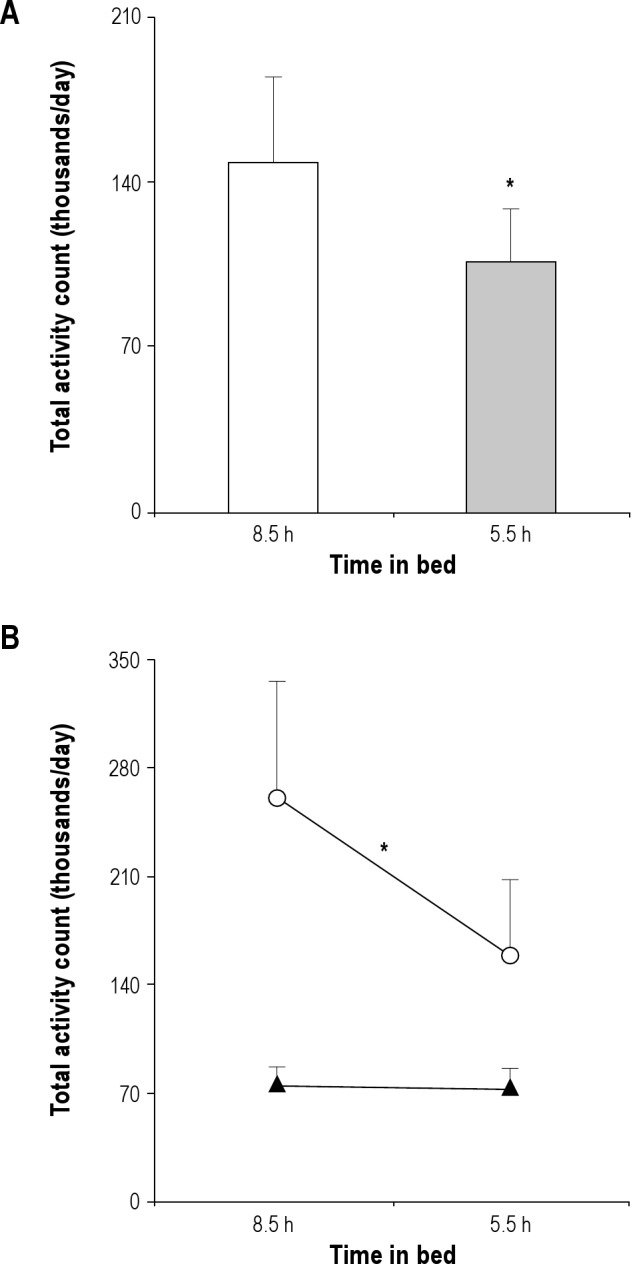
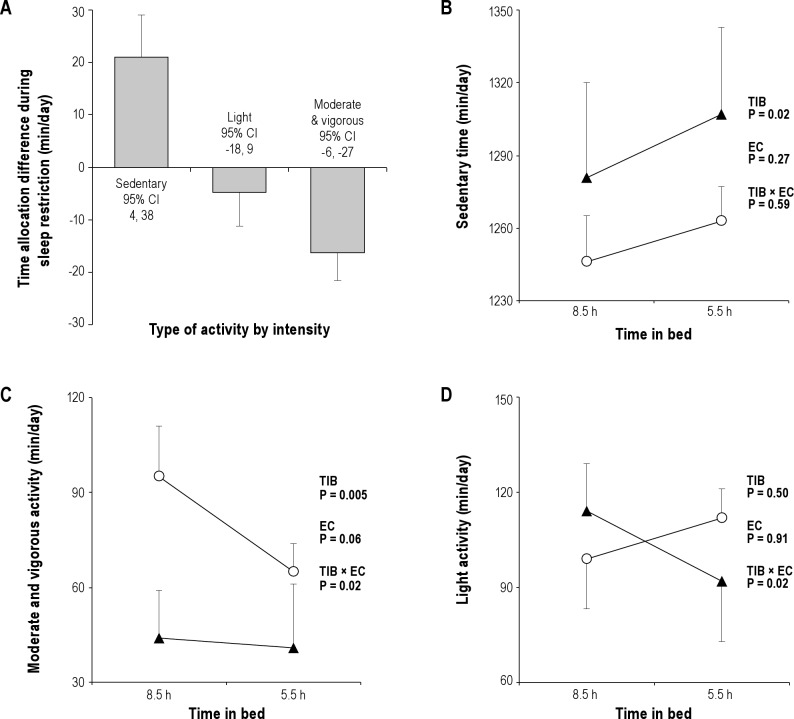
Measurements and results: Sleep and total body movement were measured by wrist actigraphy and waist accelerometry. Subjective mood and vigor was assessed using visual analog scales. The main outcome was the comparison of total activity counts between sleep conditions. Ancillary endpoints included changes in sedentary, light, and moderate plus vigorous activity, and their association with changes in mood and vigor. Daily sleep was reduced by 2.3 hr (P < 0.001) and total activity counts were 31% lower (P = 0.020) during the 5.5-hr time-in-bed condition. This was accompanied by a 24% reduction in moderate-plus-vigorous activity time (P = 0.005) and more sedentary behavior (+21 min/day; P = 0.020). The decrease in daily activity during the 5.5-hr time-in-bed condition was seen mostly in participants who exercised regularly (-39 versus -4% in exercisers versus nonexercisers; P = 0.027). Sleep loss-related declines in physical activity correlated strongly with declines in subjective vigor (R = 0.90; P < 0.001).
Conclusions: Experimental sleep restriction results in decreased amount and intensity of physical activity in adults at risk for type 2 diabetes.
Keywords: Physical activity; familial risk of diabetes; regular exercise; sedentary behavior; sleep restriction.
Figures
References
-
- Sargeant LA, Wareham NJ, Khaw KT. Family history of diabetes identifies a group at increased risk for the metabolic consequences of obesity and physical inactivity in EPIC-Norfolk: a population-based study. The European Prospective Investigation into Cancer. Int J Obes. 2000;24:1333–9. - PubMed
-
- Laaksonen DE, Lindstrom J, Lakka TA, et al. Physical activity in the prevention of type 2 diabetes: the Finnish diabetes prevention study. Diabetes. 2005;54:158–65. - PubMed
-
- Samaras K, Kelly PJ, Chiano MN, Spector TD, Campbell LV. Genetic and environmental influences on total-body and central abdominal fat: the effect of physical activity in female twins. Ann Intern Med. 1999;130:873–82. - PubMed
Publication types
MeSH terms
Grants and funding
LinkOut - more resources
Full Text Sources
Medical
