


Anticancer activities of Nigella sativa (black cumin)
- PMID: 22754079
- PMCID: PMC3252704
- DOI: 10.4314/ajtcam.v8i5S.10
Anticancer activities of Nigella sativa (black cumin)
Abstract
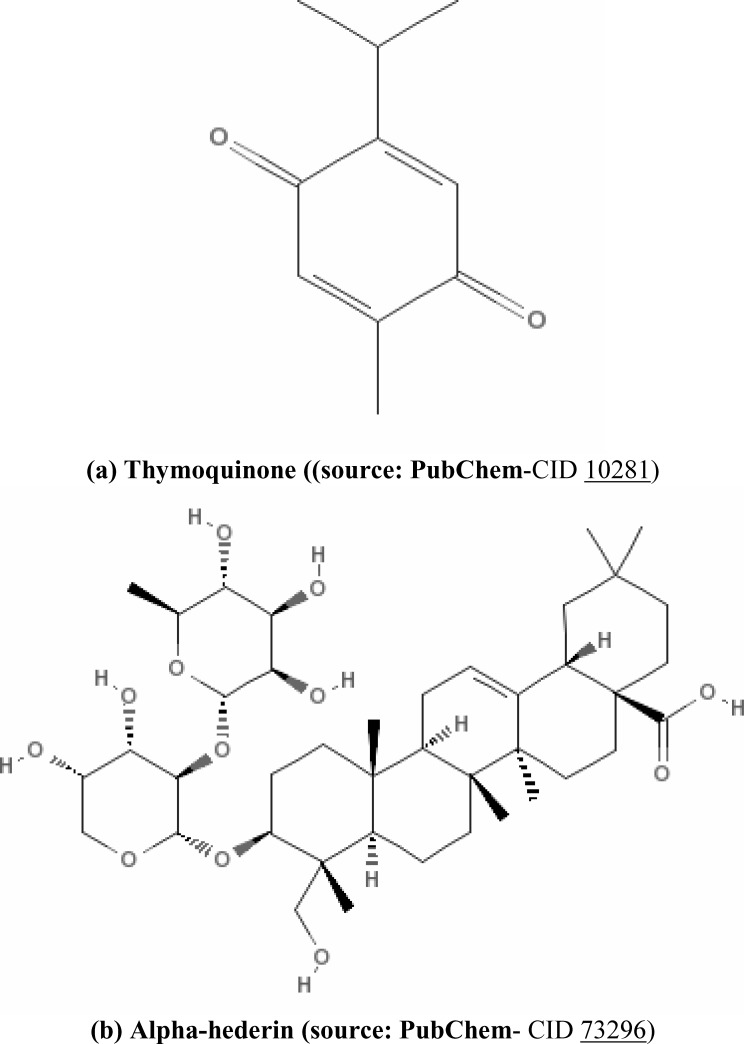
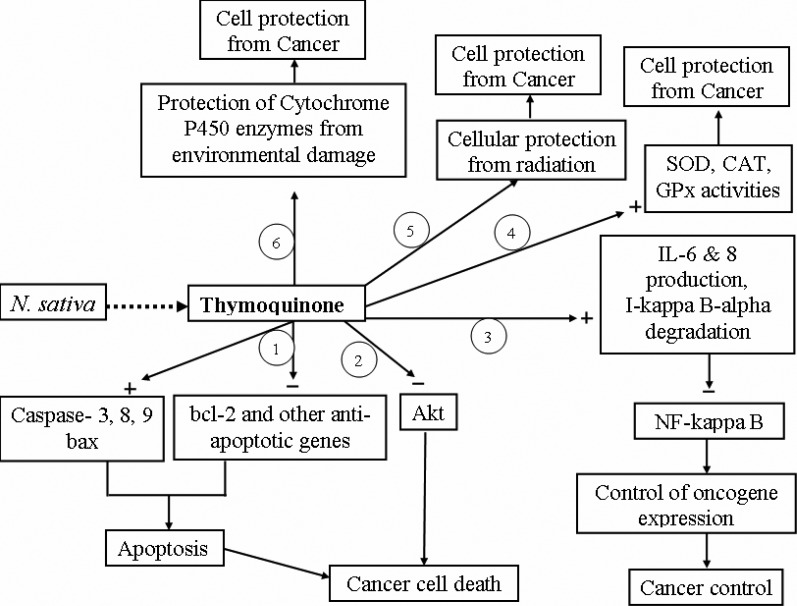
Nigella sativa has been used as traditional medicine for centuries. The crude oil and thymoquinone (TQ) extracted from its seeds and oil are effective against many diseases like cancer, cardiovascular complications, diabetes, asthma, kidney disease etc. It is effective against cancer in blood system, lung, kidney, liver, prostate, breast, cervix, skin with much safety. The molecular mechanisms behind its anticancer role is still not clearly understood, however, some studies showed that TQ has antioxidant role and improves body's defense system, induces apoptosis and controls Akt pathway. Although the anti-cancer activity of N. sativa components was recognized thousands of years ago but proper scientific research with this important traditional medicine is a history of last 2∼3 decades. There are not so many research works done with this important traditional medicine and very few reports exist in the scientific database. In this article, we have summarized the actions of TQ and crude oil of N. sativa against different cancers with their molecular mechanisms.
Keywords: Anti-cancer mechanism; Antioxidant; Nigella sativa; Thymoquinone; Traditional medicine.
Figures
References
-
- Aggarwal BB, Kunnumakkara AB, Harikumar KB, Tharakan ST, Sung B, Anand P. Potential of spice-derived phytochemicals for cancer prevention. Planta Med. 2008;74:1560–1569. - PubMed
-
- Al-Ali A, Alkhawajah AA, Randhawa MA, Shaikh NA. Oral and intraperitoneal LD50 of thymoquinone, an active principle of Nigella sativa, in mice and rats. J Ayub Med Coll Abbottabad. 2008;20:252–257. - PubMed
-
- Albensi BC, Mattson MP. Evidence for the involvement of TNF and NF-kappaB in hippocampal synaptic plasticity. Synapse. 2000;35:151–159. - PubMed
-
- Alenzi FQ, El-Bolkiny Yel-S, Salem ML. Protective effects of Nigella sativa oil and thymoquinone against toxicity induced by the anticancer drug cyclophosphamide. Br J Biomed Sci. 2010;67:20–28. - PubMed
-
- Ali BH, Blunden G. Pharmacological and toxicological properties of Nigella sativa. Phytother Res. 2003;17:299–305. - PubMed
Publication types
MeSH terms
Substances
LinkOut - more resources
Full Text Sources
Medical