


May-Thurner syndrome: a not so uncommon cause of a common condition
- PMID: 22754121
- PMCID: PMC3377287
- DOI: 10.1080/08998280.2012.11928834
May-Thurner syndrome: a not so uncommon cause of a common condition
Abstract
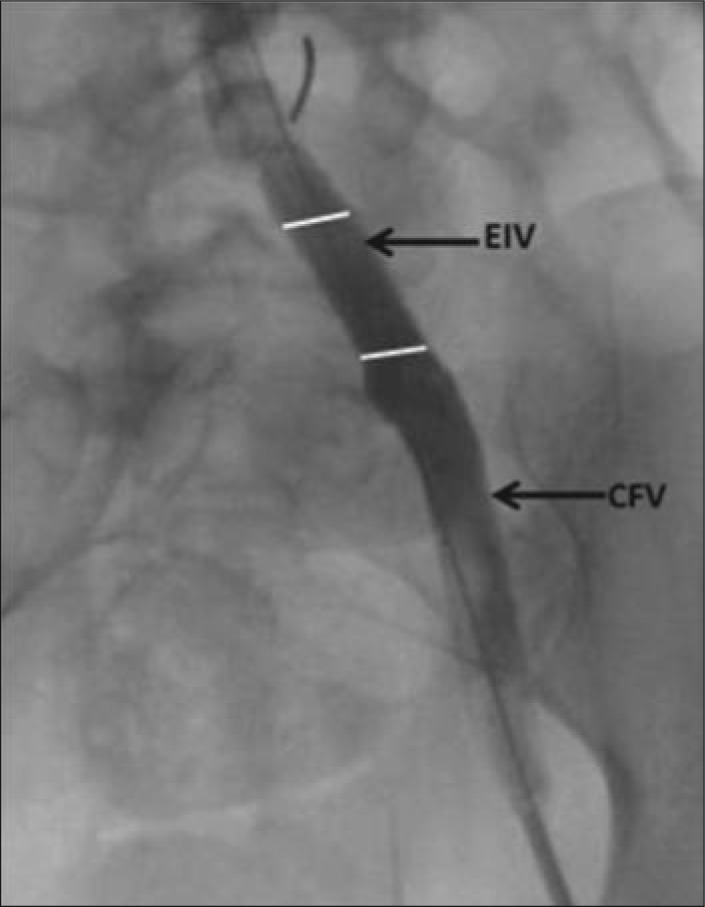
May-Thurner syndrome is a rarely diagnosed condition in which patients develop iliofemoral deep venous thrombosis (DVT) due to an anatomical variant in which the right common iliac artery overlies and compresses the left common iliac vein against the lumbar spine. This variant has been shown to be present in over 20% of the population; however, it is rarely considered in the differential diagnosis of DVT, particularly in patients with other risk factors. Systemic anticoagulation alone is insufficient treatment, and a more aggressive approach is necessary to prevent recurrent DVT. Herein, we present a patient with multiple risk factors for DVT. With a comprehensive diagnostic approach, she was found to have May-Thurner syndrome. Local infusion of thrombolytics as well as mechanical thrombectomy failed to resolve the thrombus. Subsequently the patient underwent successful stent placement in the area that was compressed followed by 6 months of chronic anticoagulation with warfarin. There has been no recurrence of DVT in the ensuing 18 months.
Figures
References
-
- May R, Thurner J. The cause of the predominantly sinistral occurrence of thrombosis of the pelvic veins. Angiology. 1957;8(5):419–427. - PubMed
-
- Kibbe MR, Ujiki M, Goodwin AL, Eskandari M, Yao J, Matsumura J. Iliac vein compression in an asymptomatic patient population. J Vasc Surg. 2004;39(5):937–943. - PubMed
-
- O'Sullivan GJ, Semba CP, Bittner CA, Kee ST, Razavi MK, Sze DY, Dake MD. Endovascular management of iliac vein compression (May-Thurner) syndrome. J Vasc Interv Radiol. 2000;11(7):823–836. - PubMed
-
- Thijs W, Rabe KF, Rosendaal FR, Middeldorp S. Predominance of left-sided deep vein thrombosis and body weight. J Thromb Haemost. 2010;8(9):2083–2084. - PubMed
-
- Moudgill N, Hager E, Gonsalves C, Larson R, Lombardi J, DiMuzio P. May-Thurner syndrome: case report and review of the literature involving modern endovascular therapy. Vascular. 2009;17(6):330–335. - PubMed
LinkOut - more resources
Full Text Sources