


Deleterious effects of high dose connexin 43 mimetic peptide infusion after cerebral ischaemia in near-term fetal sheep
- PMID: 22754366
- PMCID: PMC3382776
- DOI: 10.3390/ijms13056303
Deleterious effects of high dose connexin 43 mimetic peptide infusion after cerebral ischaemia in near-term fetal sheep
Abstract
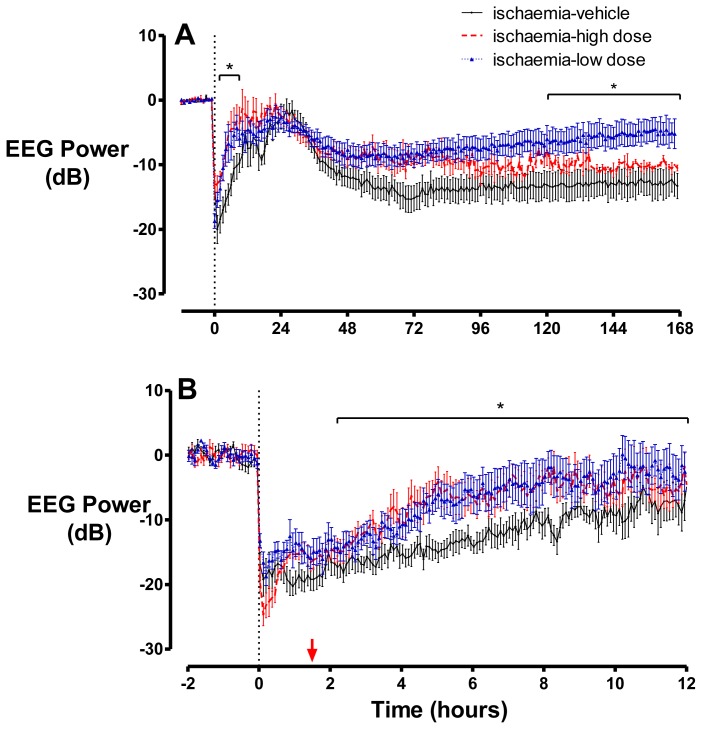
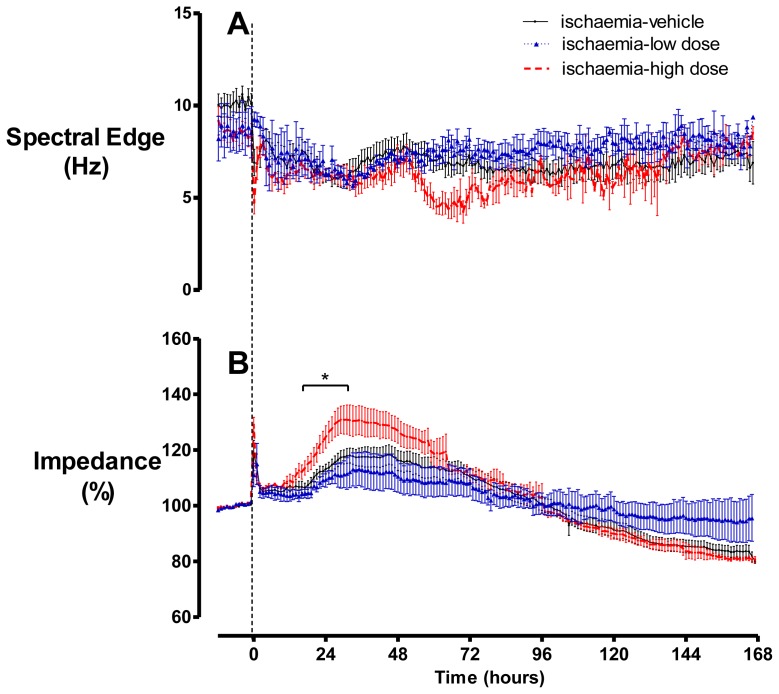
Hypoxic-ischaemic brain injury at birth is associated with 1-3/1000 cases of moderate to severe encephalopathy. Previously, we have shown that connexin 43 hemichannel blockade, with a specific mimetic peptide, reduced the occurrence of seizures, improved recovery of EEG power and sleep state cycling, and improved cell survival following global cerebral ischaemia. In the present study, we examined the dose response for intracerebroventricular mimetic peptide infusion (50 μmol/kg/h for 1 h, followed by 50 μmol/kg/24 h (low dose) or 50 μmol/kg/h for 25 h (high dose) or vehicle only (control group), starting 90 min after the end of ischaemia), following global cerebral ischaemia, induced by 30 min bilateral carotid artery occlusion, in near-term fetal sheep (128 ± 1 days gestation). Both peptide infusion groups were associated with a transient significant increase in EEG power between 2-12 h after ischaemia. The ischaemia-low dose group showed a significant recovery of EEG power from day five compared to the ischaemia-vehicle and -high dose groups. In contrast, the high dose infusion was associated with greater secondary increase in impedance (brain cell swelling), as well as a trend towards a greater increase in lactate concentration and mortality. These data suggest that higher doses of connexin mimetic peptide are not beneficial and may be associated with adverse outcomes, most likely attributable to uncoupling of connexin 43 gap junctions leading to dysfunction of the astrocytic syncytium.
Keywords: connexins; fetus; gap junctions; hemichannels; ischaemia; mimetic peptide.
Figures
References
-
- Vannucci R.C. Hypoxic-ischemic encephalopathy. Am. J. Perinatol. 2000;17:113–120. - PubMed
-
- Edwards A.D., Brocklehurst P., Gunn A.J., Halliday H., Juszczak E., Levene M., Strohm B., Thoresen M., Whitelaw A., Azzopardi D. Neurological outcomes at 18 months of age after moderate hypothermia for perinatal hypoxic ischaemic encephalopathy: Synthesis and meta-analysis of trial data. Br. Med. J. 2010;340 doi: 10.1136/bmj.c363. - DOI - PMC - PubMed
-
- Thornton J.S., Ordidge R.J., Penrice J., Cady E.B., Amess P.N., Punwani S., Clemence M., Wyatt J.S. Temporal and anatomical variations of brain water apparent diffusion coefficient in perinatal cerebral hypoxic-ischemic injury: Relationships to cerebral energy metabolism. Magn. Reson. Med. 1998;39:920–927. - PubMed
-
- Williams C.E., Gunn A.J., Mallard C., Gluckman P.D. Outcome after ischemia in the developing sheep brain: An electroencephalographic and histological study. Ann. Neurol. 1992;31:14–21. - PubMed
-
- Freeman S.M., Abboud C.N., Whartenby K.A., Packman C.H., Koeplin D.S., Moolten F.L., Abraham G.N. The “bystander effect”: Tumor regression when a fraction of the tumor mass is genetically modified. Cancer Res. 1993;53:5274–5283. - PubMed
Publication types
MeSH terms
Substances
LinkOut - more resources
Full Text Sources
Other Literature Sources
Miscellaneous
