


Anti-hyperglycemic effect of chebulagic acid from the fruits of Terminalia chebula Retz
- PMID: 22754367
- PMCID: PMC3382786
- DOI: 10.3390/ijms13056320
Anti-hyperglycemic effect of chebulagic acid from the fruits of Terminalia chebula Retz
Abstract
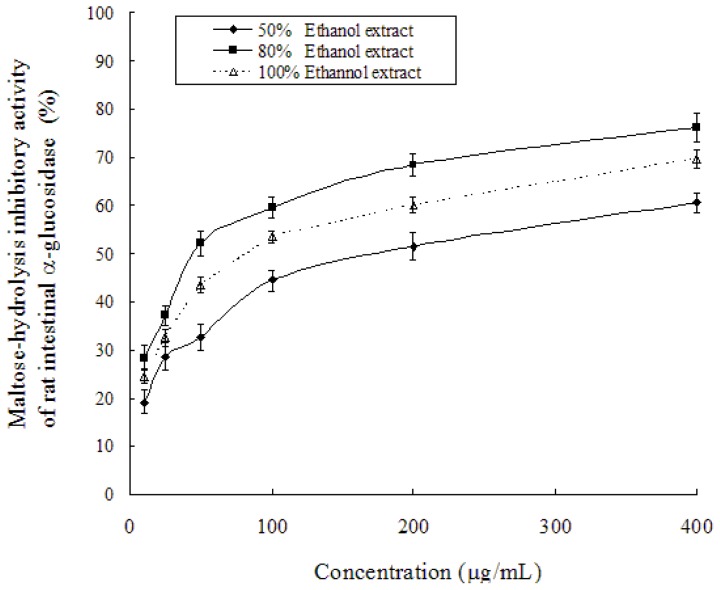
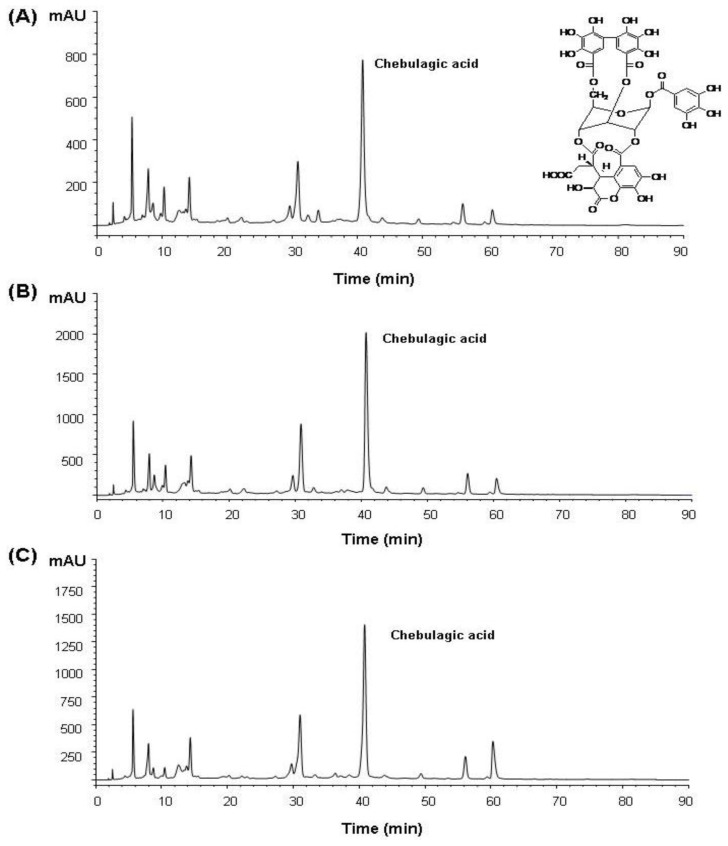
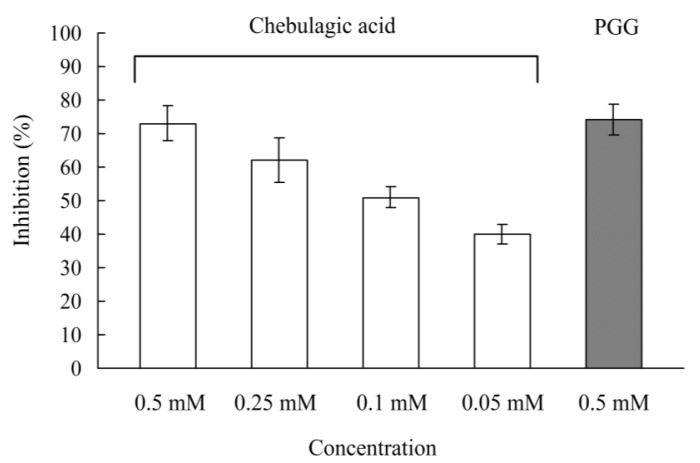
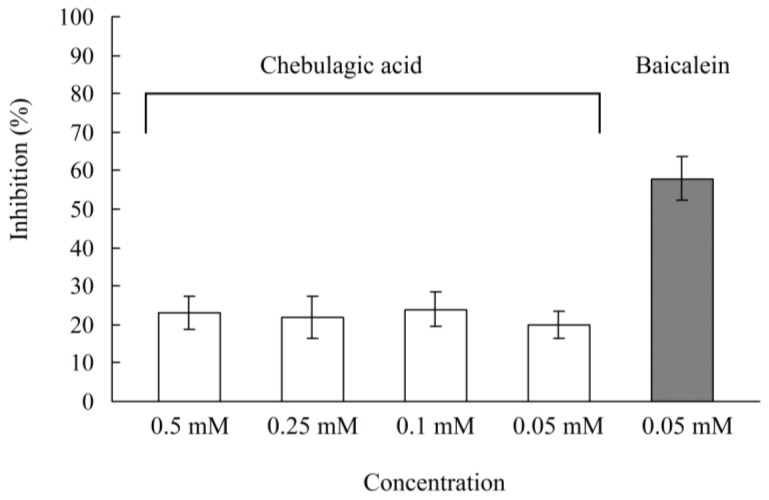
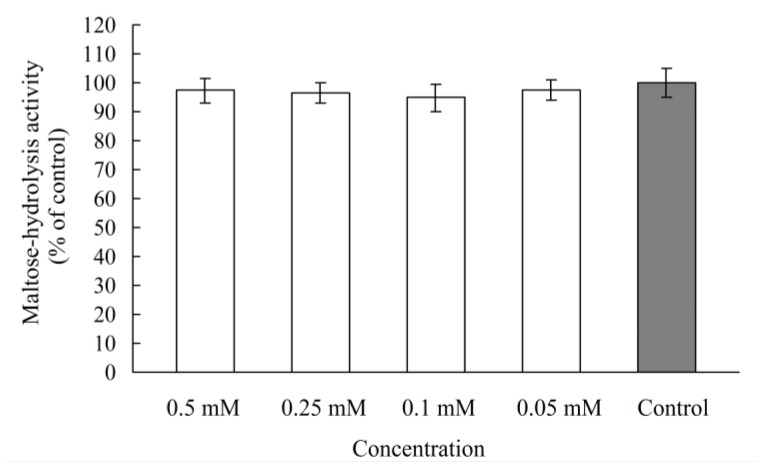
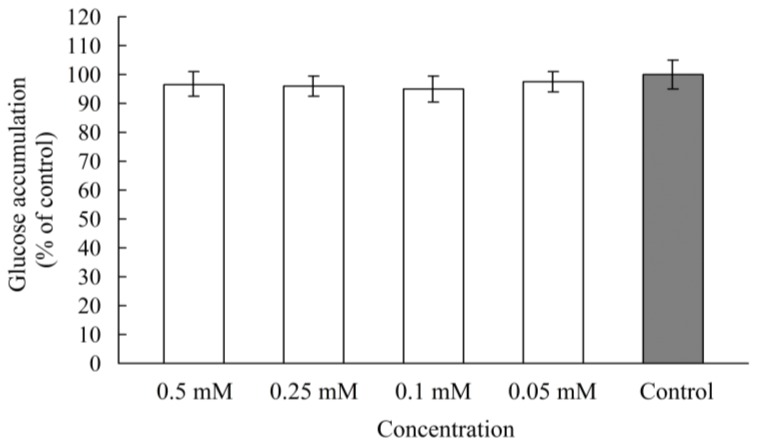
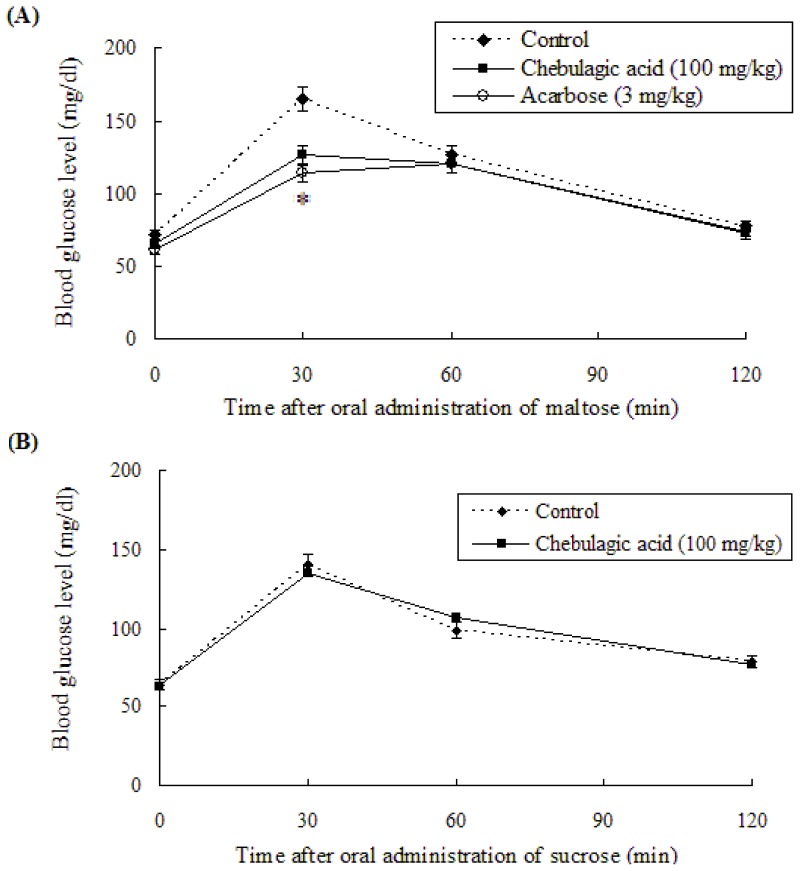
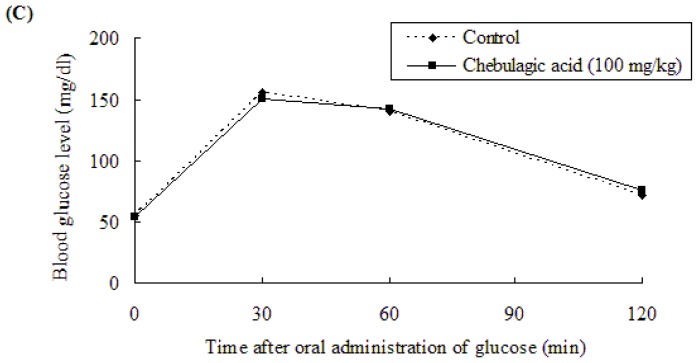
In the present study, we firstly compared rat intestinal α-glucosidase inhibitory activity by different ethanol-aqueous extractions from the dried fruits of Terminalia chebula Retz. The enzymatic assay showed that the 80% ethanol extract was more potent against maltase activity than both 50% and 100% ethanol extracts. By HPLC analysis, it was determined that the 80% ethanol extract had a higher content of chebulagic acid than each of 50% or 100% ethanol extract. Next, we investigated how efficiently chebulagic acid could inhibit sugar digestion by determining the glucose level on the apical side of the Caco-2 cell monolayer. The result showed that the maltose-hydrolysis activity was down-regulated by chebulagic acid, which proved to be a reversible inhibitor of maltase in Caco-2 cells. On the other hand, chebulagic acid showed a weak inhibition of sucrose-hydrolysis activity. Meanwhile, chebulagic acid did not have an obvious influence on intestinal glucose uptake and was not effective on glucose transporters. Further animal studies revealed that the oral administration of chebulagic acid (100 mg/kg body weight) significantly reduced postprandial blood glucose levels by 11.1% in maltose-loaded Sprague-Dawley (SD) rats compared with the control group, whereas the oral administration of chebulagic acid did not show a suppressive effect on postprandial hyperglycemia in sucrose- or glucose-loaded SD-rats. The results presented here suggest that chebulagic acid from T. chebula can be used to control blood glucose and manage type 2 diabetes, although clinical trials are needed.
Keywords: Terminalia chebula; anti-hyperglycemia; chebulagic acid; α-glucosidase inhibitor.
Figures
References
-
- Zhao L.Y., Lan Q.J., Huang Z.C., Ouyang L.J., Zeng F.H. Antidiabetic effect of a newly identified component of Opuntia dillenii polysaccharides. Phytomedicine. 2011;18:661–668. - PubMed
-
- Rendell M. The role of sulphonylureas in the management of type 2 diabetes mellitus. Drugs. 2004;64:1339–1358. - PubMed
-
- Lebovitz H.E. alpha-Glucosidase inhibitors. Endocrinol. Metab. Clin. North Am. 1997;26:539–551. - PubMed
Publication types
MeSH terms
Substances
LinkOut - more resources
Full Text Sources
Medical
