


OX40 costimulation by a chimeric antigen receptor abrogates CD28 and IL-2 induced IL-10 secretion by redirected CD4(+) T cells
- PMID: 22754764
- PMCID: PMC3382912
- DOI: 10.4161/onci.19855
OX40 costimulation by a chimeric antigen receptor abrogates CD28 and IL-2 induced IL-10 secretion by redirected CD4(+) T cells
Abstract
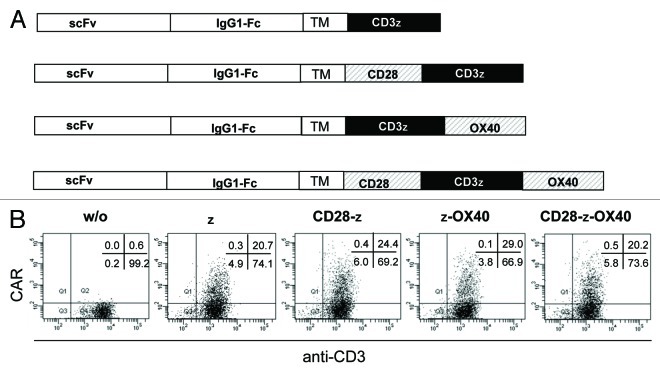
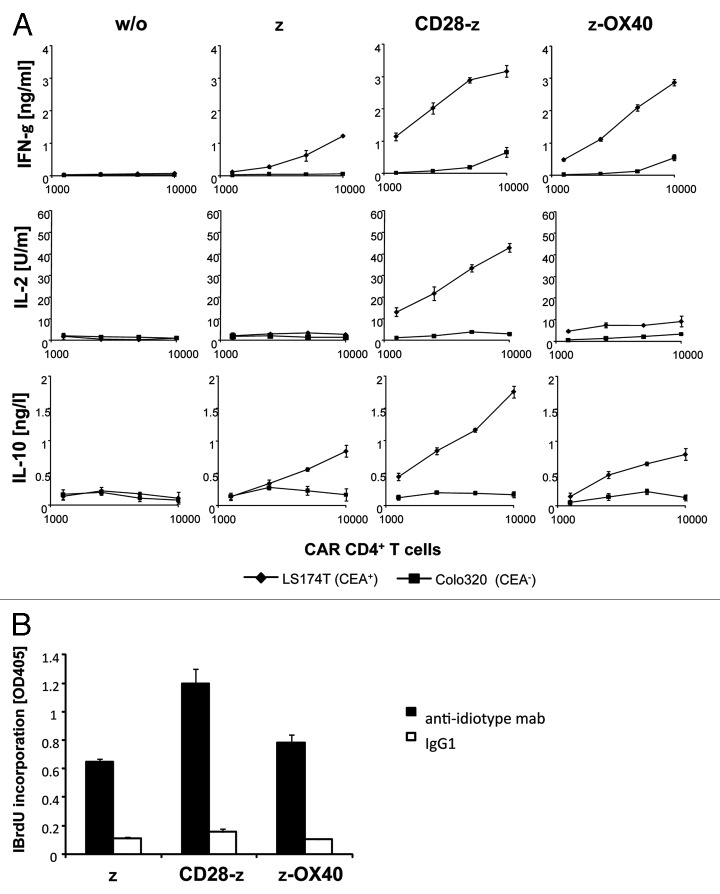
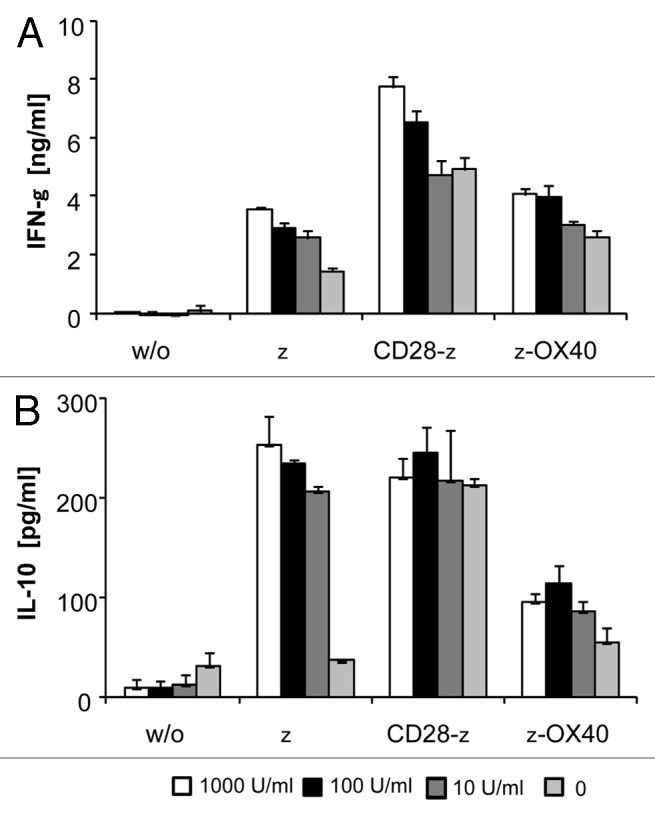
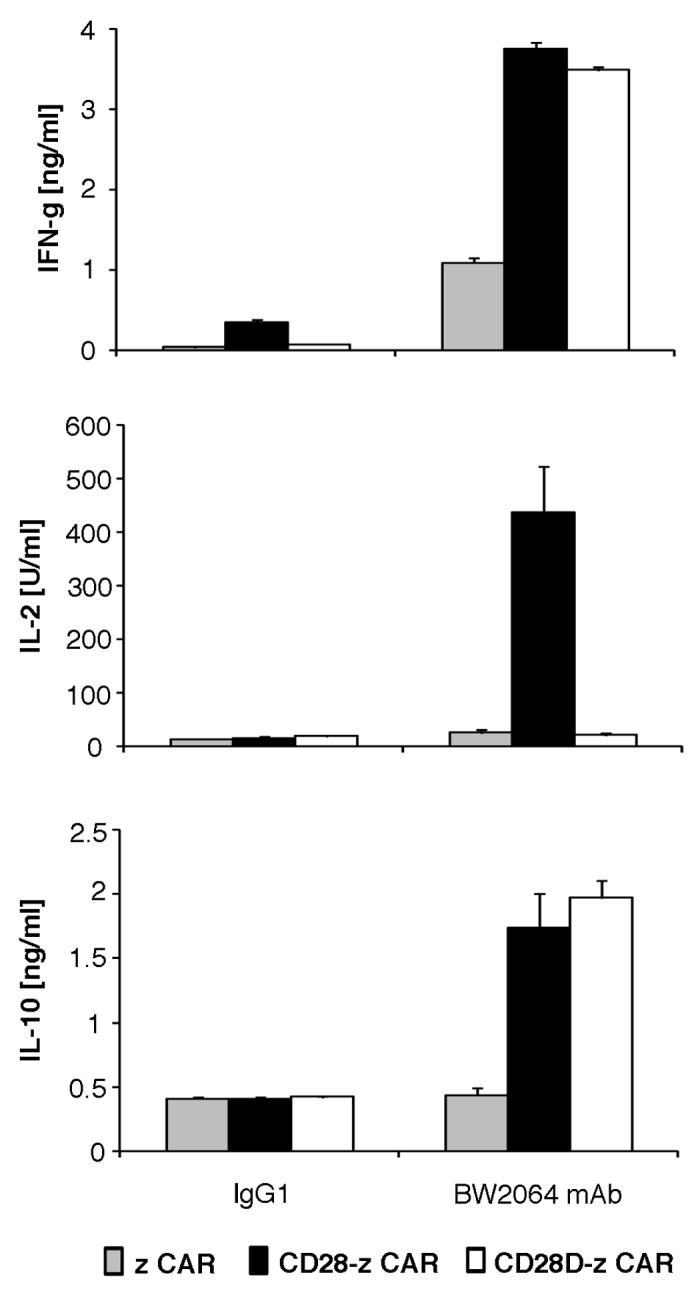
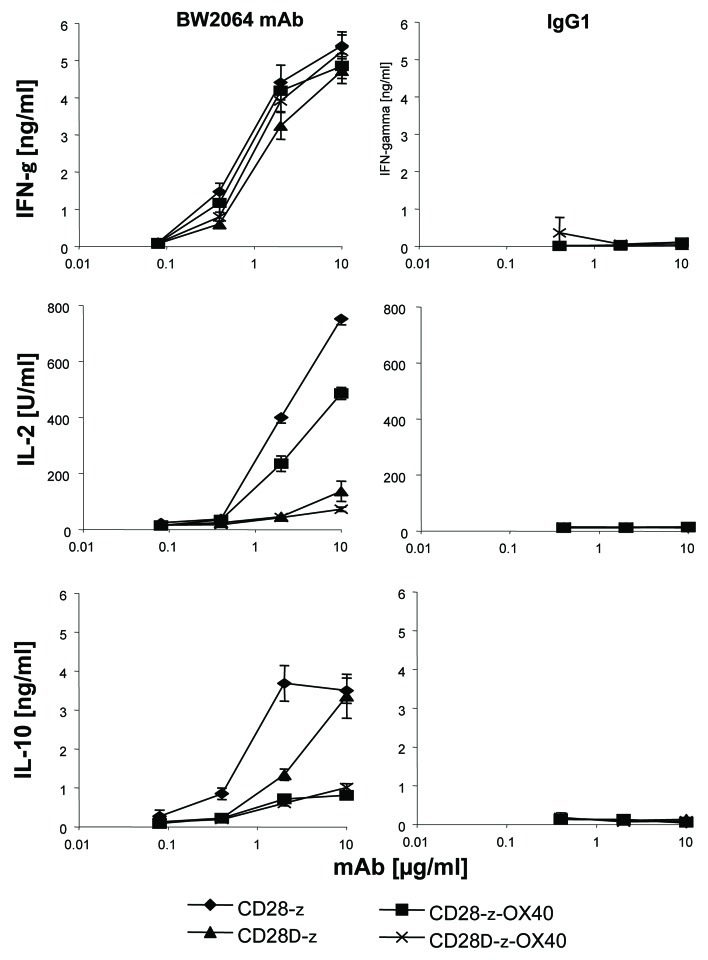
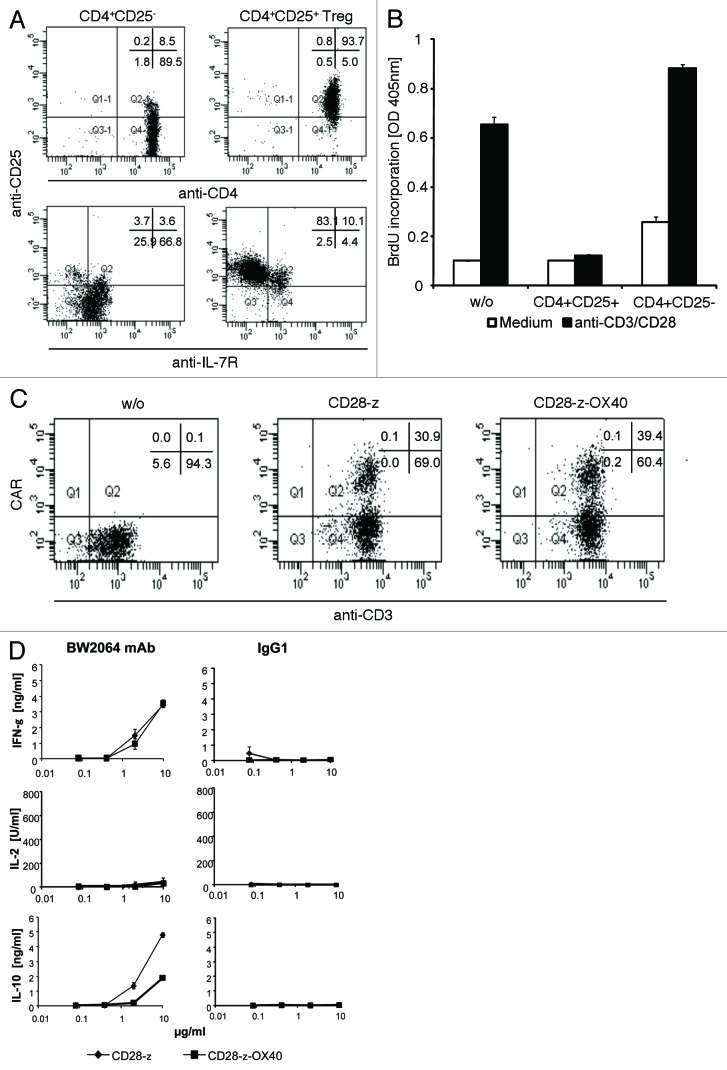
Adoptive therapy with chimeric antigen receptor (CAR) redirected T cells recently showed remarkable anti-tumor efficacy in early phase clinical trials; self-repression of the immune response by T-cell secreted cytokines, however, is still an issue raising interest to abrogate the secretion of repressive cytokines while preserving the panel of CAR induced pro-inflammatory cytokines. We here revealed that T-cell activation by a CD28-ζ signaling CAR induced IL-10 secretion, which compromises T cell based immunity, along with the release of pro-inflammatory IFN-γ and IL-2. T cells stimulated by a ζ CAR without costimulation did not secrete IL-2 or IL-10; the latter, however, could be induced by supplementation with IL-2. Abrogation of CD28-ζ CAR induced IL-2 release by CD28 mutation did not reduce IL-10 secretion indicating that IL-10 can be induced by both a CD28 and an IL-2 mediated pathway. In contrast to the CD28-ζ CAR, a CAR with OX40 (CD134) costimulation did not induce IL-10. OX40 cosignaling by a 3rd generation CD28-ζ-OX40 CAR repressed CD28 induced IL-10 secretion but did not affect the secretion of pro-inflammatory cytokines, T-cell amplification or T-cell mediated cytolysis. IL-2 induced IL-10 was also repressed by OX40 co-signaling. OX40 moreover repressed IL-10 secretion by regulatory T cells which are strong IL-10 producers upon activation. Taken together OX40 cosignaling in CAR redirected T cell activation effectively represses IL-10 secretion which contributes to counteract self-repression and provides a rationale to explore OX40 co-signaling CARs in order to prolong a redirected T cell response.
Figures
References
-
- Eshhar Z, Waks T, Gross G, Schindler DG. Specific activation and targeting of cytotoxic lymphocytes through chimeric single chains consisting of antibody-binding domains and the gamma or zeta subunits of the immunoglobulin and T-cell receptors. Proc Natl Acad Sci U S A. 1993;90:720–4. doi: 10.1073/pnas.90.2.720. - DOI - PMC - PubMed
-
- Hombach A, Sent D, Schneider C, Heuser C, Koch D, Pohl C, et al. T-cell activation by recombinant receptors: CD28 costimulation is required for interleukin 2 secretion and receptor-mediated T-cell proliferation but does not affect receptor-mediated target cell lysis. Cancer Res. 2001;61:1976–82. - PubMed
-
- Finney HM, Akbar AN, Lawson ADG. Activation of resting human primary T cells with chimeric receptors: costimulation from CD28, inducible costimulator, CD134, and CD137 in series with signals from the TCR zeta chain. J Immunol. 2004;172:104–13. - PubMed
Publication types
LinkOut - more resources
Full Text Sources
Other Literature Sources
Medical
Research Materials
